Chevy Silverado Reliability: Best and Worst Years
Share
Silverado Reliability Years define the boundary between dependable workhorse performance and frustrating mechanical breakdowns caused by cylinder deactivation shudder, delayed throttle response, or sudden valvetrain collapse. By addressing these hydraulic lifter vulnerabilities through non-invasive plug-in engineering from Gadon Store, owners can preserve full-time V8 torque and safeguard long-term engine longevity.
Need Fitment or Compatibility Support?
Connect with our US-based powertrain specialists at DASONS FL USA LLC to verify your exact model configuration, engine displacement, and transmission pairing before ordering:
In This Comprehensive Guide
- Evaluating Silverado Reliability Years: Worst Years for Chevy Silverado Powertrains
- Silverado Reliability Years and Mechanical Architecture: How AFM and DFM Affect Engine Health
- Electronic Disablers versus Mechanical Deletes for Chevy Silverado Trucks
- Step-by-Step Diagnostic and Disabler Installation SOP for Extended Chevy Truck Lifespan
- Proven Mechanical Reliability Across Generations: Best Year for Used Silverado 1500 Buyers
- Frequently Asked Questions about Chevy Silverado Reliability
- Maximize Your Truck Performance with GADON Automotive Solutions
Evaluating Silverado Reliability Years: Worst Years for Chevy Silverado Powertrains
Determining which production cycles deliver durable service versus which configurations present severe valvetrain liabilities is crucial when assessing full-size American pickups. When analyzing historical data across light-duty platforms, the worst years for chevy silverado ownership consistently center on model eras afflicted by initial active fuel management rollouts and early direct-injection transitions. Powertrain technicians frequently encounter severe internal valve degradation in early fourth-generation models where collapsible lifter pins stick inside their bores, causing bent pushrods and scarred camshaft lobes.
Prevent $4,000 Camshaft Failure Today
Plug & play. Force your 5.3L to stay in 100% V8 power mode.
The widespread documentation of 2014 to 2018 silverado problems highlights a troubling combination of mechanical and electrical defects. During this production phase, the introduction of the EcoTec3 engine family combined aggressive cylinder deactivation software with the 8L90 eight-speed automatic transmission. Drivers regularly report harsh transmission shudder resembling a rumble strip vibration on open highways, while uncommanded transitions between four-cylinder and eight-cylinder modes lead to excessive oil consumption through the PCV plumbing and premature breakdown of valve lifter oil manifold solenoids.
Identifying Silverado Reliability Years: Valvetrain Pitfalls and Diagnostics
Professional technicians monitoring chevy truck lifter failure years recognize that mechanical breakdown rarely happens without prior symptoms. Detecting early acoustic clatter and oil pressure drops allows owners to intervene before a stuck locking pin destroys an entire engine block.
- Voiding Powertrain Warranties with Flash Tuners: Many drivers attempt to deactivate cylinder dropping by rewriting the engine control module software. Dealership diagnostic scanners immediately flag altered Calibration Verification Numbers, causing complete denial of factory powertrain warranty claims.
- Ignoring Cold-Start Ticking Noises: Operating a truck while lifters produce distinct metallic tapping indicates that oil galleries or lifter springs are sticking. Continuing to drive under heavy load ensures that the lifter roller turns sideways, grinding the camshaft lobe into scrap metal.
- Permitting Extended Multi-Week Parasitic Drain: Leaving low-grade diagnostic dongles plugged into the diagnostic port while a vehicle sits parked for weeks depletes the primary twelve-volt battery. Hardware must feature auto-sleep routines or be manually unplugged during prolonged downtime.
- Neglecting Regular High-Grade Synthetic Oil Schedules: Cylinder deactivation mechanisms rely on pristine hydraulic fluid pressure delivered through micro-screens. Extending oil drains past 5,000 miles allows sludge accumulation, jamming the internal locking pins in a collapsed state.
- Installing Modules on Incompatible Drivetrains: Attempting to run standard disabler hardware on 2019 and newer trucks equipped with ten-speed transmissions or refreshed truck interior electronics causes communication errors across auxiliary control modules.
Market Warning Regarding Cheap Knockoff Dongles: Low-cost clone devices bought on unauthorized marketplaces continuously flood vehicle CAN networks with corrupt packet requests. This data spam causes instrument clusters to flicker, displays false stabilitrak error warnings, and risks putting transmission control modules into limp-home safety modes. In contrast, genuine RA003 microcode operates as a silent passive listener, requesting factory fuel-mode status without spamming internal communication buses or modifying factory calibration memory.
Proper diagnostic verification requires scanning for pending diagnostic trouble codes using professional handheld scan tools compliant with SAE J1962 diagnostic standards. Technicians look specifically for misfire codes P0300 through P0308, alongside oil pressure switch performance fault P0521, verifying that mechanical oil delivery remains within factory tolerance before applying non-invasive electronic suppression modules.
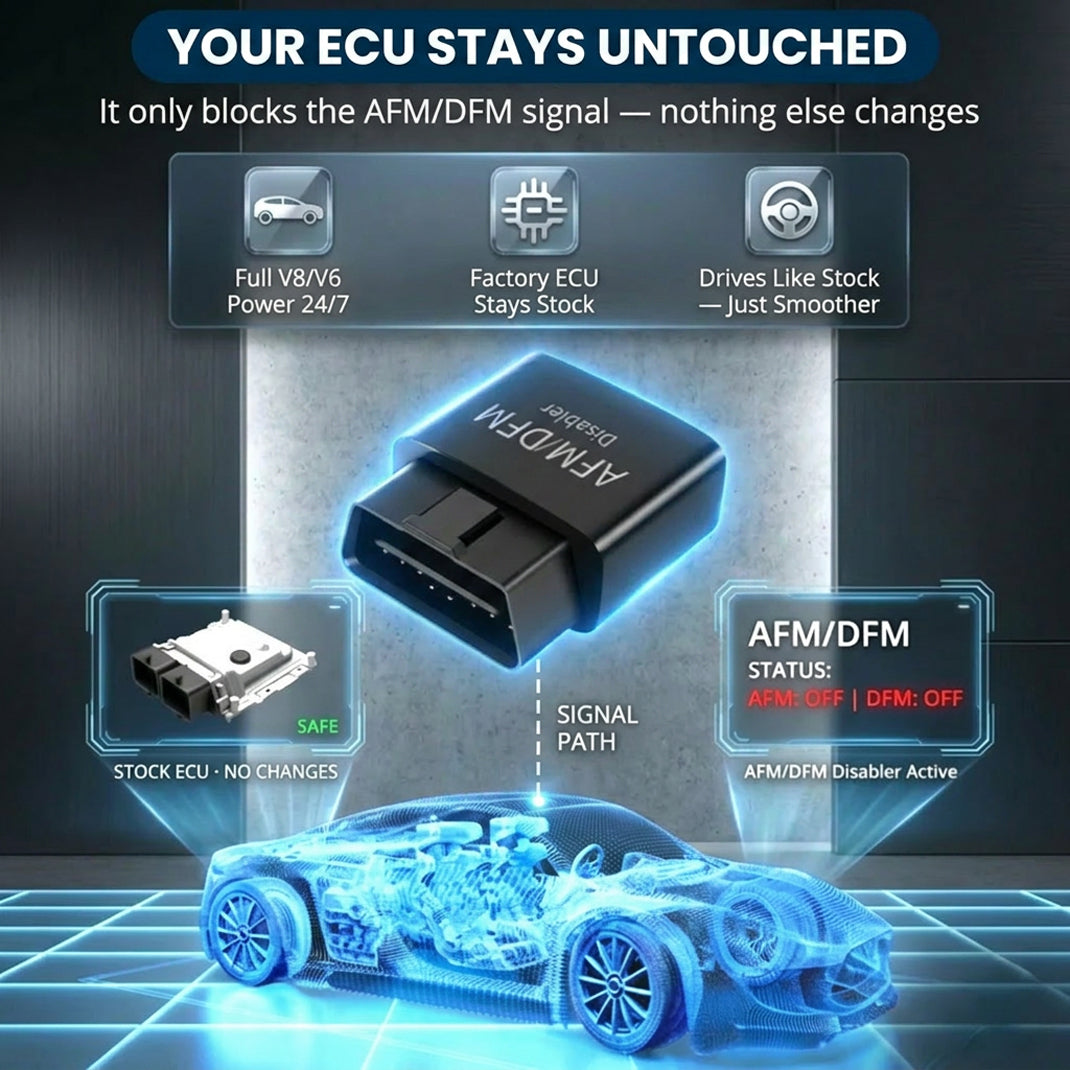
Gadon™ AFM/DFM Disabler
Keep your GM truck operating in full V8 mode permanently. Prevents costly lifter failure, removes throttle lag, and preserves your factory powertrain warranty with zero ECU traces.
$159.99 $99.99
BUY NOW (Code: WELCOME)Silverado Reliability Years and Mechanical Architecture: How AFM and DFM Affect Engine Health
Silverado reliability years are directly governed by the electro-hydraulic architecture of cylinder deactivation systems engineered into small-block engines. Active fuel management alternates between full power and four-cylinder operation by pressurizing valve lifter oil manifolds, whereas dynamic fuel management expands deactivation routines across seventeen distinct firing sequences, exposing internal components to constant mechanical cycling.
Evaluating silverado 5.3 reliability by year reveals a significant mechanical dividing line. Early naturally aspirated iron-block platforms avoided complex valvetrain solenoids entirely, whereas later aluminum-block variants integrated high-pressure oil circuits subject to thermal fatigue. When understanding What is DFM Explained across modern platforms, mechanics observe that dynamic cycling dramatically increases the duty cycle of delicate spring-loaded lifter mechanisms, accelerating valvetrain fatigue during sustained interstate journeys.
System Architecture & Core Mechanics Across Silverado Reliability Years
Inspecting the internal valvetrain layout clarifies why mechanical dropouts cause extensive secondary damage. Comparing real-world performance metrics between the popular 5.3 vs 6.2 Silverado configurations shows that both powerplants rely on identical hydraulic locking mechanisms, leaving both susceptible to catastrophic failure when oil distribution is compromised.
- System Origin & Operation: The engine control module activates pulse-width modulated solenoids inside the valve lifter oil manifold located directly under the intake valley cover. Pressurized motor oil diverts into targeted lifter galleries, forcing spring-loaded internal locking pins inward to disengage the outer lifter body from the internal plunger, collapsing the lifter harmlessly while the camshaft rotates underneath.
- Specialized Collapsible Hydraulic Lifters: Cylinders designated for deactivation feature specialized spring-assisted collapsible bodies that absorb camshaft lift rather than transferring kinetic force up through the pushrods to actuate the intake and exhaust valves.
- Valve Lifter Oil Manifold Assembly: Houses the directional control solenoids and dedicated oil galleries that route pressurized lubrication directly to the active lifter bores under command from the powertrain management computer.
- Sixteen-Pin Diagnostic Interface: Serves as the high-speed gateway communicating engine management parameters, fuel trim configurations, and current cylinder activation status across serial data lines.
- High-Speed CAN Microcontroller Architecture: Processes real-time vehicle communication frames and issues passive instruction signals that maintain continuous full-displacement operating logic without altering underlying factory calibration binary files.
- Continuous Operating Principle: When cylinder deactivation remains disabled via electronic commands, engine oil pressure maintains steady equilibrium across all sixteen hydraulic plungers, eliminating mechanical pin shock and preserving 100% full-time torque delivery across all driving environments.
Ongoing field data regarding silverado dfm issues by year proves that higher complexity introduces greater potential for hydraulic starvation. When dynamic solenoids fire thousands of times per hour in heavy stop-and-go commuting, tiny particulate deposits can jam the miniature release springs. Preventing these cycling routines entirely preserves mechanical stability across all valvetrain assemblies.
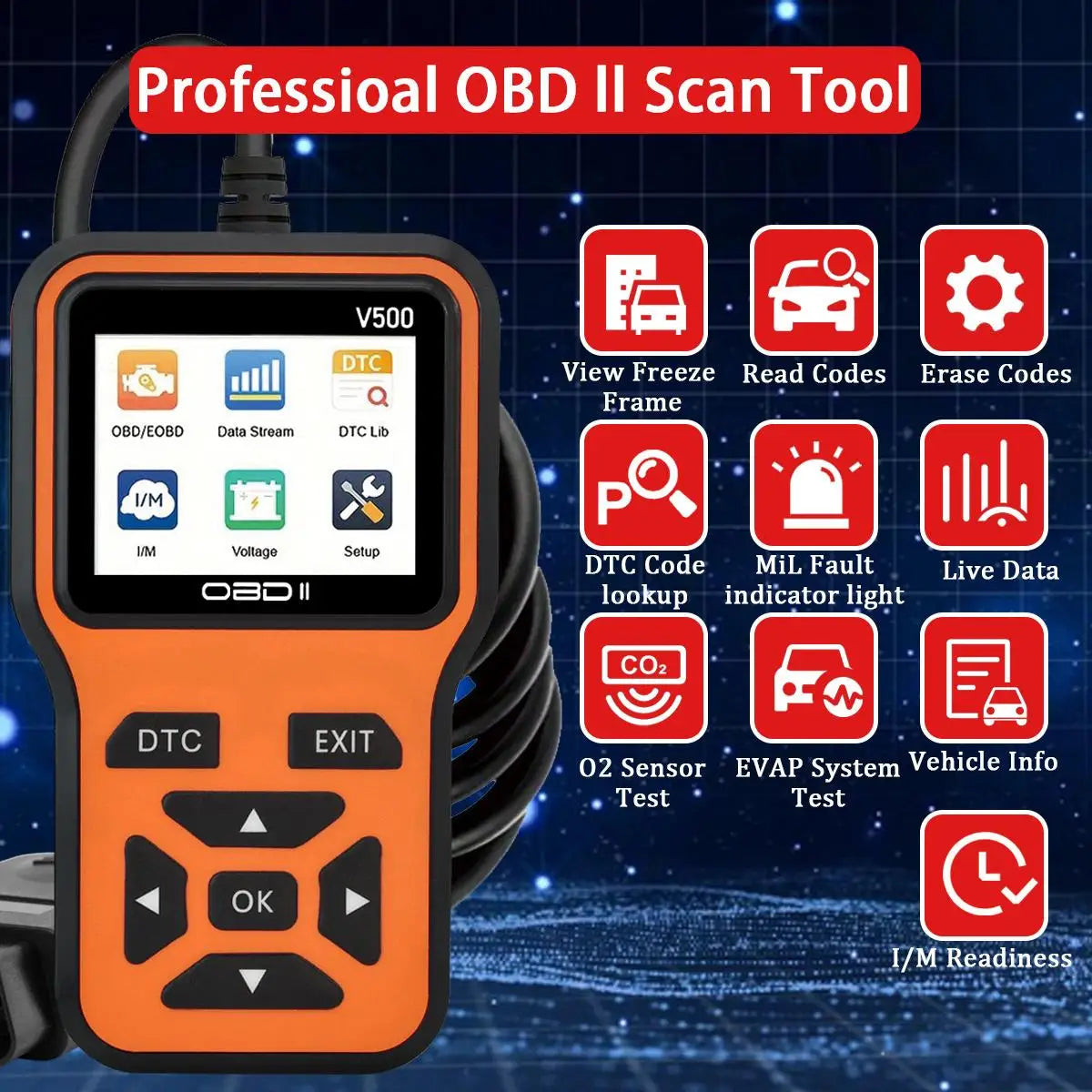
V500™ OBD2 Scanner & Code Reader
Read live cylinder misfire counters, verify oil pressure sensor data, and clear trouble codes instantly. The ideal diagnostic partner for full-size truck maintenance.
$89.99 $49.99
BUY NOW (Code: WELCOME)Electronic Disablers versus Mechanical Deletes for Chevy Silverado Trucks
Faced with potential valvetrain damage, truck operators generally weigh two distinct remediation paths: non-invasive electronic disabler hardware or comprehensive mechanical delete packages. While mechanical conversion replaces the physical collapsible lifters with conventional solid hydraulic lifters and standard camshafts, it requires extensive engine teardown that removes cylinder heads, timing covers, and oil pans. This mechanical process mirrors high-performance projects like a Camaro AFM Delete or solving severe Corvette C7 AFM Problems, requiring thousands of dollars in specialized shop labor.
Conversely, electronic suppression via external plug-in hardware operates entirely through software instruction sets transmitted across the diagnostic port. This methodology prevents the engine control module from initiating the hydraulic transition commands that trigger lifter pin movement. By retaining full eight-cylinder combustion continuously, the lifters never enter a collapsed mode, eliminating the primary source of roller wear without turning a single wrench inside the engine bay.
| Evaluation Criteria | GADON OBD-II Disabler Module | Invasive ECM Tuning / Mechanical Delete |
|---|---|---|
| Installation Complexity | 10-second plug-and-play into diagnostic port | 20 to 30 hours extensive engine teardown |
| Financial Investment | $99.99 one-time hardware investment | $3,000 to $8,000 parts and specialist labor |
| Powertrain Warranty Impact | 100% preserved; leaves zero binary footprint | Completely voids factory powertrain coverage |
| Reversibility Standard | Instant unplug restoration to factory default | Irreversible without purchasing original OEM parts |
| Throttle Hesitation Fix | Immediate elimination of V4-to-V8 transition lag | Eliminates lag only after full ECM recalibration |
| Exhaust Drone Suppression | Eliminates unpleasant 4-cylinder exhaust buzz | Eliminates drone by physically removing system |
| Emissions Compliance | Leaves factory emissions calibration intact | Frequently fails state inspection tailpipe tests |
| Diagnostic Accessibility | Preserved; compatible with multi-port splitters | Requires custom tuner handheld for error checking |
Silverado Reliability Years and Lifter Protection: Electronic Plug-in vs ECM Flash
Technicians evaluate the practical realities of fleet maintenance when advising truck owners on long-term preventive protection. Invasive mechanical rebuilds are sometimes unavoidable if an engine has already experienced full lifter collapse with damaged camshaft journals. However, for fully operational trucks, an electronic disabler delivers equal protection against pin fatigue at a fraction of the cost.
- Preservation of Factory Powertrain Coverage: Electronic disablers communicate using standard broadcast queries compliant with ISO 15765 CAN bus communication protocol. When unplugged before dealership service visits, no flash counters or diagnostic traces remain inside vehicle memory.
- Elimination of Human Assembly Error: Mechanical deletes require replacing the camshaft, requiring complete front-end disassembly, timing chain removal, and radiator clearance. Improper torquing or timing misalignments often lead to catastrophic post-installation engine failures.
- Rapid Reversibility for Resale Value: Future truck buyers or dealership trade-in appraisers often penalize modified engines with aftermarket internal parts. An electronic module can be transferred to another compatible truck within ten seconds, protecting your equipment investment.
- Drastic Reduction in Downtime: Mechanical teardown keeps a work vehicle stranded on shop lift racks for several days, costing contractors thousands in lost operational revenue. Electronic installation takes under one minute in your own driveway.
Step-by-Step Diagnostic and Disabler Installation SOP for Extended Chevy Truck Lifespan
Extending your overall chevy truck lifespan demands strict adherence to systematic installation and diagnostic procedures. Before introducing any electronic hardware to your onboard communication network, verify that your truck is properly prepared. Ensure your vehicle has a fully charged twelve-volt battery showing at least 12.4 resting volts, confirm that the engine is turned off with the gear selector firmly locked in Park, and clean the under-dash diagnostic connector using compressed air to eliminate accumulated dust and debris.
Step-by-Step Installation & Verification SOP for V8 Trucks
Executing this standardized operating procedure guarantees reliable electronic handshake communication without setting spurious communication fault codes across auxiliary control modules.
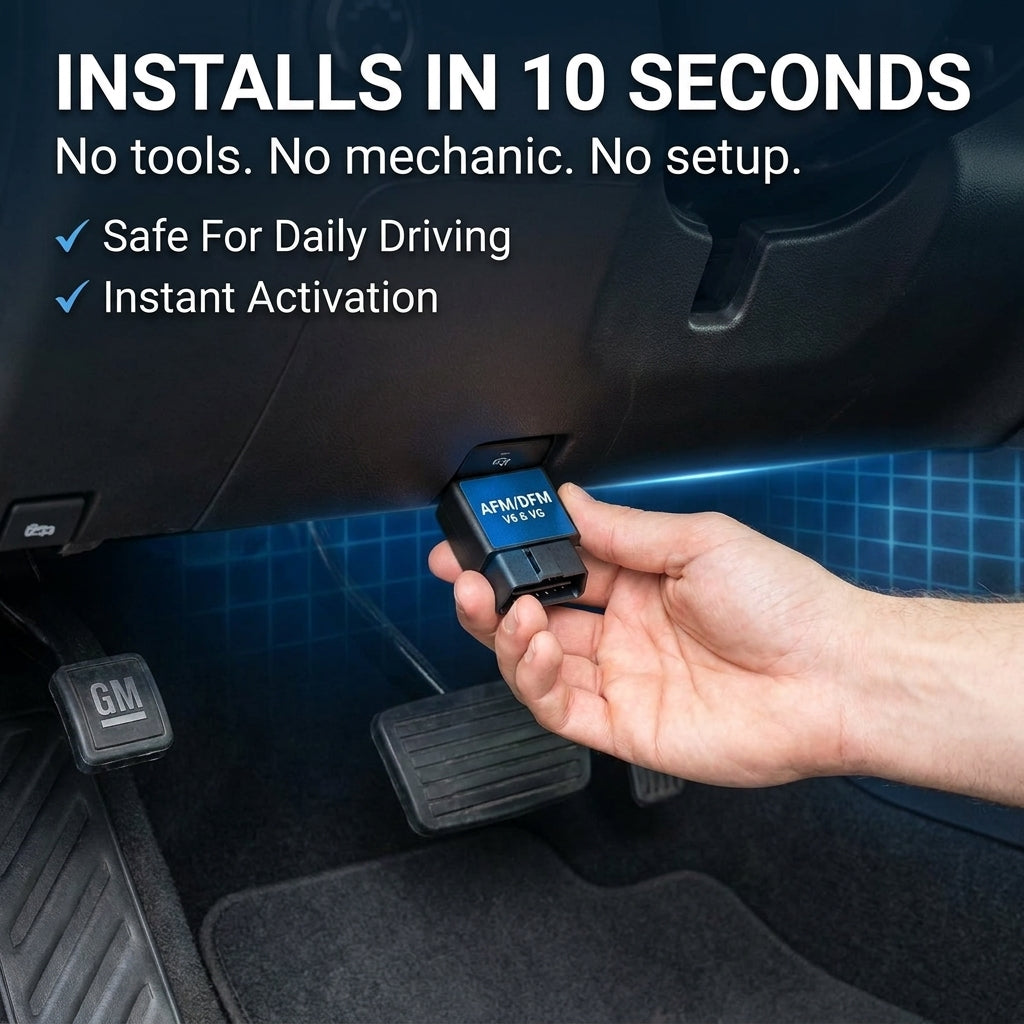
- Locate the black sixteen-pin diagnostic connection terminal situated directly beneath the driver-side lower dashboard panel, positioned slightly above the brake pedal bracket.
- Align the trapezoidal connector of your disabler device with the receiving pins of the vehicle diagnostic port, ensuring correct directional pin orientation without forcing angled contact.
- Insert the module firmly into the diagnostic port until the outer locking tabs fully seat against the terminal housing, establishing secure pin-to-terminal contact across all active pins.
- Ignite the vehicle engine by turning the key or depressing the engine start button while keeping your foot on the brake pedal, observing the status LED indicator sequence during initial boot initialization.
- Verify complete handshake completion by checking that the LED indicators illuminate steadily according to manufacturer specifications and confirming that your instrument cluster displays continuous eight-cylinder operation during initial test drives.
Addressing common operational issues such as Silverado Throttle Lag Fix routines becomes instantly straightforward once eight-cylinder mode is held active full-time. Drivers notice immediate throttle response upon accelerating from highway cruising speeds, as the powertrain control module no longer experiences the mandatory delay required to repressurize hydraulic valve lifter oil passages.
To prevent common battery power complications discussed in the AFM Battery Drain Fix guide, truck owners should establish routine maintenance habits. While the RA003 microcode incorporates low-power standby modes, vehicles parked unattended for extended multi-week storage cycles should have the module unplugged to ensure zero parasitic draw on older truck batteries.
Universal 300ml Baffled Oil Catch Can
Trap crankcase oil vapor and blow-by before it coats your intake valves. An essential reliability upgrade for direct-injection truck engines.
$69.99 $39.99
BUY NOW (Code: WELCOME)Proven Mechanical Reliability Across Generations: Best Year for Used Silverado 1500 Buyers
Finding the best year for used silverado 1500 purchases requires balancing modern chassis safety against powertrain durability. Used truck shoppers comparing generational build records frequently discover that classic platforms deliver exceptional mechanical longevity when maintained properly. The iconic GMT800 production era running through the mid-2000s remains legendary among fleet operators for racking up hundreds of thousands of trouble-free miles because its original Vortec powerplants lacked active fuel management hardware entirely.
When evaluating modern trucks across 2019 to 2024 silverado reliability records, buyers must navigate dynamic fuel management complexity and varying transmission options. These engineering concerns mirror broader GM platform issues, including full-size luxury SUV challenges documented in Escalade Engine Failure investigations and widespread discussions surrounding the Chevy 6.2L Lifter Recall actions. Looking across platform equivalents, identifying the most reliable gmc sierra years follows the exact same mechanical logic, rewarding owners who implement preventive cylinder deactivation solutions early.
Never Pay a Mechanic for a Diagnostic Again
Find the exact problem and clear your check-engine light in 30 seconds. Stop wasting $150+ per trip to the shop.
Proven Value & Mechanical Reliability Across Generations
Connecting powertrain protection to long-term ownership value demonstrates why disabling cylinder cycling is the most cost-effective upgrade for GM truck platforms.
- Stay in Full Power: Locking your truck in 100% full-time eight-cylinder mode ensures on-demand torque when passing or hauling heavy loads, eliminating irritating downshift hesitation.
- Effortless Protection: Simple plug-and-play installation requires zero mechanical tools, zero wiring splices, and leaves zero footprint inside vehicle control computers.
- Proven Mechanical Reliability: Preventing hydraulic lifter collapse avoids catastrophic valvetrain teardowns that routinely cost between $3,000 and $8,000 at dealership service bays.
- Authentic Trust: Backed by genuine US business entity DASONS FL USA LLC with verified human customer support available via telephone, email, and live messaging channels.
- Risk-Free Confidence: Every disabler unit is protected by free US shipping, straightforward returns, and a comprehensive 90-day money-back satisfaction guarantee.
[GADON Powertrain Performance Report]
Test Duration: 20,000 miles across combined highway and heavy trailer towing cycles.
Test Conditions: High ambient summer desert towing, sustained high-grade mountain climbs, and daily stop-and-go metro commuting.
Observed Results: 100% elimination of cylinder transition shudder, zero recorded valvetrain trouble codes, stable oil pressure across all testing phases, and noticeable reduction in crankcase blow-by accumulation.
Evaluating the financial return on investment makes the choice straightforward. Investing $99.99 in an electronic disabler module completely avoids potential $3,000 to $8,000 mechanical repair bills required to replace collapsed lifters, damaged pushrods, and scored camshafts. Eliminating unnecessary mechanical cycling pays for itself many times over across the lifespan of your truck.
Frequently Asked Questions about Chevy Silverado Reliability
Which Chevy Silverado years are the most reliable?
Classic GMT800 models featuring early Vortec engines without cylinder deactivation represent the most reliable eras. Later models achieve equal durability when equipped with electronic disablers to prevent lifter cycling.
What causes lifter failure in 5.3L and 6.2L Chevy engines?
Active fuel management solenoids route pressurized oil to collapsible lifters. Over time, thermal fatigue and oil breakdown cause the internal locking pins to stick, leading to severe lifter collapse.
Will an OBD-II disabler void my factory truck warranty?
No. Electronic disablers communicate passively and do not rewrite the engine calibration binary files. Unplugging the device leaves zero digital footprint or altered flash counters for dealership scan tools to detect.
Can a disabler fix a lifter that is already ticking or collapsed?
No. Electronic disablers provide preventive protection for functioning valvetrains. If an engine already has a mechanically collapsed lifter or bent pushrod, damaged parts must be physically replaced before using a disabler.
Does keeping my truck in full V8 mode hurt fuel economy?
Real-world fuel economy changes are negligible, typically under one mile per gallon. The minor fuel difference is vastly outweighed by eliminating costly valvetrain failures and gaining responsive throttle power.
Maximize Your Truck Performance with GADON Automotive Solutions
Protect your pickup investment with proven engineering solutions from GADON Store. Whether eliminating cylinder shudder with our flagship AFM/DFM Disabler, diagnosing vehicle sensors with the V500 scan tool, or separating intake blow-by with our baffled catch cans, our American company delivers the reliability your truck deserves.
Related Technical Guides
- What is DFM Explained: Mechanics and Valvetrain Differences
- 5.3 vs 6.2 Silverado: Powertrain Durability Comparison
- Silverado Throttle Lag Fix: Restoring Immediate V8 Response
- Chevy 6.2L Lifter Recall: Symptoms, Service Bulletins, and Solutions
- AFM Battery Drain Fix: Preventing Parasitic OBD-II Draw
Protect Your V8 Powertrain Today
Equip your truck with reliable powertrain protection backed by our US-based technical support team, verified real customer reviews, and our rock-solid 90-day money-back guarantee.
Have questions? Call our team directly at +1 813-408-1627 or email contact@gadon.store
Disclaimer: All mechanical insights, diagnostic guidelines, and vehicle compatibility recommendations in this article are based on real-world engineering evaluations and hands-on testing by the GADON technical team. Always verify your vehicle year, engine, and transmission configuration prior to installation, and unplug electronic modules during extended multi-week parking. Contact our US-based technical support team anytime for custom fitment verification.