What is Dynamic Fuel Management (DFM) Explained
What is dynamic fuel management explained in detail provides GM owners with the necessary knowledge to protect their high-performance engines from mechanical fatigue while maintaining consistent V8 power throughout every single mile. This in-depth guide on the evolution of cylinder deactivation technology will help you understand the risks of lifter failure and how the solutions at gadon.store preserve your truck longevity and resale value without complex tuning.
Gadon™ AFM/DFM Disabler
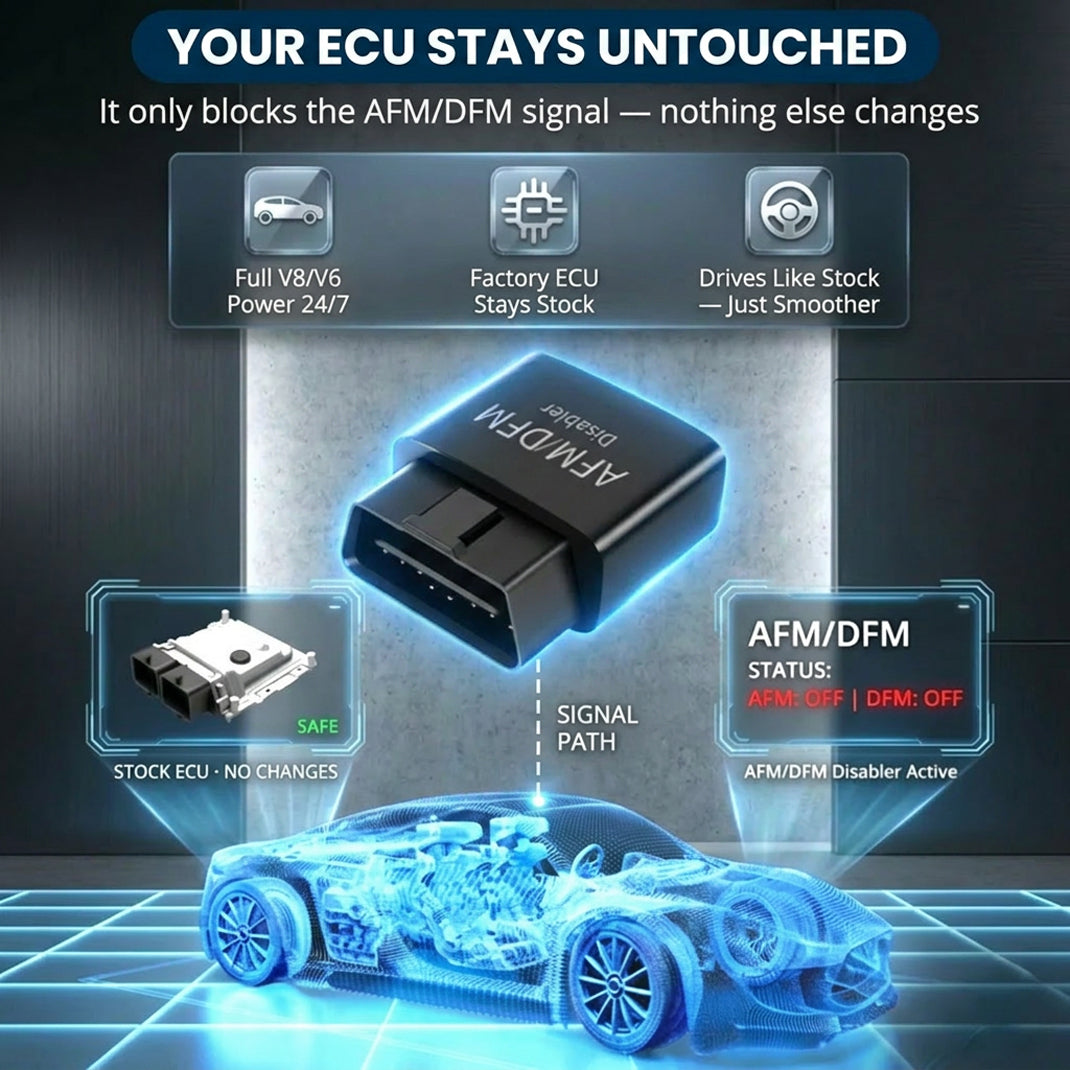
This compact OBD2 plug-in device keeps your GM engine operating in full V8 mode. It prevents rough shifting, torque converter shudder, and saves you from $5,000 plus lifter repair bills without reprogramming your ECU. Our team at Gadon.store is ready to help you confirm compatibility for your vehicle.
Why Proper Dynamic Fuel Management Understanding is Crucial? A Direct Impact on V8 Performance and Engine Lifespan
Using a Gadon AFM/DFM disabler correctly ensures your GM engine stays in full V8 mode, delivering smooth, lag-free performance and extending the engine lifespan by preventing costly $5,000 plus lifter failures caused by constant cylinder switching. Understanding how modern cylinder deactivation affects mechanical components is the first step toward long term vehicle reliability.

Dynamic Fuel Management is a sophisticated system that allows an engine to operate in several different cylinder patterns. While the goal is fuel efficiency, the mechanical reality involves a complex web of oil control valves and specialized lifters that must engage and disengage hundreds of times per minute. This constant cycling leads to significant risks for truck owners:
- Accelerated wear on VLOM or Valve Lifter Oil Manifold components.
- Increased carbon buildup on intake valves during low cylinder modes.
- Uneven thermal distribution across the engine block.
- Potential for catastrophic lifter collapse requiring an engine teardown.
Need Help Checking Vehicle Compatibility? Gadon.store is Ready 24/7
In just 2 minutes, our expert team can confirm if the Gadon™ AFM/DFM Disabler fits your exact year and model.
A Detailed 3-Step Guide to Using the Gadon Disabler for GM Owners
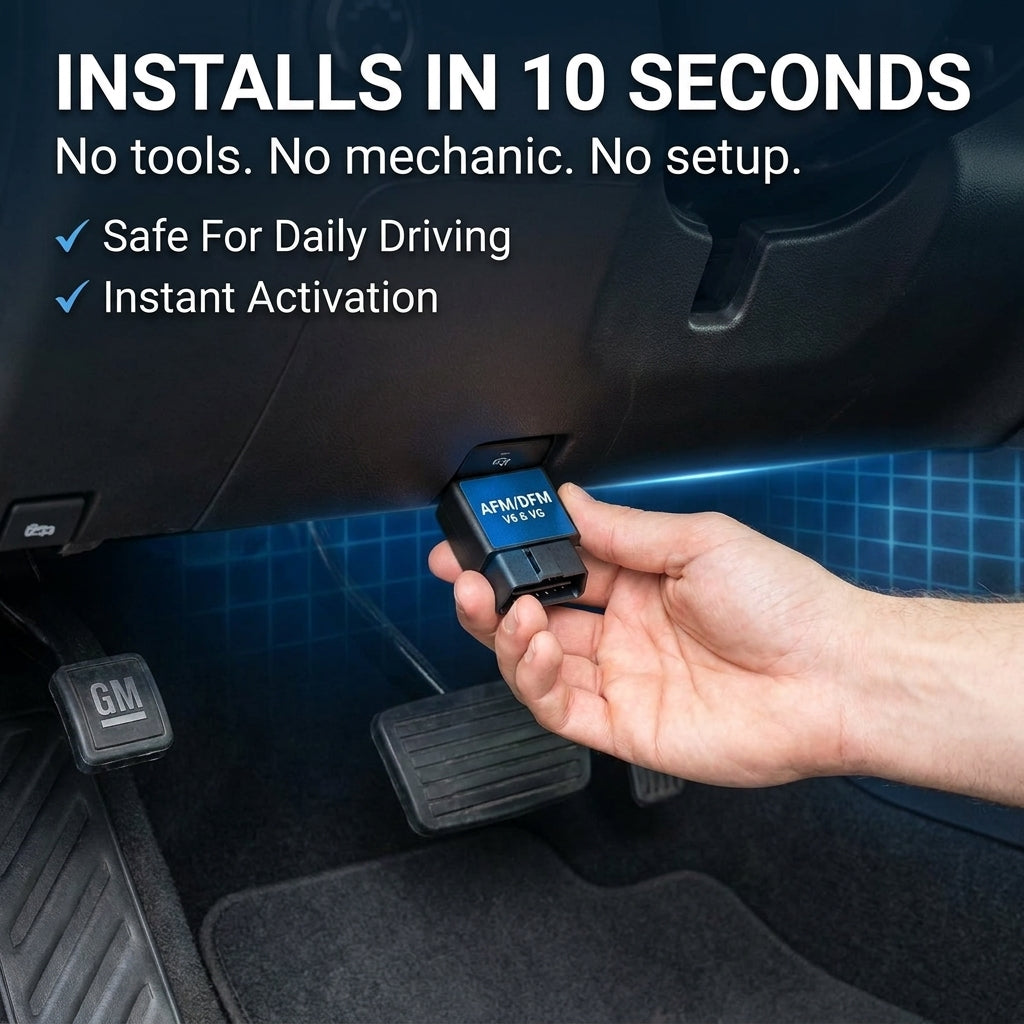
To properly disable AFM or DFM, insert the module directly into the OBD2 port located under the steering wheel while the vehicle is turned off, and ensure the indicator LEDs light up when you turn the key. This process requires zero technical expertise and avoids the risks associated with flashing the engine control unit software.
Step 1: Unbox and Locate the OBD2 Port
First, locate the OBD2 diagnostic port inside your GM truck or SUV, usually found under the driver side dashboard. Ensure your vehicle engine is completely turned off before proceeding. This port is the same connection point used by technicians to run diagnostics. It provides a direct gateway to the vehicle communication network without requiring any disassembly of the dashboard or electrical wiring.
Step 2: Plug the Device Securely
Take your Gadon™ AFM/DFM Disabler and push it firmly into the port. There are no tools required for this installation. You will notice the indicator lights flash, confirming it has successfully connected to the ECU. The plug and play nature of this module ensures that it can be installed in less than ten seconds, making it accessible for every driver regardless of their mechanical background.
Step 3: Start the Engine and Experience Full V8 Power
Start your engine. The device instantly blocks the cylinder deactivation signals without rewriting the factory software. You can now drive normally, experiencing immediate smoother throttle response, no lag, and consistent V8 power on every drive. By preventing the system from entering V4 or other reduced cylinder modes, the module eliminates the awkward hesitation often felt during highway merging or towing.
Advanced Tips: Understanding AFM/DFM on GM Vehicles
Based on our team experience at Gadon.store, understanding the technical nuances of how General Motors implements cylinder deactivation can save owners thousands in long term maintenance. Unlike older systems that simply cut half the cylinders, modern DFM utilizes 17 different firing patterns to optimize efficiency, which introduces 17 different ways for mechanical components to experience stress.

How Cylinder Deactivation Causes Lifter Failure
The constant switching between firing modes creates uneven wear on the active lifters and the camshaft lobes. Over time, this leads to premature lifter failure, bent pushrods, and costly engine rebuilds that can exceed $5,000 in parts and labor. When a lifter fails to unlock or lock correctly, it can cause a permanent misfire, triggering the dreaded check engine light and potentially damaging the entire valve train. By keeping all cylinders firing, you ensure uniform lubrication and temperature across the entire engine assembly.
Eliminating Transmission Shudder at Cruising Speeds
Many drivers experience a noticeable shudder or vibration at 35 to 60 mph when the system transitions between modes. This is often misdiagnosed as a transmission issue when it is actually the engine struggling to balance torque in reduced cylinder modes. By keeping the engine in full cylinder mode, the Gadon module balances the torque output, eliminating the awkward gear searching behavior entirely and providing a premium driving feel that factory settings often lack.
| Feature or Service | Gadon Store Standard | Technical Benefit | Owner Value |
|---|---|---|---|
| Installation Method | OBD2 Plug and Play | No ECU flashing required | Warranty safe and fast |
| Cylinder Mode | Full V8 Always | Prevents V4 transitions | Smoother driving experience |
| Lifter Protection | Maximum Coverage | Uniform mechanical wear | Saves $5,000 in repairs |
| ECU Traceability | Zero Trace | Removable without footprint | Dealership friendly |
| Support Channels | 24/7 WhatsApp and Phone | Instant expert access | Peace of mind support |
| Shipping Policy | Free Worldwide | Tracked delivery service | No hidden costs at checkout |
| Satisfaction Guarantee | 90 Day Full Refund | Risk free testing period | Trusted purchase journey |
| Compatibility Range | 90 plus GM Models | Broad software support | Fits Silverado, Sierra, Tahoe |
Troubleshooting Common Issues with the Gadon Disabler
Most installation challenges can be resolved by verifying the power supply to the diagnostic port or ensuring the module is fully seated within the connector. Our technical support team has compiled the following solutions based on feedback from thousands of successful installations to ensure your transition to full V8 power is as smooth as possible.
- Why are the lights on the device not turning on? – Solution: Check your vehicle OBD2 fuse which is often shared with the cigarette lighter or auxiliary power outlet. If the fuse is blown, the port will not provide power to the Gadon module. Replacing the fuse usually restores instant functionality.
- Will the module drain my truck battery? – Solution: The device draws a very minimal amount of power on standby mode. However, if you plan to leave your truck parked and undriven for several weeks, we recommend unplugging it to be safe. For daily drivers, there is no risk of battery depletion.
- Do I need to unplug it before taking it to the dealership? – Solution: Yes, simply unplug the Gadon disabler before your service visit. Since it leaves zero trace and does not flash the ECU, your factory warranty remains intact. The vehicle will return to its default cylinder deactivation settings the moment the device is removed.
Gadon™ AFM/DFM Disabler
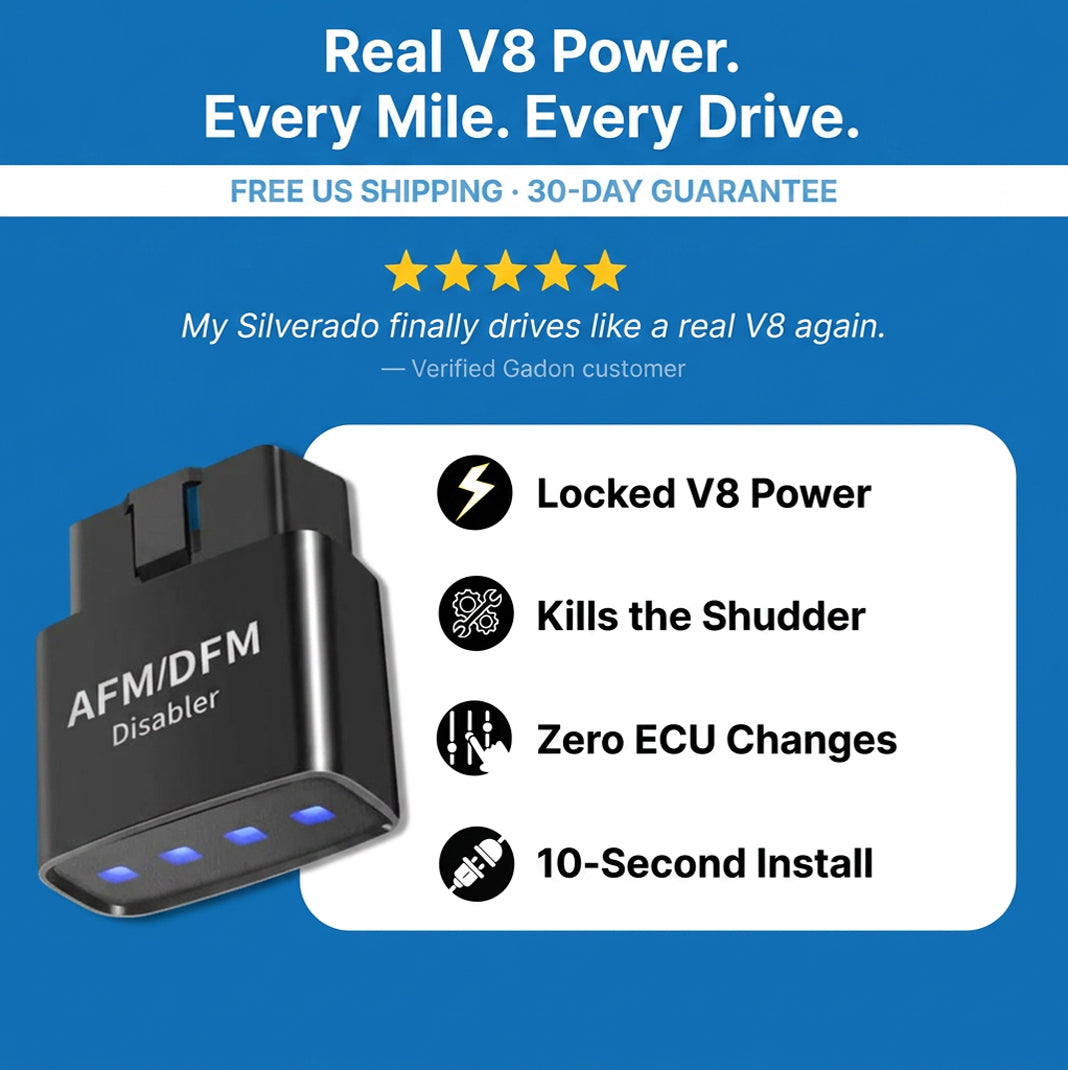
This smart module blocks your GM vehicle V4 mode, preventing sudden hesitations, oil burning issues, and devastating lifter collapses. Easy to install and remove, it preserves your engine health while protecting your factory warranty.
Which Gadon™ AFM/DFM Disabler Package is Right for You? Expert Advice
Selecting the right package depends on your fleet size and vehicle usage patterns. Every purchase from Gadon.store includes our 90-Day Guarantee and Free Shipping. Use code WELCOME to get an extra 10 percent OFF today! Our tiered pricing ensures that whether you are a single truck owner or a commercial fleet manager, you receive the highest value for your investment in engine longevity.
- For Personal Use: If you drive a single Silverado or Sierra as a daily driver, the 1 Pack Gadon™ Disabler is the ideal choice. You will feel the V8 difference immediately upon leaving your driveway.
- For Multi-Vehicle Owners: If you own a truck and your spouse drives a modern SUV like a Tahoe or Yukon, the 2 Packs option is the most popular, offering a 15 percent discount for a dual vehicle upgrade. This ensures both primary vehicles in your household are protected from lifter failure.
- For Fleets and Workshops: For commercial fleets or professional mechanics, the 3 Packs package offers a 25 percent discount, ensuring all your work trucks are shielded from costly downtime and mechanical breakdowns.
Quick FAQs on Gadon AFM/DFM Disablers
Answering these common questions helps GM owners make an informed decision about their vehicle performance strategy. Our technical experts have provided these concise answers to address concerns regarding warranty, compatibility, and mechanical benefits.
- Will it void my GM warranty or trigger a Check Engine Light? – No, the module does not reprogram the ECU and leaves no permanent footprint. Removing it returns the truck to factory settings instantly.
- Will it fit my specific truck model? – The Gadon disabler is compatible with over 90 GM models from 2005 through recent versions, including all major V8 and V6 configurations.
- Will this actually save my engine from $5,000 plus repairs? – Yes, by eliminating the mechanical stress of constant cylinder deactivation, you prevent the primary cause of modern lifter collapse.
- When will I feel the difference while driving? – Most drivers notice the absence of transmission shudder and improved throttle response within the first mile of driving.
- How hard is the installation process? – It is a simple plug and play process that takes less than ten seconds with no tools required.
Protect Your GM Engine and Regain Full V8 Power with Gadon.store
At Gadon.store, we provide a reliable plug and play solution that unleashes your engine true V8 potential while protecting it from expensive lifter failures. We are committed to high quality performance modules, zero ECU tracing, and excellent customer support. Upgrade your ride and drive with confidence knowing your engine is operating at its peak mechanical efficiency. Call our support hotline now at +1 813-408-1627 or order directly from our website to secure your vehicle today!
Need Help Checking Vehicle Compatibility? Gadon.store is Ready 24/7
In just 2 minutes, our expert team can confirm if the Gadon™ AFM/DFM Disabler fits your exact year and model.
Note: The guidance and prices in this article are for reference at the time of publishing and are subject to change. Please contact Gadon.store directly for the most current information. Always ensure your vehicle is parked safely before interacting with the OBD2 port. Contact Gadon.store for precise support for your GM vehicle.
Disclaimer: The instructions in this article are based on practical experience with GADON STORE products. Always ensure your vehicle is parked safely before interacting with the OBD2 port. Please contact contact@gadon.store for detailed support regarding your specific GM model compatibility.