DFM vs AFM: What’s the Difference in GM V8s?

DFM vs AFM: What’s the Difference in GM V8s?

AFM vs DFM represents the evolution of General Motors cylinder deactivation technology engineered to maximize fuel efficiency across V6 and V8 platforms. Understanding the mechanical differences and shared vulnerabilities between both systems is essential for owners seeking to prevent catastrophic lifter collapse, optimize throttle response, and explore reliable automotive protection solutions at Gadon Store.

GADON STORE EXCLUSIVE
Gadon™ AFM/DFM Disabler

Premium Auto Parts

Gadon™ AFM/DFM Disabler - Keep Your V8 Running Strong

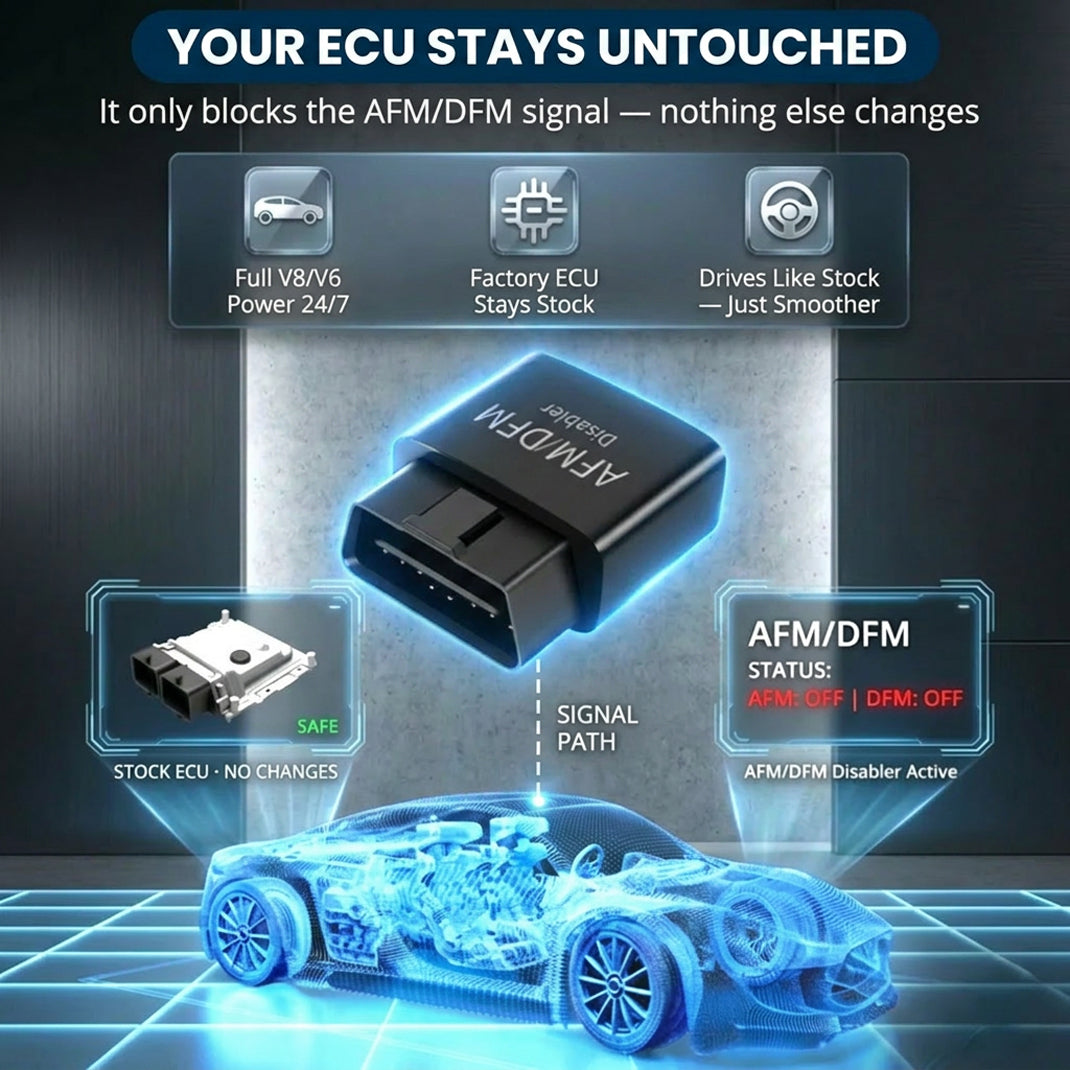
Prevent mechanical lifter failure and maintain smooth full-time V8 power with our 10-second plug-and-play solution. Operates without ECU flashing and leaves zero traces upon removal.


Hotline: +1 813-408-1627

LEARN MORE

What is AFM vs DFM? Overview and core concepts

AFM vs DFM distinguishes two generations of cylinder deactivation technology developed by General Motors to shut down specific engine cylinders under light loads. Both systems target improved fuel economy but use distinct operating patterns that affect drivability and mechanical longevity.

Active Fuel Management (AFM), originally introduced as Displacement on Demand, alternates strictly between an 8-cylinder mode and a fixed 4-cylinder mode. In contrast, Dynamic Fuel Management (DFM) utilizes 17 distinct cylinder firing combinations to continuously modulate engine displacement. Gain deeper technical insights through our comprehensive guide on DFM explained.

AFM versus DFM cylinder deactivation in a GM V8

While DFM offers seamless transitions across varied profiles, both architectures share common operational realities that truck owners experience daily:

  • Fixed vs Dynamic Modes: AFM toggles between 4 and 8 cylinders; DFM cycles between 1 and 8 cylinders dynamically.
  • Drivetrain Sensation: AFM often causes an audible exhaust tone change and noticeable shudder around 40 mph during mode switches.
  • Mechanical Lifter Dependency: Both systems utilize collapsible hydraulic valve lifters governed by high-pressure oil control solenoids.

Why is understanding AFM vs DFM important? Unmissable benefits

Understanding the operational mechanics of AFM and DFM empowers owners to eliminate severe mechanical failure risks while regaining peak V8 horsepower and immediate throttle responsiveness. Taking proactive control shields your powertrain from catastrophic component wear.

Prevents Costly Mechanical Lifter Collapse

Continuous locking and unlocking cycles place heavy mechanical stress on internal locking pins and springs inside the lifters. Disabling cylinder deactivation keeps lifters fully pressurized, avoiding collapsed hardware that damages camshaft lobes and demands $3000 to $8000 in teardown repairs.

Eliminates Drivetrain Shudder and Mode Hesitation

Torque converter clutch slip is frequently applied by the transmission controller to dampen torsional vibrations during 4-cylinder operation. Eliminating cylinder drops stops annoying cabin vibrations, restores 100% full-time torque, and delivers crisp passing power on the highway.

Reduces Oil Consumption and Ticking Noises

Deactivated cylinders generate continuous vacuum cycles that draw motor oil past piston rings into combustion chambers, causing carbon buildup. Holding all cylinders active stabilizes crankcase pressures, addressing chronic oil consumption issues and persistent cold-start lifter tick.

PROFESSIONAL DIAGNOSTICS
V500 OBD2 Scanner

Advanced Auto Tools

V500 OBD2 Scanner - Master Your Engine's Health

Identify underlying diagnostic trouble codes instantly before minor sensor faults escalate into severe engine damage. Read real-time engine data and clear check engine lights effortlessly.


Hotline: +1 813-408-1627

LEARN MORE

Detailed analysis of AFM and DFM mechanical architectures

Comparing AFM and DFM requires examining how electronic control modules interact with oil control valves and valvetrain hardware. Both systems modify valve actuation timing through oil pressure modulation to achieve target emissions metrics.

Active Fuel Management (AFM) Operating Principles

AFM relies on the Valve Lifter Oil Manifold (VLOM) assembly situated directly beneath the intake manifold. When cruising conditions occur, the engine computer energizes solenoids to direct pressurized oil to cylinders 1, 4, 6, and 7, collapsing their lifters and leaving the valves closed.

Dynamic Fuel Management (DFM) Operating Principles

DFM equips all 16 valve lifters with individual electronic solenoid controls rather than a shared 4-cylinder bank. The engine control computer computes cylinder torque requirements up to 80 times per second, dynamically selecting optimal firing patterns across 17 distinct configurations.

Non-Invasive Electronic Management vs Permanent ECM Flashing

Overriding cylinder deactivation via permanent ECM flashing risks voiding factory powertrain warranties and alters calibration checksums. Learn why plug-in modules represent the preferred path in our comparative analysis of AFM disabler vs custom tune. If you need compatibility verification for your truck, email our technical team at contact@gadon.store.

Technical Feature Active Fuel Management (AFM) Dynamic Fuel Management (DFM)
Generation Era Gen IV and early Gen V (2007-2018) Gen V updated platforms (2019-Present)
Firing Patterns 2 Modes (Fixed 8-Cylinder or 4-Cylinder) 17 Patterns (Variable 1 to 8 Cylinders)
Deactivation Hardware 8 Collapsible Lifters on 4 Cylinders 16 Collapsible Lifters on all 8 Cylinders
Switch Frequency Moderate cycle count per trip Continuous micro-adjustments per second
Primary Vulnerability Pin sticking and VLOM solenoid clogging High-frequency locking pin wear and collapse
Average Repair Cost $3000 to $4500 (Lifters & Camshaft) $4000 to $8000 (Full 16-Lifter Replacement)

Step-by-step guide on disabling AFM and DFM systems for beginners

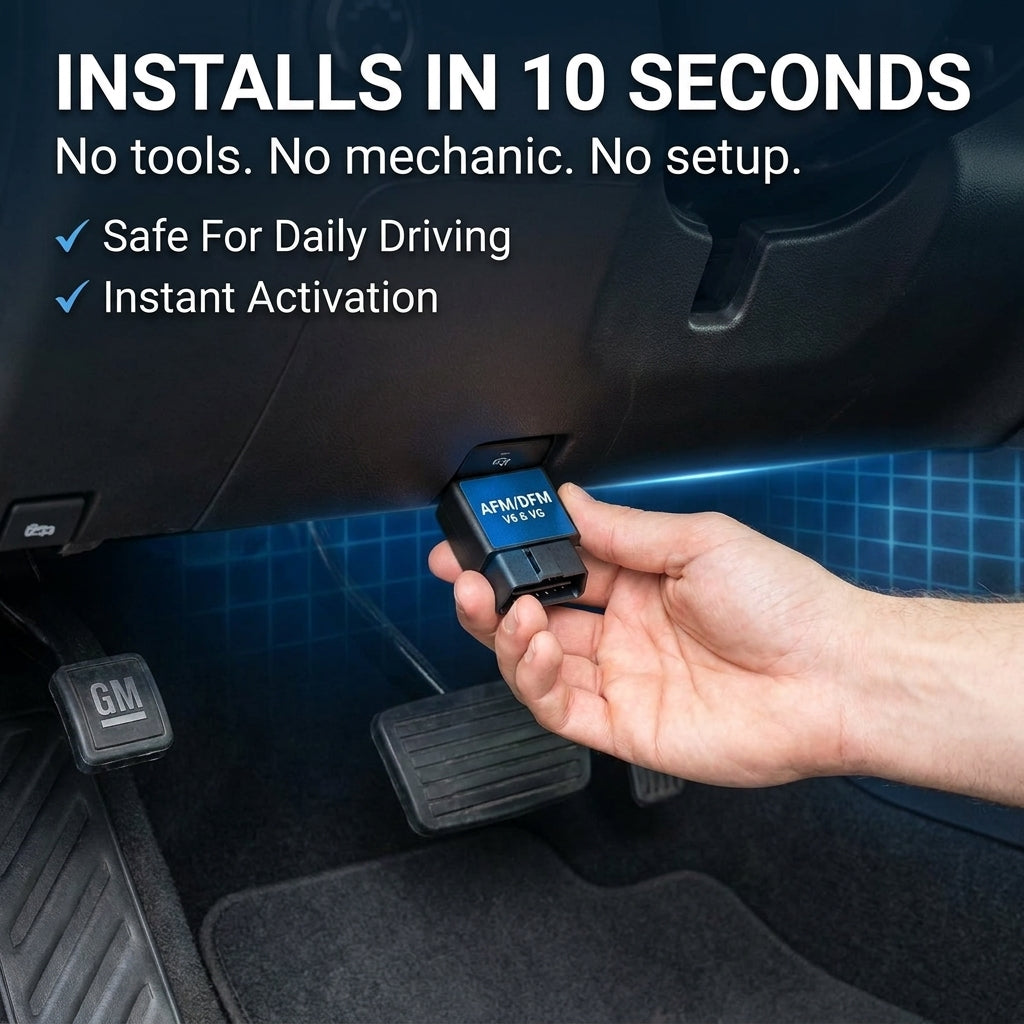
Safely disabling AFM and DFM requires a direct hardware connection to the 16-pin diagnostic link connector beneath your vehicle dashboard. Review top device ratings in our best AFM disablers roundup and follow these clear instructions.

Step 1: Pre-Installation Inspection and Engine Shutdown

Inspect the vehicle state and verify that all power accessories are deactivated.

  • Purpose: Prevent electrical transients across CAN bus lines during initial device insertion.
  • Tools needed: Flashlight or mobile illumination source.
  • Specific actions:
    • Park the vehicle on a level surface and engage the parking brake firmly.
    • Turn the ignition switch to the OFF position and remove the physical key.
    • Wait exactly 180 seconds for the electronic control modules to enter sleep mode.
  • Expected results: Instrument cluster screens and dashboard accessory lights power down completely.

Step 2: Diagnostic Port Access and Hardware Alignment

Locate the 16-pin diagnostic connector in the driver footwell.

  • Purpose: Ensure secure alignment between the disabler pins and vehicle connector receptacles.
  • Tools needed: Microfiber cleaning cloth.
  • Specific actions:
    • Locate the trapezoidal 16-pin OBD2 port situated underneath the steering column assembly.
    • Wipe away residual dust and debris from the port housing using the microfiber cloth.
    • Align the narrower edge of the disabler connector with the narrower side of the vehicle port.
  • Expected results: Clear visual alignment is established without foreign debris obstructing terminal pins.

Step 3: Module Connection and Protocol Handshake Initialization

Engage the module firmly into the diagnostic interface.

  • Purpose: Establish high-speed digital communication with the powertrain control network.
  • Tools needed: Gadon™ AFM/DFM Disabler module.
  • Specific actions:
    • Push the disabler module straight into the diagnostic port until fully seated.
    • Listen for a firm mechanical click confirming positive pin engagement.
    • Wait exactly 10 seconds while the internal microcontroller synchronizes with CAN bus protocols.
  • Expected results: Module LED indicators illuminate, signaling complete physical and electrical contact.

Step 4: System Verification and Dashboard Health Check

Power the vehicle ignition and monitor dashboard instrument indicators.

  • Purpose: Confirm that the disabler module communicates without triggering diagnostic fault codes.
  • Tools needed: Vehicle ignition key.
  • Specific actions:
    • Turn the ignition key to the ON position without cranking the starter motor.
    • Verify that the LED sequence on the disabler flashes in sequence before turning solid.
    • Turn the key to START, crank the engine, and inspect the instrument cluster for Check Engine Lights.
  • Expected results: Engine idles smoothly with zero warning lamps illuminated on the dashboard display.

Step 5: Test Drive Confirmation and Road Performance Logging

Conduct a short road test to confirm full-time V8 operation.

  • Purpose: Verify that cylinder deactivation remains fully suppressed under steady cruising loads.
  • Tools needed: None.
  • Specific actions:
    • Drive the vehicle onto an open highway or steady roadway at 45 to 65 mph.
    • Monitor the instrument cluster economy screen to confirm the V8 indicator remains active constantly.
    • Apply light throttle adjustments and verify the total absence of hesitation or cabin shudder.
  • Expected results: 100% full-time V8 displacement is maintained across all driving conditions.

Discover detailed diagnostic connection principles in our dedicated OBD2 disabler guide.

Mistakes to avoid when managing AFM and DFM systems? Expert advice from Gadon Store

Improper handling or incorrect accessory usage can result in communication errors and parasitic battery draw. Avoid these common installation mistakes:

  • Plugging in hardware while the engine is running: Hot-plugging creates transient voltage spikes across communication pins. Gadon Store Advice: Always turn the ignition completely OFF before inserting or removing any diagnostic module.
  • Using unshielded OBD2 splitters: Inferior splitter cables create data packet collision between connected devices. Gadon Store Advice: Utilize a Heavy Duty OBD2 Y-Splitter Cable engineered with internal signal isolation shielding.
  • Neglecting prolonged storage drainage: Diagnostic ports supply continuous battery power that can slowly deplete charge over weeks of inactivity. Gadon Store Advice: Unplug diagnostic modules if parking your vehicle unattended for more than 7 consecutive days.
GARAGE ESSENTIALS
Gadon Cordless Impact Wrench 3-in-1 Kit

Heavy Duty Tools

Gadon Cordless Impact Wrench 3-in-1 Kit - Unstoppable Torque

Execute heavy truck maintenance, wheel changes, and suspension upgrades with high-output brushless torque and long-lasting lithium battery power built for serious mechanics.


Hotline: +1 813-408-1627

LEARN MORE

Frequently Asked Questions about AFM vs DFM (FAQs)

Is DFM just a newer name for AFM?

No. AFM uses a fixed 4-cylinder mode, whereas DFM runs 17 dynamic patterns. Both deactivate cylinders and share the same mechanical lifter weak point.

Which cylinder system is worse for engine reliability?

Both carry identical failure risks. DFM experiences more switching cycles, but a collapsed lifter scoring the camshaft creates costly repairs on either system.

How do I know whether my truck has AFM or DFM?

It depends on your model year and engine code. Send your Year, Make, Model, and Engine details to contact@gadon.store for instant confirmation.

Does the Gadon disabler support both AFM and DFM?

Yes. The disabler locks in full-time cylinder mode across both AFM and DFM platforms. One plug-in module covers both systems reliably.

Does installing a plug-in disabler require custom tuning?

No. It operates as a plug-in, non-invasive device without ECM flashing, returning your vehicle to factory status instantly upon removal.

Elevate your engine durability with solutions from Gadon Store

Safeguarding your GM V8 against lifter collapse demands proven, non-invasive hardware solutions. Eliminate cylinder deactivation risks, restore responsive V8 power, and protect your investment today. For expert fitment assistance and priority technical support, connect with the Gadon Store team via WhatsApp, dial +1 813-408-1627, or reach us directly at contact@gadon.store.

Note: The content in this article is for reference purposes and is compiled from the experience of the Gadon Store team. For in-depth consultation tailored to your specific case, please contact us directly.

Back to blog