AFM Disabler vs Custom Tune: Which is Better?
An afm disabler vs custom tune comparison is essential for General Motors owners seeking to unlock full engine potential and prevent expensive mechanical repairs. This in-depth guide on optimizing GM vehicle performance will help you understand which solution fits your driving style and budget. By analyzing technical data from gadon.store, you gain insights into protecting your factory warranty and maintaining full cylinder power. Mastering these engine management strategies ensures your truck remains reliable on the road for many miles ahead.
Gadon™ AFM/DFM Disabler
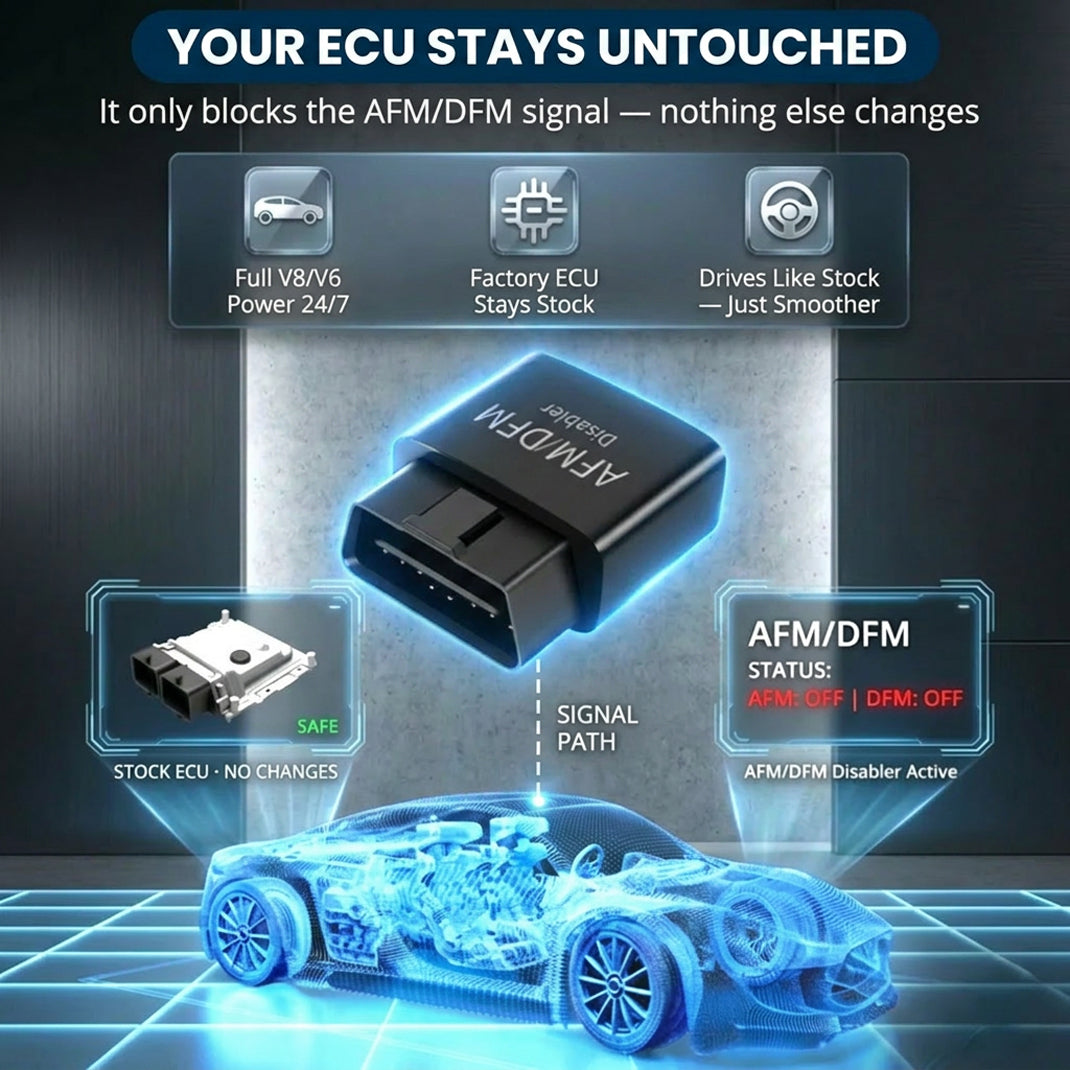
This compact OBD2 plug-in device keeps your GM engine operating in full V8 mode. It prevents rough shifting, torque converter shudder, and saves you from massive lifter repair bills without reprogramming your ECU. Our team at Gadon.store is ready to help you confirm compatibility for your vehicle.
Why Proper AFM Disabler vs Custom Tune is Crucial? A Direct Impact on V8 Performance and Engine Lifespan
Using a Gadon AFM/DFM disabler correctly ensures your GM engine stays in full V8 mode, delivering smooth, lag-free performance and extending the engine lifespan by preventing costly lifter failures caused by constant cylinder switching. Understanding the technical nuances between a hardware module and a software tune is vital for any truck owner who values long-term reliability. The choice you make impacts everything from transmission health to resale value. Many drivers face the dilemma of choosing a plug-and-play device or a permanent software modification. Each path has distinct consequences for the mechanical integrity of your vehicle. Failing to address Active Fuel Management issues often leads to catastrophic internal engine damage that results in repair bills exceeding five thousand dollars. By choosing a high-quality solution from Gadon Store, you mitigate these risks and ensure consistent power delivery across all driving conditions.
- • Eliminates the transition lag between four and eight cylinder modes.
- • Prevents excessive oil consumption and carbon buildup on piston rings.
- • Protects delicate lifters and pushrods from uneven hydraulic pressure.
- • Maintains the structural integrity of the engine block by balancing thermal loads.
Need Help Checking Vehicle Compatibility? Gadon.store is Ready 24/7
In just 2 minutes, our expert team can confirm if the Gadon™ AFM/DFM Disabler fits your exact year and model.
A Detailed 3-Step Guide to Using AFM Disabler vs Custom Tune for GM Owners
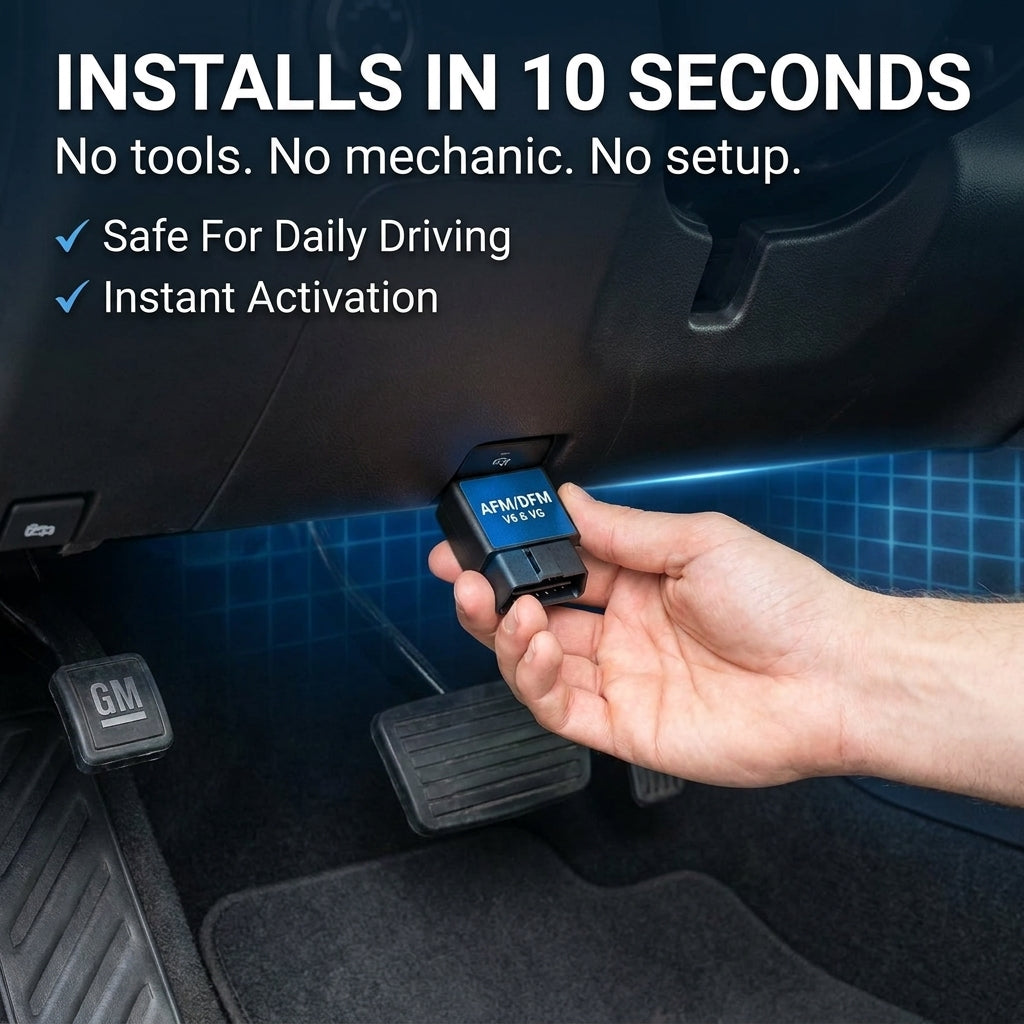
Choosing between a hardware module and a software tune involves different levels of commitment and technical steps. A disabler provides an immediate, reversible solution while a tune requires deep access to the vehicle computer system. For most users, the simplicity of a plug-in device outweighs the complexity of reflashing the ECU. The following steps outline how to implement the hardware approach, which is the most common method for preserving warranties. We recommend verifying your specific engine type before starting this process to ensure full compatibility with the selected module. Following this protocol guarantees that your truck operates at peak performance without the need for professional mechanic intervention. This process takes less than one minute and provides instantaneous results that you can feel during the next drive.
Step 1: Unbox and Locate the OBD2 Port
First, locate the OBD2 diagnostic port inside your GM truck or SUV, usually found under the driver side dashboard near the steering column. Ensure your vehicle engine is completely turned off before proceeding to avoid any electrical interference. This port serves as the communication gateway to the Engine Control Unit and allows the Gadon module to interact with the vehicle software safely. Clean the area around the port to ensure a solid physical connection without dust or debris blocking the pins.
Step 2: Plug the Device Securely
Take your Gadon™ AFM/DFM Disabler and push it firmly into the port. There are no tools required for this installation. You will notice the indicator lights flash, confirming it has successfully connected to the ECU and is receiving power. The zero trace technology ensures that the device does not leave permanent markers in the vehicle memory. This step is critical as a loose connection could lead to intermittent signals or failure to block the cylinder deactivation command.
Step 3: Start the Engine and Experience Full V8 Power
Start your engine and observe the smooth idle. The device instantly blocks the cylinder deactivation signals without rewriting the factory software. You can now drive normally, experiencing immediate smoother throttle response, no lag, and consistent V8 power on every drive. This hardware solution bypasses the complex logic of fuel management systems while maintaining the factory fuel maps. You will notice the vehicle no longer attempts to drop into four cylinder mode during highway cruising.
Advanced Tips: Understanding AFM/DFM on GM Vehicles
Active Fuel Management and Dynamic Fuel Management are technologies designed to improve fuel economy by deactivating specific cylinders under light load conditions. While the concept is efficient on paper, the mechanical reality often involves increased wear and tear on engine components. Over time, the repeated engagement and disengagement of lifters cause metal fatigue and oil flow issues. Professional mechanics often cite these systems as the primary cause of premature engine failure in modern V8 platforms. Understanding the mechanical interaction between the VLOM and the hydraulic lifters is essential for recognizing the value of a disabler. By keeping all cylinders active, you ensure uniform lubrication and temperature distribution throughout the engine block.
How Cylinder Deactivation Causes Lifter Failure
The constant switching between V4 and V8 modes creates uneven wear on the active lifters. Over time, this leads to premature lifter failure, bent pushrods, and costly engine rebuilds that can exceed five thousand dollars in parts and labor. The specialized lifters used in AFM systems are prone to collapsing when the locking pin fails to engage correctly. This results in a distinct ticking sound and a significant loss of engine compression. Preventing this cycle is the most effective way to preserve the long-term health of your Silverado or Sierra engine.
Eliminating Transmission Shudder at Cruising Speeds
Many drivers experience a noticeable shudder or vibration at cruising speeds between thirty-five and sixty miles per hour. This sensation occurs when the torque converter clutch struggles to manage the pulsing torque of a four cylinder engine in a heavy truck. By keeping the engine in full-cylinder mode, the Gadon module balances the torque, eliminating the awkward gear-searching behavior entirely. This provides a much more refined driving experience and prevents excessive heat buildup in the transmission fluid.
Performance Comparison: AFM Disabler vs Custom Tune Options
When evaluating the differences between hardware modules and software modifications, it is helpful to look at the technical specifications and impact on vehicle longevity. A disabler is a passive device that interacts with the communication bus, while a tune is an active rewrite of the engine operating system. The following table provides a clear breakdown of how different solutions compare across several critical performance metrics for General Motors vehicles. This data is compiled based on expert analysis and user feedback from the Gadon Store community.

| Solution Type | Installation Method | Warranty Safety | Primary Benefit |
|---|---|---|---|
| Gadon AFM Disabler | OBD2 Plug-In | Zero Trace Removal | Prevents Lifter Failure |
| Custom Dyno Tune | Software Flash | Voids Warranty | Maximum Horsepower |
| Handheld Programmer | OBD2 Flash | Leaves Flash Footprint | Adjustable Profiles |
| Mechanical Delete | Internal Hardware Swapping | Permanent Modification | Physical Reliability |
| Generic OBD2 Module | OBD2 Plug-In | Possible Trace | Basic V8 Mode |
| Mail-in ECU Flash | Hardware Removal | Highly Detectable | Speed Limiter Removal |
| Software Bypass | Laptop Interface | Permanent Change | Specific Data Logging |
| Performance Chip | Wire Splicing | Damages Harness | Basic Signal Modification |
Gadon™ AFM/DFM Disabler
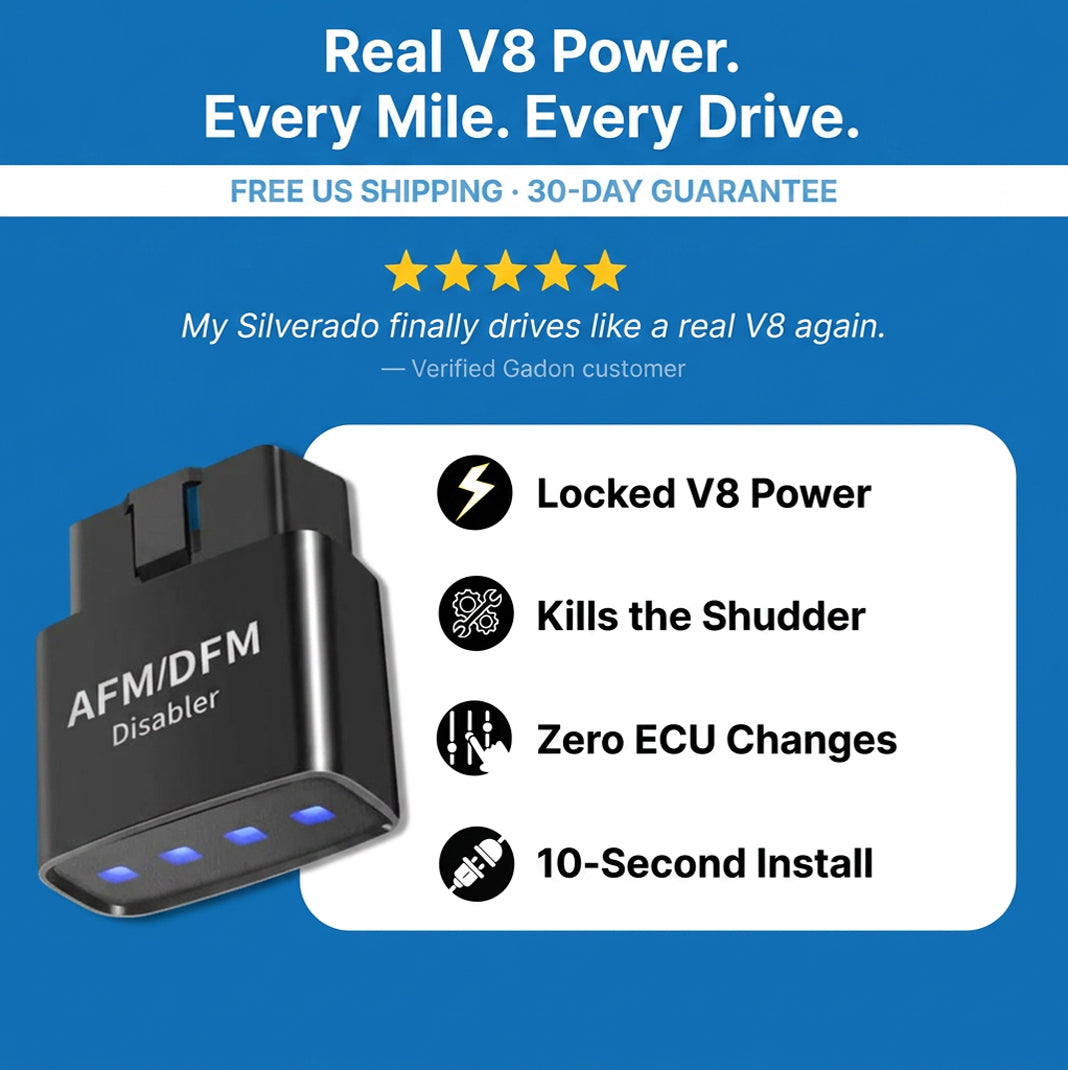
This smart module blocks your GM vehicle V4 mode, preventing sudden hesitations, oil burning issues, and devastating lifter collapses. Easy to install and remove, it preserves your engine health while protecting your factory warranty.
Troubleshooting Common Issues with AFM Disabler vs Custom Tune
Dealing with electronic modules requires a basic understanding of your vehicle electrical system and how diagnostic ports function. Most issues reported by users are related to power delivery or physical connection rather than internal device failure. It is important to remember that these modules are designed to be secondary to the engine main operating system. If you encounter unexpected behavior, the first step is always to verify the integrity of the OBD2 connection. Our support team at Gadon Store has compiled a list of the most frequent technical queries to help you maintain continuous V8 operation. Addressing these minor issues promptly ensures that your engine remains protected from the risks associated with cylinder deactivation.
- • Why are the lights on the device not turning on? → Solution: Check your vehicle OBD2 fuse, which is often shared with the cigarette lighter or auxiliary power outlet. If the fuse is blown, the port will not provide the necessary voltage to the Gadon module.
- • Will the module drain my truck battery? → Solution: The device draws a very minimal amount of power on standby. However, if you plan to leave your truck parked and undriven for several weeks, we recommend unplugging it to be completely safe from battery depletion.
- • Do I need to unplug it before taking it to the dealership? → Solution: Yes, simply unplug the Gadon disabler before your service visit. Since it leaves zero trace and does not flash the ECU, your factory warranty remains intact.
- • Is it normal for the module to feel warm during operation? → Solution: Yes, slight heat generation is normal as the internal processor manages communication with the vehicle data bus. Ensure there is adequate airflow around the port area.
Which Gadon™ AFM/DFM Disabler Package is Right for You? Expert Advice
Selecting the right package depends on your fleet size and long-term vehicle maintenance goals. We offer several configurations to meet the needs of individual truck owners and commercial operators alike. Every purchase from Gadon Store includes our 90-Day Guarantee and Free Shipping. Use code WELCOME to get an extra discount today. Whether you drive a single Silverado for daily commuting or manage a fleet of GMC Sierra work trucks, our solutions are designed to scale with your requirements. Investing in multiple units is a cost-effective strategy for families with multiple GM vehicles or workshops that specialize in truck performance. Our expert advisors are available to help you determine the most efficient way to protect your investment.

- For Personal Use: The 1 Pack Gadon™ Disabler is the perfect choice for a single daily driver. You will feel the V8 difference immediately and enjoy a smoother ride.
- For Multi-Vehicle Owners: If you own a Silverado and your spouse drives a Tahoe, the 2 Packs package is ideal, offering a significant discount for a dual-vehicle upgrade.
- For Fleets and Workshops: The 3 Packs package offers the highest value, ensuring all your work trucks are protected against lifter failure and transmission shudder.
Quick FAQs on Gadon AFM/DFM Disablers
Truck owners often have technical questions regarding the long-term impact of using an OBD2 module. Our goal is to provide transparent and accurate information to help you make the right choice for your vehicle. The following frequently asked questions address the most common concerns regarding warranty, compatibility, and performance results. These answers are based on extensive field testing and feedback from over fifty thousand satisfied customers who have successfully implemented our technology. By understanding these core concepts, you can drive with confidence knowing that your engine is operating in its most reliable state.
- Will it void my GM warranty or trigger a Check Engine Light? No. The Gadon disabler does not reprogram your ECU or flash the computer. Simply unplug it before taking it to the dealership, and it leaves zero trace. Your factory warranty remains intact.
- Will it fit my specific truck model? It is compatible with over ninety GM models manufactured between 2005 and the current year, including Silverado, Tahoe, Sierra, Yukon, and Escalade.
- Will this actually save my engine from expensive repairs? Absolutely. AFM/DFM cylinder deactivation is a leading cause of premature lifter failure. By keeping the engine firing on all cylinders uniformly, the device prevents the uneven wear that leads to massive rebuild costs.
- When will I feel the difference while driving? Within the first mile of operation. Most drivers report an immediate elimination of shudder at cruising speeds and much smoother throttle response.
- How hard is the installation process? It takes less than ten seconds. You need absolutely no tools and no mechanical experience to successfully install the module into the OBD2 port.
Need Help Checking Vehicle Compatibility? Gadon.store is Ready 24/7
In just 2 minutes, our expert team can confirm if the Gadon™ AFM/DFM Disabler fits your exact year and model.
Protect Your GM Engine and Regain Full V8 Power with Gadon.store
At Gadon.store, we provide a reliable, plug-and-play solution that unleashes your true V8 potential while protecting it from expensive lifter failures. We are committed to high-quality performance modules, zero ECU tracing, and excellent customer support. Upgrade your ride and drive with confidence knowing your engine is safe. Call our support hotline now at +1 813-408-1627 or order directly from our website to secure your vehicle today!
Disclaimer: The instructions and prices in this article are for reference at the time of publishing and are subject to change. Please contact Gadon.store directly for the most current information. Always ensure your vehicle is parked safely before interacting with the OBD2 port. Contact Gadon.store for precise support for your GM vehicle.