Stop the 5.3 Lifter Tick Before Your Engine Fails
5.3 lifter tick fix strategies represent a crucial technical intervention for preserving your GM vehicle, resolving the annoying mechanical tapping noises and preventing catastrophic engine block failure. This in-depth guide on managing active cylinder systems will help you find a highly reliable, OBD2 plug and play path to restore true V8 horsepower and torque while successfully avoiding expensive mechanical repair bills through the verified automotive technology resources at gadon.store right away to protect your truck.
Gadon™ AFM/DFM Disabler
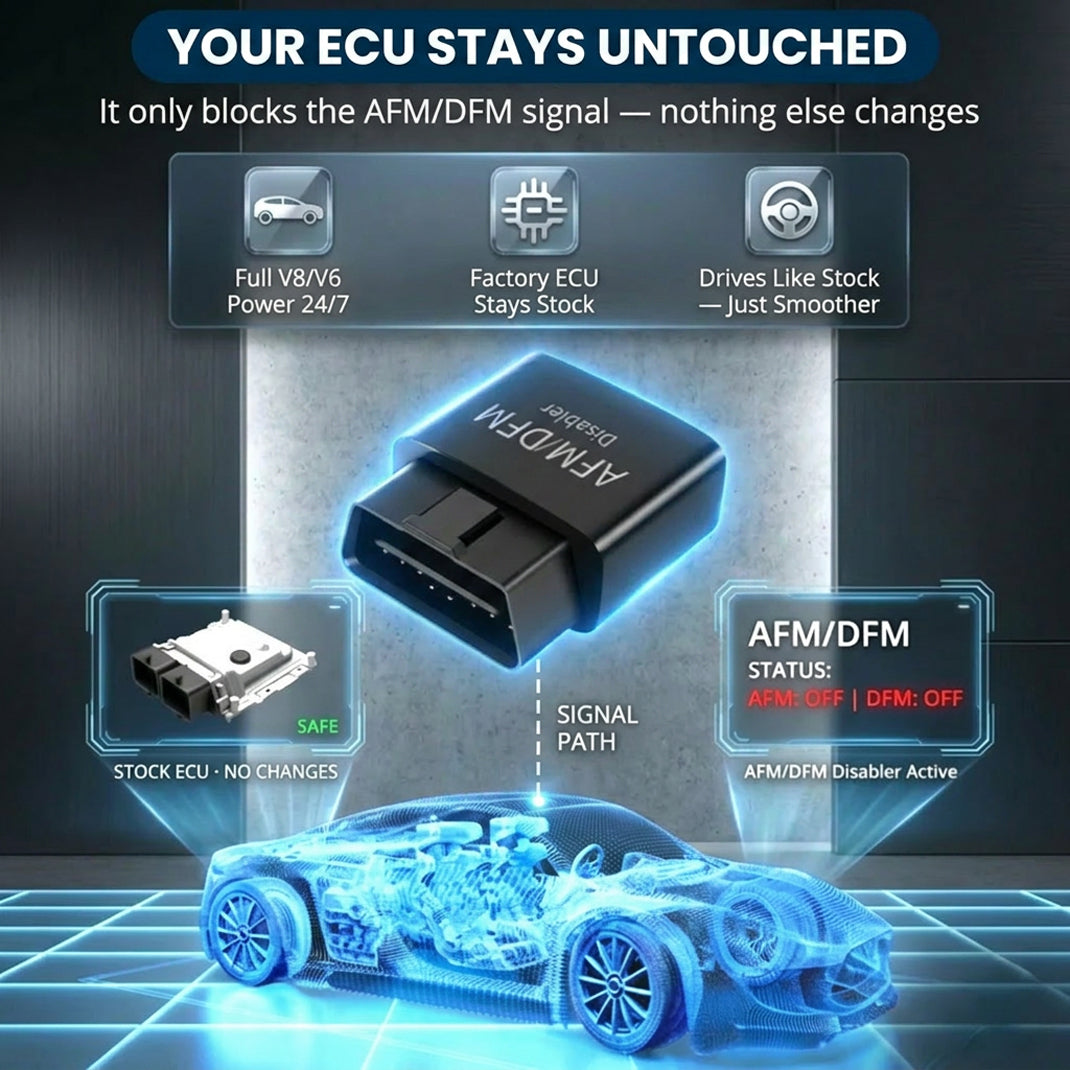
This compact OBD2 plug-in device keeps your GM engine operating in full V8 mode. It prevents rough shifting, torque converter shudder, and saves you from massive repair bills without reprogramming your ECU. Our team at Gadon.store is ready to help you confirm compatibility for your vehicle.
Need Help Checking Vehicle Compatibility? Gadon.store is Ready 24/7
In just 2 minutes, our expert team can confirm if the Gadon™ AFM/DFM Disabler fits your exact year and model.
Why Proper 5.3 Lifter Tick Fix is Crucial? A Direct Impact on V8 Performance and Engine Lifespan
Using a Gadon AFM/DFM disabler correctly ensures your GM engine stays in full V8 mode, delivering smooth, lag-free performance and extending the engine lifespan by preventing costly five thousand dollar lifter failures caused by constant cylinder switching.

The 5.3 liter V8 engine is a very popular choice for GM truck owners. It delivers strong towing capability and reliable horsepower. However, the fuel management system introduces serious mechanical vulnerabilities. These vulnerabilities often lead to severe ticking noises under the hood.
Addressing this issue early saves thousands of dollars in mechanical repairs. A loud tapping sound from the engine is a major warning. This noise usually points to a collapsed hydraulic lifter. Ignoring this symptom leads to rapid valvetrain damage.
Your engine camshaft can sustain deep physical grooves. This wear destroys engine performance. It also introduces metal shavings into your motor oil. Metal shavings damage critical bearings and the oil pump. Eventually, the entire engine block will fail completely.
Replacing hydraulic lifters is a very difficult job. It requires removing the cylinder heads and intake manifold. Most professional repair shops charge high labor fees. This repair often exceeds five thousand dollars at dealership rates. This cost is a major financial burden for owners.
Preventive measures are highly recommended by experienced technicians. Disabling the fuel management system is the easiest path. Our team at Gadon.store has verified the benefits of continuous cylinder operation. Your vehicle runs much smoother as a result.
The system stops switching back and forth between V4 and V8 modes. This relieves pressure on fragile lifter components. Keeping your engine in V8 mode balances thermal expansion. It prevents uneven wear on active components.
Here are the primary technical indicators of impending lifter damage:
- A consistent tapping or ticking noise during cold starting cycles.
- Engine misfire codes such as P0300 displaying on your diagnostic scanner.
- A noticeable drop in engine oil pressure during normal driving.
- Excessive exhaust smoke due to oil burning in deactivated cylinders.
- Rough transmission shifting behavior when the vehicle changes modes.
Protecting your vehicle does not have to be difficult. A simple plug and play OBD2 module provides instant relief. It keeps all cylinders firing in harmony. This balances thermal load across the engine block.
By maintaining constant cylinder pressure, you protect the valve springs. You also preserve the integrity of the camshaft lobes. This simple step extends the total lifespan of your motor.
Every purchase from Gadon.store includes our ninety-day guarantee and free shipping. Use code WELCOME to get an extra ten percent off today on your purchase.
A Detailed 3-Step Guide to Using 5.3 Lifter Tick Fix for GM Owners
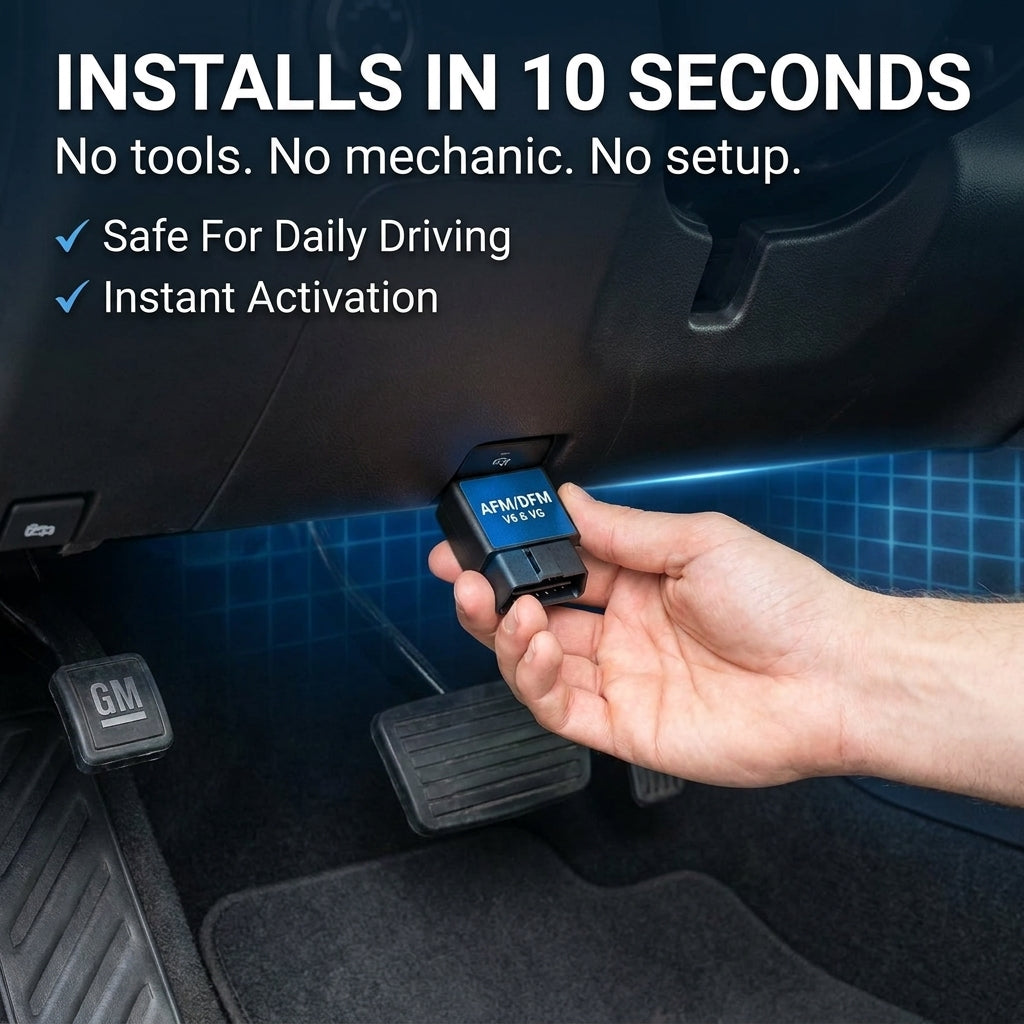
To prevent lifter failure, insert the disabler module directly into the OBD2 diagnostic port located under the steering wheel while the vehicle is turned off, start the engine, and verify the continuous V8 operation status immediately.
Installing your performance module is exceptionally simple. The entire setup takes under ten seconds to complete. You do not need to reprogram the vehicle computer. No complex tools or mechanical knowledge are required.
This non-invasive approach protects your factory warranty. You can unplug the device at any moment. This leaves zero trace on the vehicle computer. Follow these three detailed steps to protect your engine block.
Step 1: Unbox and Locate the OBD2 Port
First, unbox your brand new Gadon disabler module carefully. Inspect the pins on the connector for any transit damage. Ensure your vehicle is parked on a flat surface. Turn the engine off completely before inserting the device.
Now, locate the OBD2 diagnostic port. This port is situated beneath the dashboard on the driver side. It is typically positioned within a few inches of the hood release lever. Use a flashlight if the area is dark. Keep the following details in mind:
- Clear any dust or debris from the diagnostic port contacts.
- Ensure the ignition key is completely removed from the switch.
- Avoid using tools to force the connection open.
- Confirm the diagnostic port is secure under the dash.
Step 2: Plug the Device Securely
Next, align the connector of the Gadon™ AFM/DFM Disabler with the diagnostic port receptacle. Push the module firmly into the slot. You will hear or feel a secure connection click. Do not twist the module while inserting it.
The onboard light emitting diodes will begin to flash. This visual signal confirms active communication with the ECU. The module draws nominal voltage directly from the vehicle battery. It is designed to fit snug and secure. Monitor these key details:
- The indicator lights should flash in a sequential pattern.
- Verify the module is seated fully flush with the receptacle.
- Do not force the connection if pins are misaligned.
- Ensure no wires are pinched near the driver side pedals.
Step 3: Start the Engine and Experience Full V8 Power
Now, insert your key and start the engine of the truck. The module immediately blocks cylinder deactivation commands. Your dashboard fuel economy display will show active V8 status. It will remain in this mode constantly. This prevents V4 switching entirely.
Take your truck for a short drive on local roads. You will experience smoother throttle response immediately. There is no more lag when accelerating from a stop sign. The annoying transmission shudder is completely gone. Observe these improvements:
- Immediate power delivery when merging onto the highway.
- A quieter exhaust sound without sudden drone changes.
- Consistent engine operating temperatures across all situations.
- No more awkward shifting sensations under light load.
Advanced Tips: Understanding AFM/DFM on GM Vehicles
Active Fuel Management and Dynamic Fuel Management are fuel saving systems that cause engine wear by repeatedly shutting down lifters, leading to mechanical wear and torque converter shudder.
General Motors introduced Active Fuel Management to meet federal economy standards. This system deactivates half of the cylinders during cruising. Dynamic Fuel Management is a more complex system. It can run the engine in seventeen different cylinder combinations.
While these technologies reduce fuel consumption slightly, they increase mechanical complexity. This trade-off is highly controversial among truck owners. The mechanical components are subjected to extreme wear cycles. Let us examine the internal engineering of these systems.
How Cylinder Deactivation Causes Lifter Failure
The special lifters used in active fuel systems are highly complex. They contain internal spring mechanisms and locking pins. When the system commands deactivation, solenoids redirect the engine oil pressure. This oil pressure releases the internal lifter pins.

The lifter collapses to stop valve movement. This locking and unlocking action happens thousands of times during a trip. The high frequency wears out internal components. Eventually, the locking pins fail to engage. This leaves the lifter permanently collapsed.
A collapsed lifter causes severe engine misfires. It also causes the loud ticking noise on startup. Deactivated cylinders run much cooler during V4 cycles. Cooler cylinders allow oil to leak past the rings. This burnt oil creates hard carbon deposits.
Carbon deposits lock the lifter pins completely. This accelerates the mechanical damage. These physical issues can be avoided by keeping the engine in V8 mode. The Gadon disabler does this reliably. Keep these mechanical consequences in mind:
- Bent pushrods that prevent valve operation.
- Scratched camshaft lobes requiring complete engine disassembly.
- Severe engine misfires that trigger limp mode safety protocols.
- Clogged catalytic converters from excessive oil burning.
Eliminating Transmission Shudder at Cruising Speeds
Many GM truck owners notice a distinct vibration when driving. This vibration is known as torque converter shudder. It typically occurs between thirty-five and sixty miles per hour. The sensation feels like driving over rumble strips on the road.
This issue is closely tied to the cylinder deactivation process. The engine output drops during V4 mode. To compensate, the transmission lock-up clutch slips to absorb the engine pulses. This slipping creates the shudder. Continuous slipping accelerates wear on clutch linings.
Using our disabler module eliminates this wear mechanism. The engine delivers consistent torque output at all times. The transmission clutch remains locked securely without slipping. This keeps your driveline operating smoothly and quietly. Take note of these operational benefits:
- Eliminate slipping torque converter clutch issues.
- Prevent expensive transmission rebuild bills.
- Keep the cabin quiet and vibration free.
- Improve overall shift quality during acceleration.
Technical Comparison of Engine Operating States
This detailed technical table compares standard fuel management systems with Gadon OBD2 modules and permanent mechanical deletes across critical metrics like cost, warranty safety, and repair complexity.
Understanding your options is important for protecting your truck. There are three common paths available to owners. The first option is keeping the factory system active. This carries high mechanical risks. The second option is utilizing a plug and play Gadon module. This represents a safe and affordable balance.
The third option is a full mechanical delete kit. This requires engine teardown and voids warranties. Let us look at the detailed comparison below:
| Technical Metric | Factory AFM DFM System | Gadon OBD2 Disabler | Mechanical Delete Kit |
|---|---|---|---|
| Cylinder Configuration | Cycles between V4 and V8 | Maintains continuous V8 | Permanent physical V8 |
| Lifter Failure Risk | High over time | Extremely low risk | Eliminated entirely |
| Vehicle Warranty | Maintains standard status | Safe leaves zero trace | Voided by modifications |
| Installation Time | Pre-installed from factory | Under ten seconds | Twenty to thirty hours |
| Average Retail Price | Zero upfront cost | Under one hundred dollars | Over three thousand dollars |
| Driveline Vibration | Frequent shudder issues | Resolved instantly | Resolved after tuning |
| Reversibility Option | Not applicable | Fully reversible instantly | Permanent modification |
| Computer Modification | Standard factory programming | No ECU flashing required | Requires permanent flash |
As the comparison demonstrates, the Gadon OBD2 disabler offers an effective, non-invasive method. It bypasses system risks without the high labor costs of physical deletion. This is a highly efficient option. Many truck owners choose this route to save money.
It provides immediate protection against common valve train issues. Our team has rigorously tested these modules under harsh conditions. The results show continuous performance gains without compromising electronic components.
Troubleshooting Common Issues with 5.3 Lifter Tick Fix
Simple troubleshooting steps like verifying the OBD2 fuse, removing the module before long storage periods, and checking port cleanliness can resolve any connectivity issues immediately.
Electronic modules from Gadon are built to high technical standards. However, occasionally users can experience small setup issues. These minor issues are usually easy to solve with basic troubleshooting steps. Let us cover the common situations. Follow these recommendations from our technical support team:
-
Why are the lights on the device not turning on?
Solution: Check your OBD2 fuse in the cabin fuse box. This fuse is often shared with the cigarette lighter socket. If the fuse is blown, the module will not receive power. Replacing the fuse resolves this issue immediately. -
Will the module drain my truck battery?
Solution: The device enters a low power standby mode when the engine is off. However, if you plan to store your vehicle for several weeks without driving, unplugging the module is recommended to conserve battery power. -
Do I need to unplug it before taking it to the dealership?
Solution: Yes, simply remove the Gadon disabler from the port before your scheduled maintenance appointment. Because it does not modify the ECU software, it leaves zero digital footprint on your vehicle. -
Why is my engine still showing a ticking noise after plugging in?
Solution: The module is a preventive tool designed to stop active cylinder switching before mechanical failure occurs. If your lifter is already physically damaged or collapsed, you must replace the hardware first. -
Can I use the disabler with an aftermarket performance tuner?
Solution: You cannot use two OBD2 plug-in devices simultaneously without a diagnostic splitter cable. If your tuner already modifies the cylinder deactivation settings, using the Gadon module is unnecessary.
Our customer support team is available 24/7 to resolve any technical questions you have. Contact us via WhatsApp or hotline for help. We are dedicated to keeping your truck running safely.
Always check the physical status of the OBD2 port before plugging in. Dusty ports can interfere with communications. Clean the port area with compressed air if needed.
Which Gadon™ AFM/DFM Disabler Package is Right for You? Expert Advice
We offer tailored product packages starting at ninety-nine dollars with our discount codes, featuring free worldwide shipping and a comprehensive ninety-day return policy for peace of mind.
Selecting the correct product package depends on your specific fleet or household needs. We have designed several options to assist you. For personal use on a single daily driver, the single pack is the logical path. It provides immediate engine protection.
If you have multiple GM vehicles in your family, the multi-vehicle packages deliver great value. They allow you to protect all your trucks. Let us look at the detailed package offerings available:
- Single Vehicle Package: This includes one premium Gadon disabler module. It is an excellent choice for a single Silverado, Tahoe, or Sierra owner. This package qualifies for our standard introductory discount codes.
- Dual Vehicle Package: This includes two separate modules. This package is popular for households with a truck and a family SUV. It offers a fifteen percent discount on the total purchase price.
- Fleet and Workshop Package: This includes three modules at a twenty-five percent discount. It is designed for commercial operators and automotive mechanics who manage multiple work trucks.
Every order from Gadon.store includes a complete ninety-day money-back guarantee. If you are not fully satisfied, return the product for a full refund. Additionally, we provide free tracked shipping worldwide. This ensures your package arrives safely at your doorstep.
Our customer satisfaction is our top priority. Our modules are extensively tested to ensure durability. We stand behind our products with complete confidence.
Gadon™ AFM/DFM Disabler
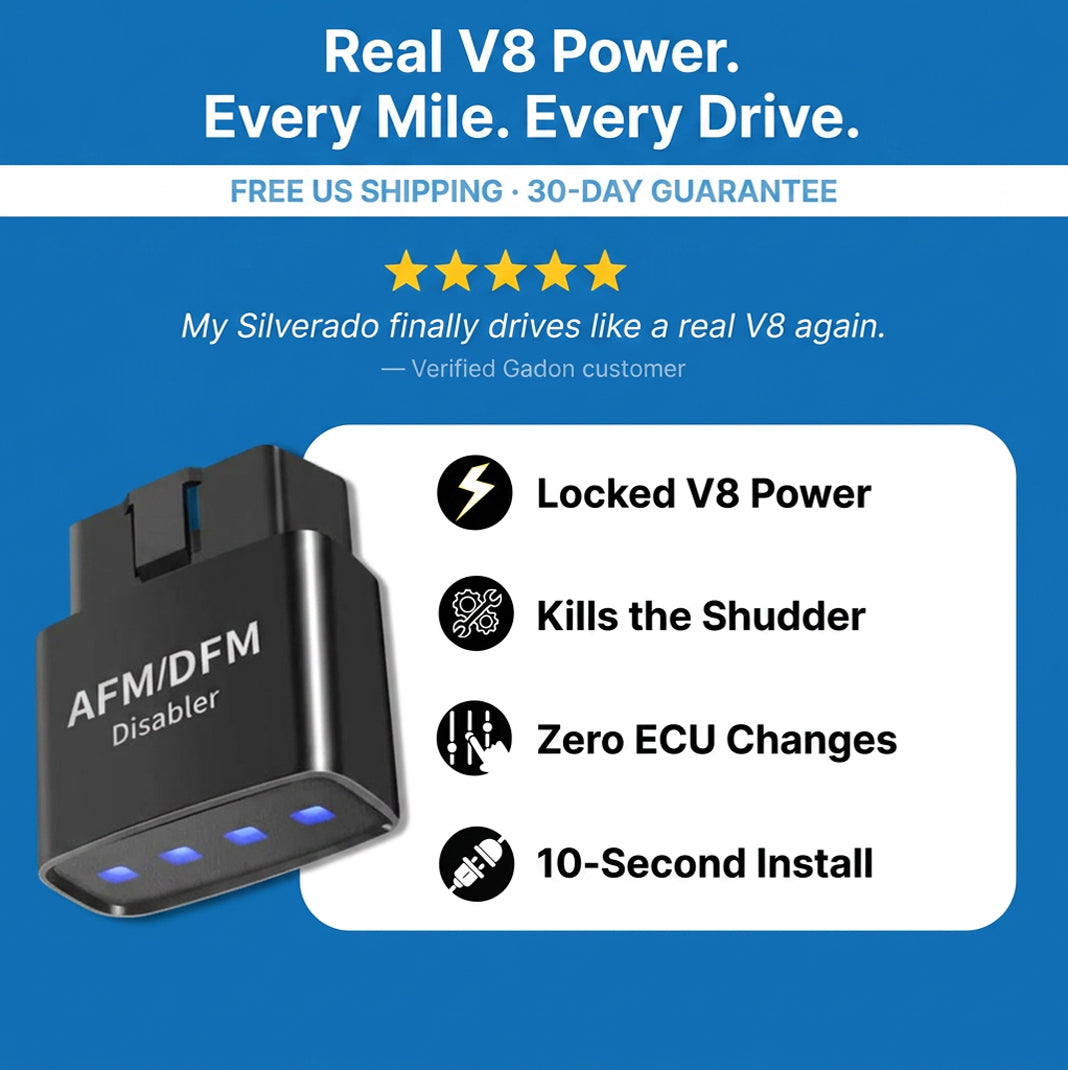
This smart module blocks your GM vehicle's V4 mode, preventing sudden hesitations, oil burning issues, and devastating lifter collapses. Easy to install and remove, it preserves your engine's health while protecting your factory warranty.
Quick FAQs on Gadon AFM/DFM Disablers
Find fast and precise answers regarding vehicle warranty protection, model compatibility ranges, diagnostic codes, and installation details.
Understanding how the technology affects your vehicle is key. We have collected the most frequent inquiries from customers. Review these answers to learn more about protecting your V8 engine block:
-
Will it void my GM warranty or trigger a Check Engine Light?
No. The Gadon disabler does not reprogram your ECU or flash the computer. Simply unplug it before taking it to the dealership, and it leaves zero trace. Your factory warranty stays fully intact and it will not trigger a check engine light. -
Will it fit my specific truck model?
Yes, it is compatible with many GM models manufactured within the compatibility range, including the Silverado, Tahoe, Sierra, Yukon, Escalade, and Suburban. It works with both V6 and V8 engines equipped with AFM or DFM systems. -
Will this actually save my engine from expensive repairs?
Absolutely. AFM/DFM cylinder deactivation is a leading cause of premature lifter failure in GM engines. By keeping the engine firing on all cylinders uniformly, the Gadon device prevents the uneven wear that leads to major engine rebuilds. -
When will I feel the difference while driving?
Within the first mile. Most drivers report an immediate elimination of shudder at cruising speeds, smoother throttle response, stronger acceleration from a dead stop, and an overall better driving experience. -
How hard is the installation process?
It takes less than ten seconds. You need absolutely no tools and no mechanical experience. If you can plug a charger into your phone, you can plug the Gadon module into your diagnostic port.
Need Help Checking Vehicle Compatibility? Gadon.store is Ready 24/7
In just 2 minutes, our expert team can confirm if the Gadon™ AFM/DFM Disabler fits your exact year and model.
Protect Your GM Engine and Regain Full V8 Power with Gadon.store
At Gadon.store, we provide a reliable, plug-and-play solution that unleashes your engine true V8 potential while protecting it from expensive lifter failures. We are committed to high-quality performance modules, zero ECU tracing, and excellent customer support. Upgrade your ride and drive with confidence.
Call our support hotline now at +1 813-408-1627 or order directly from our website to secure your vehicle today!
Disclaimer: The instructions in this article are based on practical experience with GADON STORE products. Always ensure your vehicle is parked safely before interacting with the OBD2 port. Please contact contact@gadon.store for detailed support regarding your specific GM model compatibility. Note: The guidance and prices in this article are for reference at the time of publishing and are subject to change. Please contact Gadon.store directly for the most current information.