Disable DFM on Your Silverado: Keep It V8
To disable dfm silverado trucks and maintain full V8 power, drivers can utilize a plug and play OBD2 module from gadon.store. This in-depth guide on the process of cylinder deactivation bypass will help you understand the technical benefits of keeping your GM engine running on all cylinders constantly. You will learn how this simple device prevents shudder, protects the valvetrain from premature wear, and preserves your factory warranty without resetting or flashing the engine computer safely.
Need Help Checking Vehicle Compatibility? Gadon.store is Ready 24/7
In just 2 minutes, our expert team can confirm if the Gadon™ AFM/DFM Disabler fits your exact year and model.
Why Proper Disable DFM Silverado is Crucial? A Direct Impact on V8 Performance and Engine Lifespan
Using a Gadon AFM/DFM disabler correctly ensures your GM engine stays in full V8 mode, delivering smooth, lag-free performance and extending the engine lifespan by preventing costly five thousand dollar lifter failures caused by constant cylinder switching. This technical approach addresses the root cause of mechanical fatigue in modern pushrod engines, securing consistent lubrication and balanced cylinder pressures.
Dynamic Fuel Management and Active Fuel Management were designed to assist vehicle manufacturers in meeting stringent fuel economy standards. However, the real-world operational challenges for truck owners are substantial. When an engine constantly switches between full displacement and partial cylinder modes, the internal components experience uneven thermal expansion and rapid changes in mechanical stress. This shifting process can place heavy demands on the valvetrain, leading to premature wear of critical moving parts.
The lifters inside these V8 engines rely on complex internal locking pins to enable or disable individual valves. When the engine controller commands a cylinder to shut down, oil pressure is redirected to retract these locking pins. Under constant cycling, these small pins are subjected to high friction and heavy mechanical loads. Over time, the locking mechanisms can wear down, fail to engage, or stick completely, resulting in a collapsed lifter that can damage the camshaft and trigger expensive repairs.
By utilizing a high-quality plugin module, you prevent the engine computer from executing these cylinder shutdown cycles. Keeping all eight cylinders firing uniformly ensures that oil pressure remains stable and distributed evenly across the entire valvetrain. This uniform operation reduces mechanical hot spots, prevents oil consumption issues related to inactive pistons, and preserves the structural integrity of your engine over long distances.
Furthermore, the driving experience is greatly improved. Many truck owners notice an annoying delay in acceleration when the engine transitions from four-cylinder mode back to full power. This hesitation can be problematic during highway merging or towing heavy loads. Forcing V8 mode provides immediate throttle response and eliminates the awkward power lag, allowing your vehicle to perform exactly as a powerful V8 truck should.
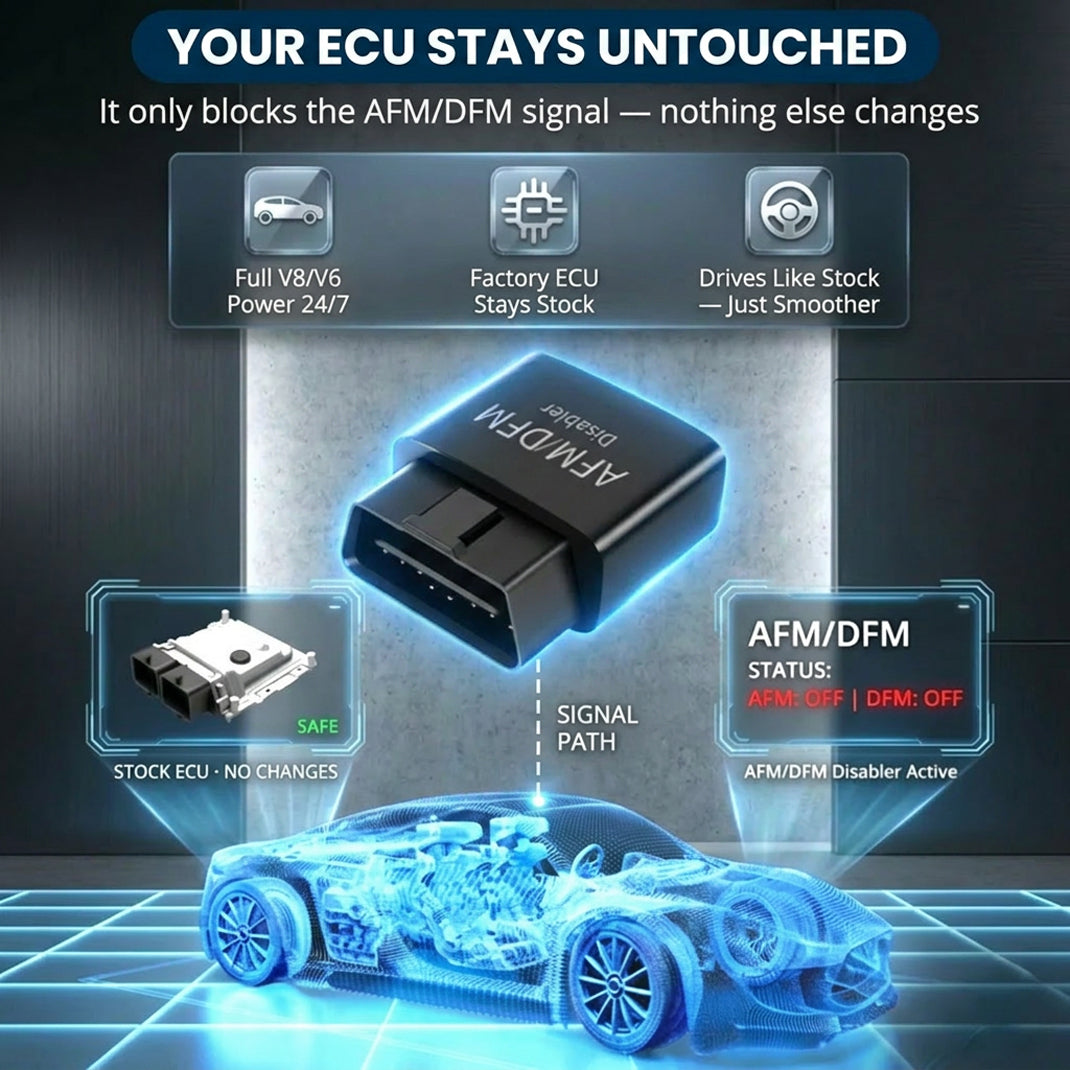
Gadon™ AFM/DFM Disabler
This compact OBD2 plug-in device keeps your GM engine operating in full V8 mode. It prevents rough shifting, torque converter shudder, and saves you from $5,000+ lifter repair bills without reprogramming your ECU. Our team at Gadon.store is ready to help you confirm compatibility for your vehicle.
Need Help Checking Vehicle Compatibility? Gadon.store is Ready 24/7
In just 2 minutes, our expert team can confirm if the Gadon™ AFM/DFM Disabler fits your exact year and model.
A Detailed 3-Step Guide to Using Disable DFM Silverado Modules for GM Owners
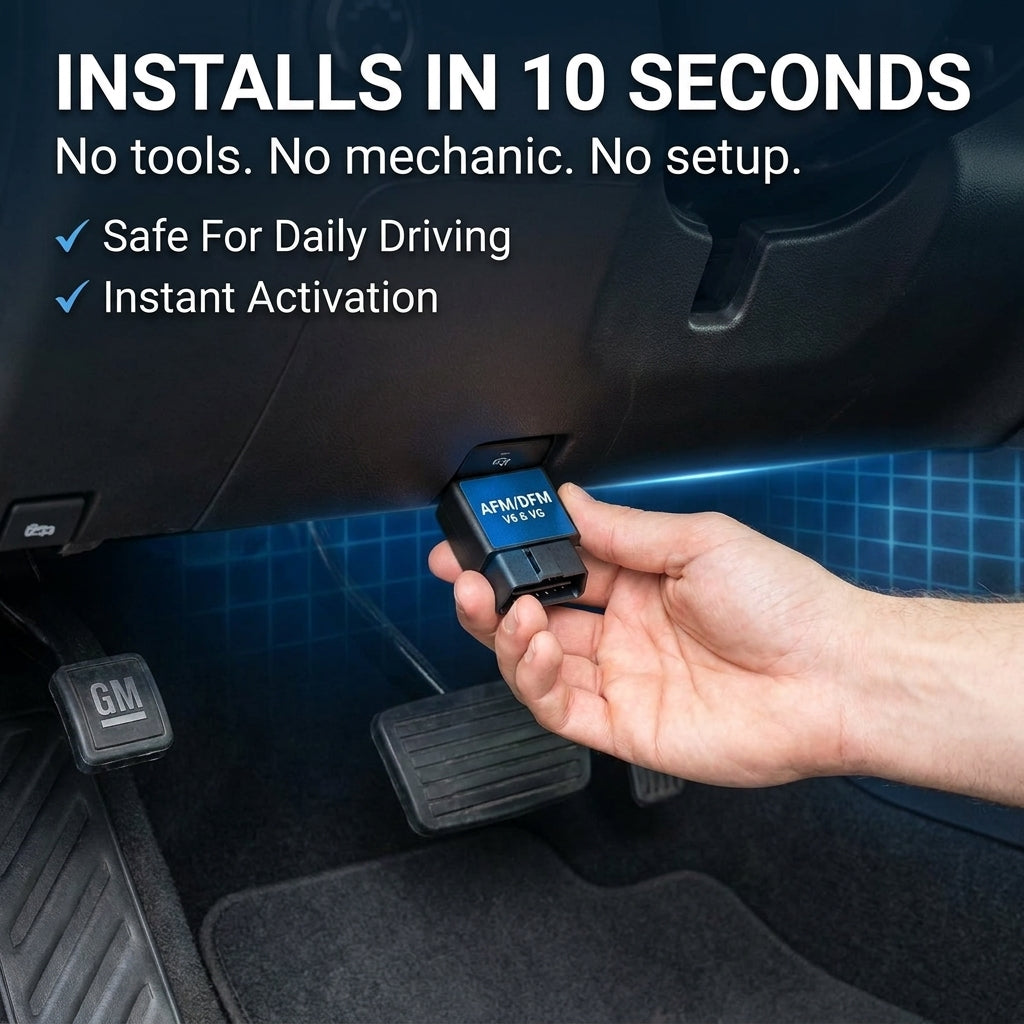
Installing a mechanical bypass module is a highly accessible and efficient way to protect your vehicle engine. This simple plug-and-play process requires zero mechanical tools, wire splicing, or complex tuning software. By interacting directly with the onboard diagnostics port, the device communicates smoothly with the vehicle systems, preventing cylinder deactivation from activating while maintaining complete safety for the factory electronics.
Unlike traditional engine tunes that overwrite the factory software inside the engine control unit, a plug-in module acts as an inline filter. It translates data in real-time, meaning that if you ever need to restore the vehicle to its original factory configuration, you can simply pull the device out. This section outlines the straightforward steps to install and enjoy your module safely.
Step 1: Unbox and Locate the OBD2 Port
Begin by carefully opening the product box and verifying the contents. Ensure that your vehicle engine is fully turned off and the ignition key is completely removed before attempting installation. Locate the diagnostic port underneath the driver side dashboard, typically positioned directly below the steering wheel column. This port is a trapezoidal female connector featuring sixteen individual pin slots. Ensure the area around the port is clean and free of dust or debris that could interfere with the electrical pins.
Step 2: Plug the Device Securely
Align the male connector of your Gadon AFM/DFM Disabler with the vehicle diagnostic port. Push the module firmly into the slot until it sits flush against the bracket. You will instantly notice the built-in light-emitting diode indicators on the face of the device begin to illuminate or flash. This visual sequence indicates that the module has successfully established power and is performing an electronic handshake with the engine control unit. Avoid wiggling the device excessively during insertion to protect the diagnostic pins.
Step 3: Start the Engine and Experience Full V8 Power
Insert your key and start the vehicle engine. The module will automatically begin communicating, instructing the engine computer to remain in full V8 operating mode continuously. As you begin driving, you will notice an immediate improvement in throttle response, especially during stop-and-go city driving or highway cruising. The annoying transmission shift hesitations and cabin vibrations associated with cylinder drop will be gone, providing you with a highly refined and consistent driving experience from the very first mile.
Advanced Tips: Understanding AFM/DFM on GM Vehicles
To fully appreciate the benefits of disabling cylinder deactivation, it is helpful to look closely at how these technologies operate inside modern V8 engines. GM has utilized two primary generations of cylinder shutdown systems over the years, known as Active Fuel Management and Dynamic Fuel Management. While they share the same goal of reducing fuel consumption, their mechanical execution is quite different, and both introduce specific wear risks to the valvetrain.

Active Fuel Management is the older system, designed to deactivate a fixed set of four cylinders under light engine loads, effectively transforming your V8 engine into a V4. Dynamic Fuel Management is a much more sophisticated evolution, capable of shutting down anywhere from one to seven cylinders depending on the immediate torque requirements. This dynamic system employs seventeen different firing patterns, making the mechanical transitions highly frequent and complex.
How Cylinder Deactivation Causes Lifter Failure
The lifter mechanism in a standard pushrod V8 engine relies on a steady flow of pressurized oil to maintain its height and follow the camshaft lobes. In engines equipped with cylinder deactivation, special lifters are installed on the cylinders that are designed to shut down. These lifters feature an outer sleeve and an inner body, held together by tiny locking pins. When the engine computer decides to deactivate a cylinder, it activates a solenoid in the lifter oil manifold assembly, directing high-pressure oil to push these locking pins inward.

Once the pins are pushed in, the outer sleeve of the lifter is allowed to compress and move up and down freely without transferring any motion to the pushrod. The valve remains closed, trapping air inside the cylinder to act as a spring. While this prevents fuel consumption in that chamber, it subjects the deactivated lifter to intense physical strain. When the system decides to reactivate the cylinder, oil pressure is released, and the locking pins must snap back into place under spring tension. This rapid, high-impact engagement can wear down the pins, causing them to shear or fail to seat correctly, leading to a collapsed lifter and costly engine damage.
Eliminating Transmission Shudder at Cruising Speeds
Another widespread complaint among truck owners is a noticeable shudder or vibration when driving at highway speeds, typically between thirty-five and sixty miles per hour. This phenomenon is closely tied to the operation of the torque converter clutch in the automatic transmission. When the engine drops down to four-cylinder mode, it naturally produces more torsional vibrations because the power strokes are spaced further apart. To prevent these vibrations from reaching the cabin, the transmission control computer is programmed to slip the torque converter clutch slightly.
This constant clutch slippage creates excess heat and accelerates the wear of the friction lining inside the torque converter. Over time, the degraded fluid and worn clutch surfaces produce a distinct shuddering sensation, often described as driving over rumble strips. By using an OBD2 bypass module to keep the engine running on all eight cylinders permanently, you eliminate these severe engine vibrations at the source. The transmission control computer no longer needs to slip the clutch continuously, which reduces operating temperatures, eliminates the shudder, and extends the lifespan of your transmission.
Troubleshooting Common Issues with Cylinder Deactivation Disablers
While plug-and-play disabler modules are designed to operate automatically and reliably, understanding a few basic troubleshooting scenarios can help you resolve minor issues quickly and keep your vehicle operating smoothly. The vast majority of difficulties reported by users are simple to address and do not indicate a fault with the device itself. Below is a detailed breakdown of common situations and their practical solutions.
-
• Why are the indicator lights on the module not turning on?
Solution: The diagnostic port relies on a dedicated fuse to provide electrical power to any plugged-in device. In many GM trucks, this fuse is shared with the auxiliary power outlets or the cigarette lighter. If you have previously used a high-draw accessory in those outlets, the fuse may have blown. Inspect your vehicle fuse box, replace the corresponding fuse if necessary, and check if the device power lights illuminate. -
• Will the plugged module drain the battery of the truck?
Solution: Our device is engineered with an advanced power-management system that monitors vehicle electrical activity. When you turn off the engine, the module detects the drop in alternator voltage and enters a low-power sleep mode after a brief period. However, if you plan to store your truck in a garage for several consecutive weeks without starting it, we advise unplugging the module from the diagnostic port to prevent any small parasitic draw on your battery. -
• Is it necessary to unplug the module before going to a dealership?
Solution: Yes, we strongly recommend removing the device before any scheduled maintenance or dealership visit. Technicians will need to connect their diagnostic scanners to the same OBD2 port to perform vehicle health checks. Since our module does not write any files or modify the software inside the engine control unit, simply pulling it out leaves no electronic footprint behind, ensuring your factory warranty remains secure. -
• What should I do if the vehicle displays a warning light after installation?
Solution: This rare occurrence typically happens if the module is plugged in or wiggled while the ignition switch is in the on position. This can disrupt the initial communication handshake between the module and the computer. To resolve this, turn off the engine, unplug the module, wait for two minutes to allow the vehicle computers to power down completely, and then insert the module firmly before starting the engine again.
Which Gadon™ AFM/DFM Disabler Package is Right for You? Expert Advice
Selecting the right product configuration is an important step in protecting your automotive investment. At Gadon store, we offer several packaging options tailored to different driving needs, whether you are an individual enthusiast looking to protect a single daily driver, a family managing multiple GM vehicles, or a commercial operator maintaining a work fleet. Our structured packages ensure you receive excellent value while matching your specific vehicle requirements.
For single vehicle owners, the standard package provides everything needed to safeguard your engine and restore full V8 performance immediately. If you have multiple GM vehicles in your household, such as a Silverado truck and a Yukon SUV, our multi-pack options offer substantial savings and ensure both vehicles remain protected against valvetrain failures. Review the technical package comparison below to determine the ideal choice for your garage.
| Product Package | Target User | Included Items | Value Offer |
|---|---|---|---|
| 1 Pack | Single Vehicle Owners | 1x Gadon™ AFM/DFM Disabler | Standard Pricing with WELCOME code |
| 2 Packs | Families and Dual GM Trucks | 2x Gadon™ AFM/DFM Disablers | Fifteen Percent Savings |
| 3 Packs | Work Fleets and Shops | 3x Gadon™ AFM/DFM Disablers | Twenty Five Percent Savings |
| Return Policy | All Buyers | Risk Free Evaluation Period | Ninety Day Money Back Guarantee |
| Shipping Policy | All Orders | Tracked Delivery Package | Free Shipping |
| Compatibility Check | All Customers | Verification via WhatsApp | Free 2 Minute Service |
| Technical Support | All Customers | Via Hotline: +1 813-408-1627 | Free Consultation |
| Warranty Safety | All Customers | Zero Trace Engine Operation | Full Warranty Protection |
Every transaction at Gadon store is backed by our customer-first policies, designed to provide peace of mind. We offer a ninety day refund period, allowing you to test the performance improvements on your own daily drives without financial risk. Our dedicated support team is always standing by to answer your technical questions and assist with installation guidance.
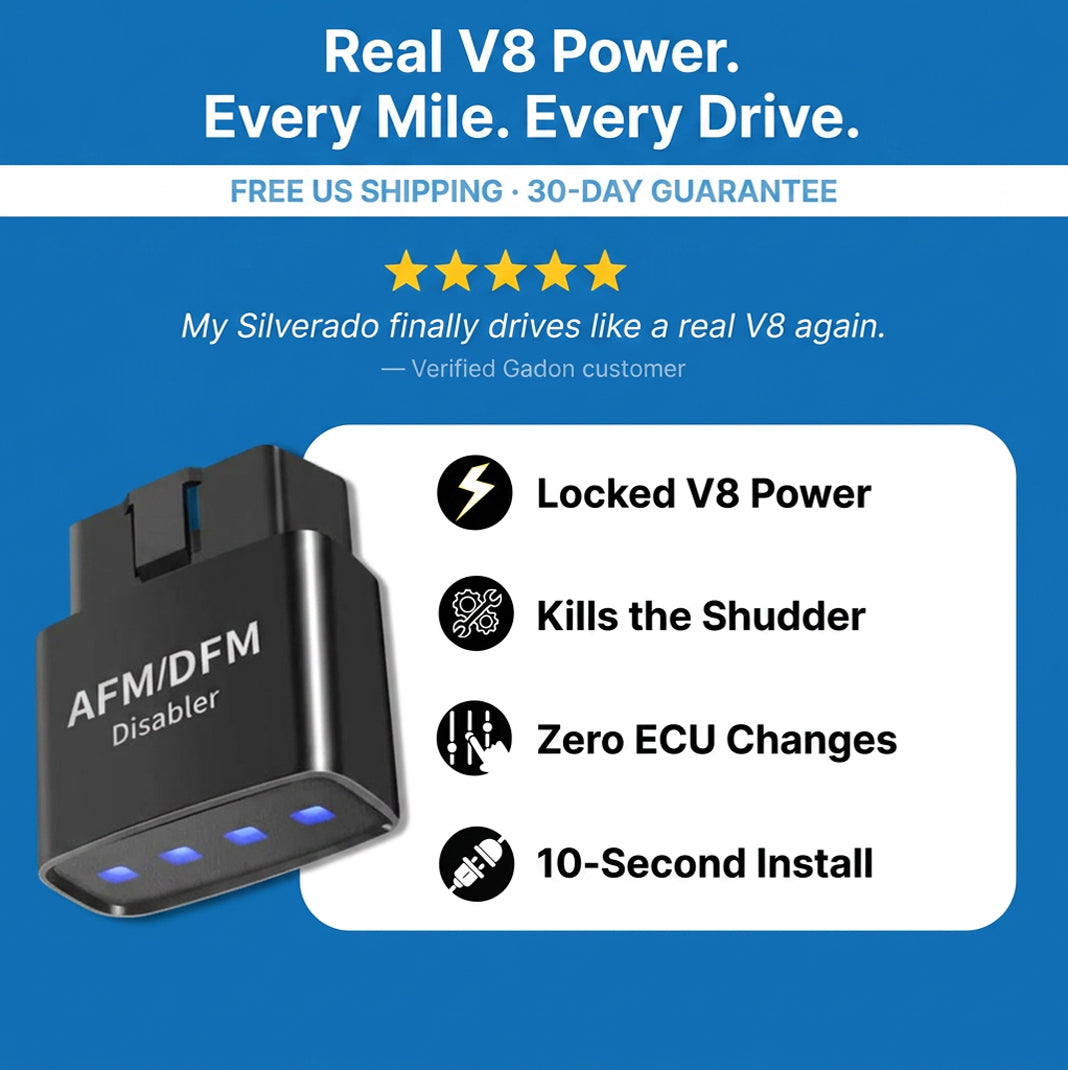
Gadon™ AFM/DFM Disabler
This smart module blocks your GM vehicle's V4 mode, preventing sudden hesitations, oil burning issues, and devastating lifter collapses. Easy to install and remove, it preserves your engine's health while protecting your factory warranty.
Quick FAQs on Gadon AFM/DFM Disablers
To help you make an informed decision, we have compiled the most common queries from GM truck owners regarding the installation and performance of our modules. These answers are based on extensive testing and feedback from thousands of satisfied drivers who have successfully protected their engines.
-
Will it void my GM warranty or trigger a Check Engine Light?
No. The Gadon disabler does not rewrite your engine computer software or flash the system. Simply unplug it before taking it to the dealership, and it leaves zero trace. Your factory warranty remains secure and it will not trigger warning lights. -
Will it fit my specific truck model?
Yes, it is compatible with many GM models manufactured in recent decades, including the Silverado, Tahoe, Sierra, Yukon, Escalade, and Suburban. It works with V6 and V8 engines equipped with active cylinder deactivation. -
Will this actually save my engine from five thousand dollars in repairs?
Absolutely. Cylinder deactivation is a leading cause of premature lifter failure. By keeping the engine firing on all cylinders uniformly, the device prevents the uneven wear that leads to expensive mechanical rebuilds. -
When will I feel the difference while driving?
Within the first mile of your drive. Most drivers report an immediate elimination of transmission vibration at cruising speeds, smoother throttle response, stronger acceleration from a stop, and a more pleasant ride. -
How hard is the installation process?
It takes less than ten seconds. You need no tools and no mechanical training. If you can plug a phone into a charger, you can install this module into your vehicle diagnostic port.
Need Help Checking Vehicle Compatibility? Gadon.store is Ready 24/7
In just 2 minutes, our expert team can confirm if the Gadon™ AFM/DFM Disabler fits your exact year and model.
Protect Your GM Engine and Regain Full V8 Power with Gadon.store
At Gadon store, we provide a reliable, plug and play solution that unleashes the true potential of your V8 engine while protecting it from expensive mechanical failures. We are committed to high quality performance modules, zero footprint operation, and excellent customer support. Upgrade your ride and drive with confidence. Call our support hotline at +1 813-408-1627 or order directly from our website to secure your vehicle today.
Disclaimer: The instructions in this article are based on practical experience with GADON STORE products. The guidance and prices in this article are for reference at the time of publishing and are subject to change. Always ensure your vehicle is parked safely before interacting with the OBD2 port. Please contact contact@gadon.store for detailed support regarding your specific GM model compatibility.