Corvette C7 AFM Problems: How to Protect the LT1
Corvette C7 AFM Problems: How to Protect the LT1
An AFM/DFM disabler module represents the most effective technical solution for maintaining full V8 power in high performance GM vehicles, preventing the notorious cylinder deactivation shudder and protecting your LT1 engine from catastrophic lifter failure. This in-depth guide on Corvette C7 AFM problems will help you understand the mechanical risks associated with Active Fuel Management and provides a clear path to preserving your sports car's value through the expertise found at gadon.store today.
Need Help Checking Vehicle Compatibility? Gadon.store is Ready 24/7
In just 2 minutes, our expert team can confirm if the Gadon™ AFM/DFM Disabler fits your exact year and model.
Why Proper Engine Protection is Crucial? A Direct Impact on V8 Performance and Engine Lifespan
Using a Gadon AFM/DFM disabler correctly ensures your GM engine stays in full V8 mode, delivering smooth, lag-free performance and extending the engine's lifespan by preventing costly 5,000 dollar plus lifter failures caused by constant cylinder switching.

Owners of the Corvette C7 equipped with the LT1 engine often face a significant mechanical dilemma regarding the Active Fuel Management system. While designed to improve fuel economy by deactivating four cylinders during light load conditions, this technology introduces several mechanical vulnerabilities that can lead to expensive repairs. The transition between V8 and V4 modes creates harmonic imbalances that stress the torque tube and internal engine components. Understanding these risks is the first step toward long term vehicle health. Professional mechanics often cite the following critical issues associated with prolonged AFM usage:
- Excessive oil consumption due to pressure variances in deactivated cylinders.
- Accelerated wear on the specialized AFM lifters which are prone to collapsing or sticking.
- Significant drivetrain vibration, commonly referred to as the 8 speed automatic transmission shudder.
- Potential damage to the torque tube couplings caused by uneven engine pulses in V4 mode.
- Long term carbon buildup on intake valves when cylinders remain inactive for extended periods.
At Gadon.store, we have observed that preventing these issues proactively is far more cost effective than reacting to a mechanical failure. A collapsed lifter often requires a complete top end engine teardown, costing owners thousands in parts and labor. By maintaining consistent V8 operation, you ensure that every internal component receives uniform lubrication and operates within its intended thermal and mechanical parameters. This stability is essential for high performance LT1 engines that are driven in both daily and spirited scenarios.
A Detailed 3-Step Guide to Using an AFM Disabler for GM Owners
The beauty of the Gadon solution lies in its simplicity. You do not need to be a certified technician or possess specialized tools to protect your Corvette. Our plug and play module interacts with the vehicle through the factory diagnostic port, sending a signal that instructs the engine control unit to remain in V8 mode at all times. This process involves no permanent modifications or software flashing, making it an ideal choice for vehicles still under factory warranty. Follow these steps to secure your performance immediately.
Step 1: Unbox and Locate the OBD2 Port
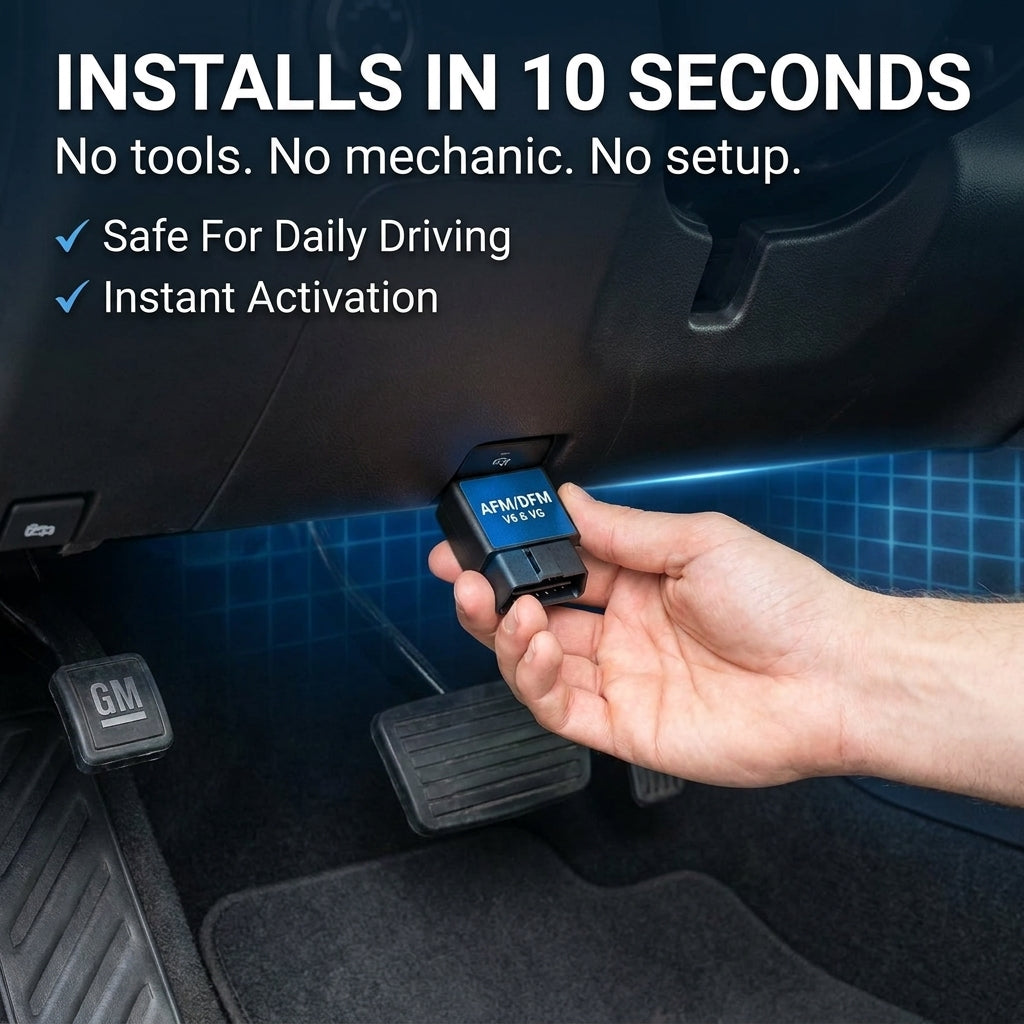
First, locate the OBD2 diagnostic port inside your GM truck or SUV, usually found under the driver side dashboard near the steering column. Ensure your vehicle engine is completely turned off before proceeding. It is important to clear the area of any obstructions to ensure a flush connection between the module and the pins within the port. In the Corvette C7, this port is easily accessible and requires no panels to be removed.
Step 2: Plug the Device Securely
Take your Gadon™ AFM/DFM Disabler and push it firmly into the port. There are no tools required for this installation. You will notice the indicator lights flash, confirming it has successfully connected to the ECU. The device is designed to fit snugly, ensuring it does not vibrate loose during aggressive driving or over rough road surfaces. Once the lights stabilize, the module is active and ready to communicate with your vehicle computer system.
Step 3: Start the Engine and Experience Full V8 Power
Start your engine. The device instantly blocks the cylinder deactivation signals without rewriting the factory software. You can now drive normally, experiencing immediate smoother throttle response, no lag, and consistent V8 power on every drive. You will notice that the V4 indicator on your instrument cluster no longer appears, signifying that the LT1 engine is firing on all eight cylinders regardless of speed or load conditions. This is the moment where your engine begins its journey toward enhanced longevity.
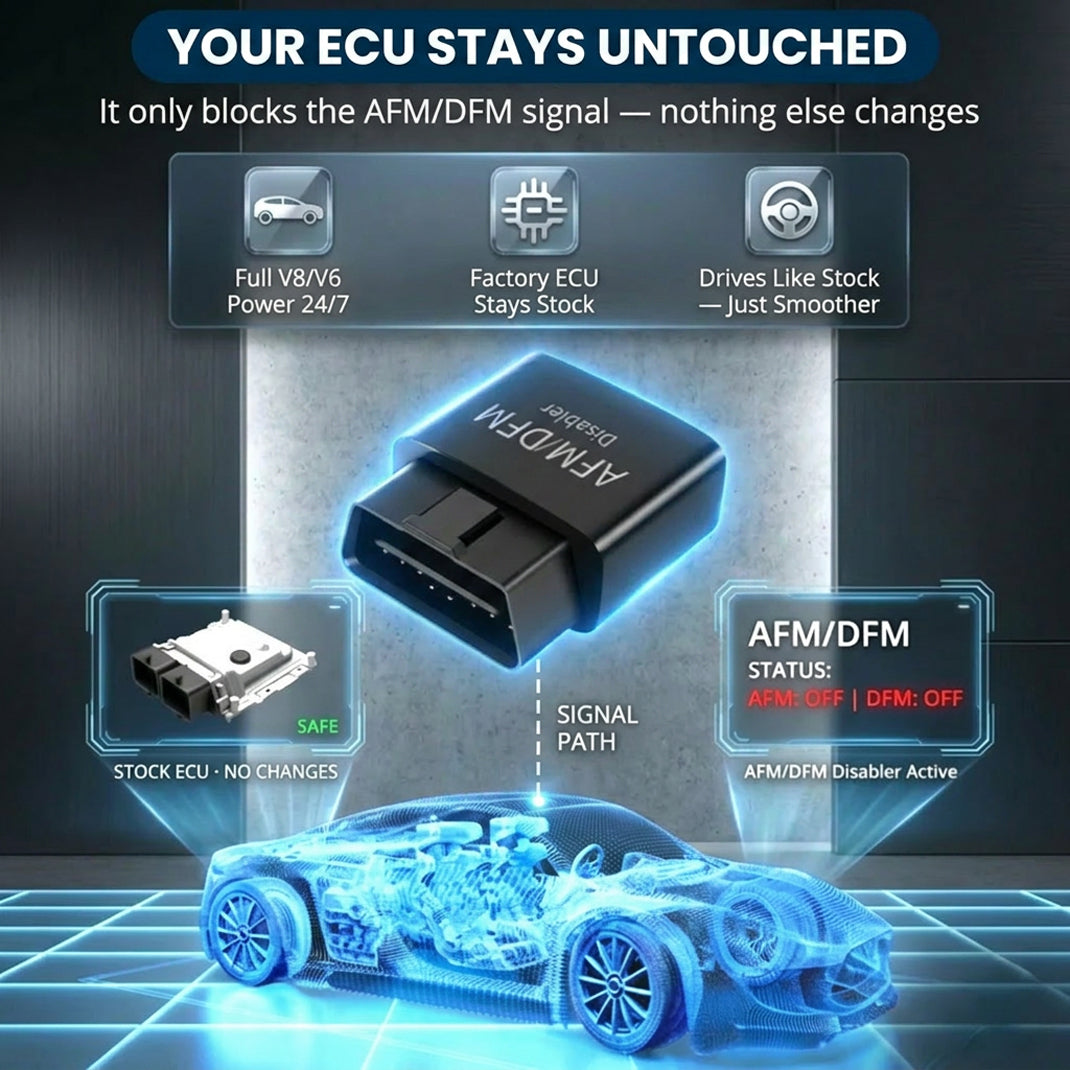
Gadon™ AFM/DFM Disabler
This compact OBD2 plug-in device keeps your GM engine operating in full V8 mode. It prevents rough shifting, torque converter shudder, and saves you from 5,000 dollar plus lifter repair bills without reprogramming your ECU. Our team at Gadon.store is ready to help you confirm compatibility for your vehicle.
Advanced Tips: Understanding AFM/DFM on GM Vehicles
To truly appreciate the value of an AFM disabler, one must understand the complex mechanical dance occurring within the LT1 engine. The Active Fuel Management system relies on specialized lifters that can be collapsed via oil pressure commands from the engine computer. While ingenious from an engineering perspective, the execution in real world driving environments has proven problematic for high mileage and high performance applications alike. By diving into the technical details, owners can make informed decisions about their vehicle maintenance strategy.
How Cylinder Deactivation Causes Lifter Failure
The constant switching between V4 and V8 modes creates uneven wear on the active lifters. These components rely on tiny locking pins and intricate oil passages to function. When the system transitions, these pins must engage or disengage under load. Over time, mechanical fatigue or oil contaminants cause these pins to fail, leading to premature lifter failure, bent pushrods, and costly engine rebuilds that can exceed 5,000 dollars. Consistent V8 operation ensures these pins remain locked, preventing the mechanical cycling that leads to degradation.
Eliminating Transmission Shudder at Cruising Speeds
Many drivers experience a noticeable shudder or vibration at 35 to 60 mph. This is often caused by the torque converter clutch attempting to manage the different vibration frequencies of a V4 engine versus a V8 engine. By keeping the engine in full cylinder mode, the Gadon module balances the torque output across the entire crankshaft. This eliminates the awkward gear searching behavior and transmission vibration entirely, providing a premium driving experience that matches the Corvette reputation.
Troubleshooting Common Issues with AFM Disablers
At Gadon.store, we believe in providing comprehensive support for every customer. While our devices are designed for extreme reliability, understanding how to address common operational questions is part of being a responsible vehicle owner. Most issues can be resolved in seconds without technical expertise. Here are the primary considerations for ensuring your device operates at peak efficiency year round:
- Why are the lights on the device not turning on? Solution: Check your vehicle OBD2 fuse which is often shared with the cigarette lighter or auxiliary power ports. If the fuse is blown, the port won't provide power to the Gadon module. Replacing the fuse usually restores function immediately.
- Will the module drain my vehicle battery? Solution: The device draws a very minimal amount of power on standby. However, if you plan to leave your car parked and undriven for several weeks, we recommend unplugging it to be safe. For daily or weekly drivers, battery drain is not a concern.
- Do I need to unplug it before taking it to the dealership? Solution: Yes, simply unplug the Gadon disabler before your service visit. Since it leaves zero trace and doesn't flash the ECU, your factory warranty remains 100 percent intact. The vehicle will revert to factory AFM settings as soon as the device is removed.
- Can I use the device in other GM vehicles? Solution: The module is compatible with a wide range of GM trucks and SUVs. If you sell your Corvette and buy a Silverado, the same device will likely work, provided the vehicle utilizes a supported AFM or DFM system.
Which Gadon™ AFM/DFM Disabler Package is Right for You? Expert Advice

Every purchase from Gadon.store includes our 90 Day Guarantee and Free Shipping. Use code WELCOME to get an extra 10 percent OFF today! Choosing the right package depends on your household vehicle lineup and your long term protection goals. We offer several options to ensure every GM owner can access this vital technology at a price that makes sense for their budget.
| Product Package | Target User | Included Items | Reference Price |
|---|---|---|---|
| 1 Pack | Single Vehicle Owners | 1x Gadon™ AFM/DFM Disabler | 99.99 dollars with WELCOME code |
| 2 Packs Popular Option | Families and Dual GM Owners | 2x Gadon™ AFM/DFM Disablers | 15 percent discount included |
| 3 Packs High Value | Work Fleets and Workshops | 3x Gadon™ AFM/DFM Disablers | 25 percent discount included |
| Return Policy | All Orders | No questions asked refund | 90 Days Protection |
| Worldwide Shipping | All Orders | Tracked Global Delivery | Always Free |
| Compatibility Check | Prospective Customers | Expert Year and Model Check | Free via WhatsApp |
| Technical Advice | All Customers | Direct Support Line | Free consultation |
| After Sales Support | Active Users | Email and Phone Assistance | Lifetime access |
Quick FAQs on Gadon AFM/DFM Disablers
We have compiled the most frequent inquiries from our community of over 50,000 satisfied customers. These answers are designed to provide clarity and peace of mind as you consider the best path forward for your LT1 engine protection.
- Will it void my GM warranty or trigger a Check Engine Light? No. The Gadon disabler does not reprogram your ECU or flash the computer. Simply unplug it before taking it to the dealership, and it leaves zero trace. Your factory warranty stays 100 percent intact and it will not trigger a check engine light.
- Will it fit my specific truck model? Yes, it is compatible with over 90 GM models manufactured between 2005 and 2026, including the Silverado, Tahoe, Sierra, Yukon, Escalade, and Suburban. It works flawlessly with both V6 and V8 engines equipped with AFM or DFM systems.
- Will this actually save my engine from 5,000 dollar plus repairs? Absolutely. AFM/DFM cylinder deactivation is a leading cause of premature lifter failure in GM engines. By keeping the engine firing on all cylinders uniformly, the Gadon device prevents the uneven wear that leads to expensive engine rebuilds.
- When will I feel the difference while driving? Within the first mile. Most drivers report an immediate elimination of shudder at cruising speeds, smoother throttle response, stronger acceleration from a dead stop, and an overall better driving experience.
- How hard is the installation process? It takes less than 10 seconds. You need absolutely no tools and no mechanical experience. If you can plug a charger into your phone, you can plug the Gadon module into your truck OBD2 port.
Need Help Checking Vehicle Compatibility? Gadon.store is Ready 24/7
In just 2 minutes, our expert team can confirm if the Gadon™ AFM/DFM Disabler fits your exact year and model.
Protect Your GM Engine and Regain Full V8 Power with Gadon.store
At Gadon.store, we provide a reliable, plug and play solution that unleashes your engine's true V8 potential while protecting it from expensive lifter failures. We are committed to high quality performance modules, zero ECU tracing, and excellent customer support. Upgrade your ride and drive with confidence knowing that your LT1 engine is firing on all cylinders as intended by the original performance engineers.
Call our support hotline now at +1 813-408-1627 or order directly from our website to secure your vehicle today!
Disclaimer: The instructions in this article are based on practical experience with GADON STORE products. Always ensure your vehicle is parked safely before interacting with the OBD2 port. Please contact contact@gadon.store for detailed support regarding your specific GM model's compatibility. Note: The guidance and prices in this article are for reference at the time of publishing and are subject to change. Please contact Gadon.store directly for the most current information.