5.3 vs 6.2 Silverado: Which Engine is More Reliable?

5.3 vs 6.2 Silverado: Which Engine is More Reliable?

5.3 vs 6.2 Silverado V8 engine reliability remains a primary deciding factor for General Motors truck owners seeking the ideal combination of payload, horsepower, and long-term durability. By optimizing your choice with expert engineering insights from Gadon Store, you can ensure your powertrain remains fully protected against mechanical lifter failure while enjoying full-time V8 performance.

Struggling to choose between these two V8 powerhouses?

Our dedicated support team is standing by to assist with physical compatibility checks, installation advice, and expert recommendations.

WhatsApp +1 813-408-1627 Call +1 813-408-1627 contact@gadon.store
GADON STORE EXCLUSIVE
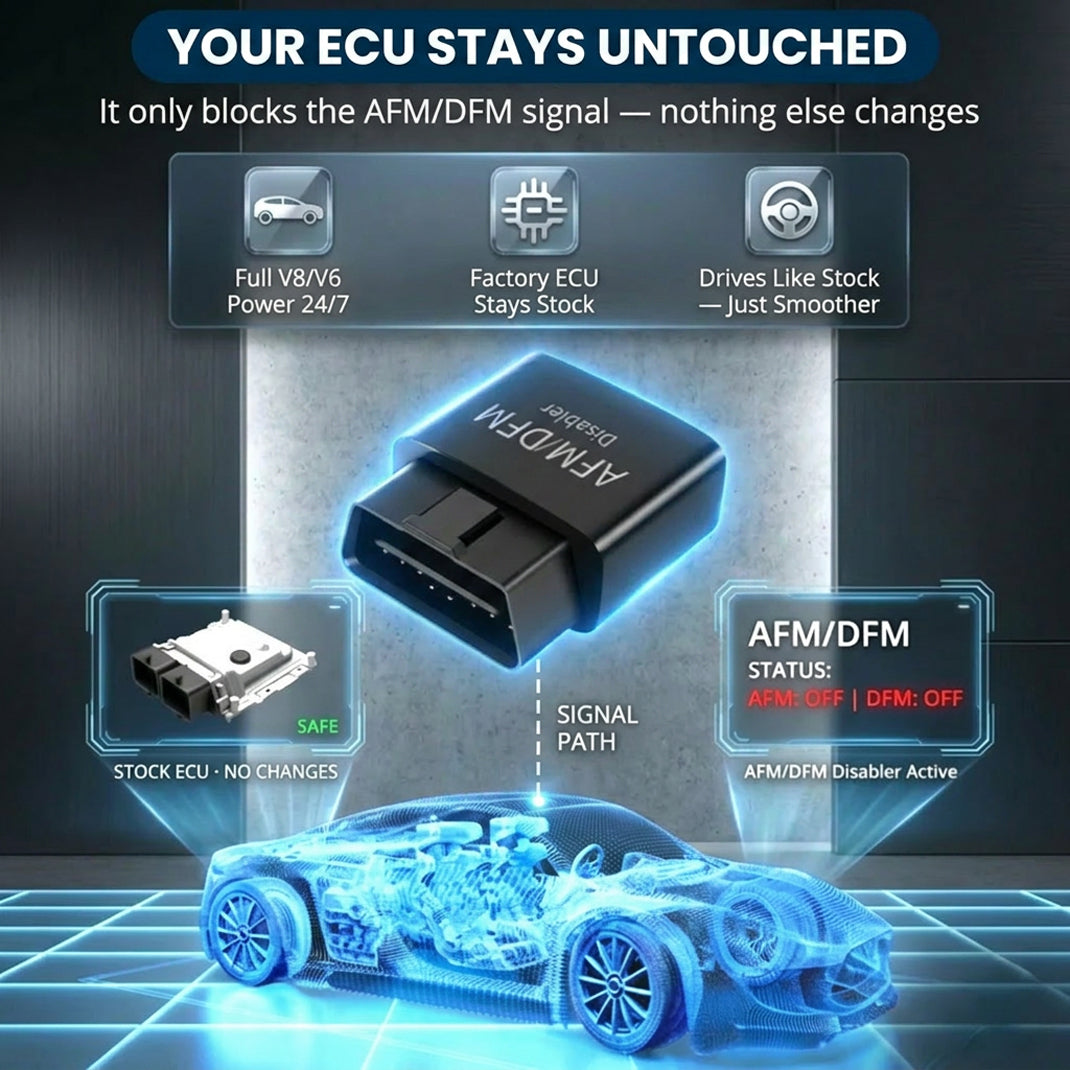
Gadon™ AFM/DFM Disabler

Premium Auto Parts

Gadon™ AFM/DFM Disabler - Keep Your V8 Running Strong

Prevent mechanical lifter failure and keep your GM V8 running smoothly with our 10-second plug-and-play solution. No ECU flashing required, leaving no traces behind.


$99.99 $159.99

SHOP NOW

What is 5.3 vs 6.2 Silverado Reliability? Overview and core concepts

5.3 vs 6.2 Silverado engine reliability refers to the comparative long-term durability, maintenance needs, mechanical failure rates, and operating conditions of GM's primary light-duty V8 powerplants.

To understand the fundamental nature of these engines, we must look at General Motors' Gen V small-block V8 architecture. The 5.3L (L83/L84) serves as the workhorse engine, featuring an aluminum block and heads, direct fuel injection, and variable valve timing. In comparison, the 6.2L (L86/L87) is the premium option, utilizing a larger bore and stroke to deliver increased horsepower and torque output. While structurally robust, both engines employ complex cylinder deactivation systems designed to conserve fuel by shutting down specific cylinders under light load conditions. The core operational elements include:

  • Engine block design: Both engines feature lightweight cast aluminum blocks designed with structural bulkheads to handle deep cylinder pressure variations.
  • Cylinder head dynamics: High-flow intake ports and specialized combustion chambers maximize fuel burn efficiency at various engine speeds.
  • Direct injection fueling: Standard direct fuel injection delivers fuel pressures reaching up to 2,900 PSI directly into the cylinders.
  • Variable valve timing: A central camshaft phaser dynamically adjusts the valve events to balance high-speed horsepower with low-speed pulling torque.

Why is understanding the differences important? Key operational trade-offs

Understanding the distinct operational parameters between these two powerplants is critical because it dictates your direct operating costs, fuel octanes, pulling capabilities, and systemic mechanical vulnerabilities.

Choosing the wrong V8 engine version can result in unexpected maintenance budgets. The 5.3L engine is designed for regular 87-octane fuel, representing a highly economical, cost-effective daily driver. Meanwhile, the high-compression 6.2L engine demands premium 91-octane or higher fuel to reach peak power levels, raising long-term operating costs. More importantly, both configurations rely heavily on hydraulic lifters that run high risks of failure due to oil aeration and switching stresses. By learning how these engines differ, truck owners can preemptively mitigate expensive service issues before they occur.

Fuel Octane Requirements and Compressive Knock

The 6.2L engine runs a high 11.5:1 compression ratio, requiring premium fuel to prevent pre-ignition knock. Running cheap, low-octane gas forces the engine control module to retard ignition timing, reducing total power and putting extra stress on internal rods.

Towing Duty Cycles and Thermal Stress

While the 5.3L engine provides ample capability for light towing, the larger 6.2L engine manages heavy loads with lower transmission shifting frequency. However, continuous heavy load towing causes high thermal levels in both blocks, accelerating oil degradation and lifter pin fatigue.

PROFESSIONAL DIAGNOSTICS
V500 OBD2 Scanner

Advanced Auto Tools

V500 OBD2 Scanner - Master Your Engine's Health

Identify underlying engine codes instantly before they turn into major repair bills. An essential tool for any GM truck owner looking to maintain peak performance.


Diagnostic Standard

LEARN MORE

Detailed comparative analysis of the 5.3L and 6.2L V8 engines

A comprehensive evaluation shows that the fundamental difference in reliability between these powertrains is smaller than the wear differences created by the active cylinder management systems. To maintain maximum performance, we must analyze the structural mechanics of how these components function inside your engine.

The newer L84 and L87 engine platforms employ Dynamic Fuel Management (DFM) which can run in 17 distinct cylinder firing configurations, compared to the older Active Fuel Management (AFM) that only switches between 4 and 8 cylinders. By constantly changing cylinder patterns, the engine places highly uneven stresses on the hydraulic lifters, causing oil starvation, clicking noises, and eventually a locked, collapsed lifter that damages the central camshaft lobes.

Analyzing Block Construction and Bore Dynamics

While both use cast aluminum, the 6.2L engine has a larger 4.06-inch bore compared to the 3.78-inch bore of the 5.3L engine. This larger diameter allows for wider valves and improved cylinder scavenging, but also exposes the piston skirts to slightly more side-loading forces over long operational runs.

Factor 5.3L V8 (L84) 6.2L V8 (L87) Role/Impact
Power Output 355 Horsepower 420 Horsepower Affects towing speeds and payload acceleration.
Fuel Fueling Regular 87 Octane Premium 91 Octane Determines long-term fueling expenses.
Deactivation Type AFM / DFM Systems AFM / DFM Systems Induces lifter wear on both configurations.
Oil Viscosity SAE 0W-20 SAE 0W-20 Mandatory thin oil for tight hydraulic channels.
Failure Risk Cost $3,000–$8,000 Repair Higher ($4,500–$9,000) Cost to physically replace failed lifters.

The Mechanical Anatomy of Cylinder Deactivation Failures

The primary mechanical culprit in both V8 configurations is the specialized spring-loaded lifter pin. When the engine's solenoid valve stops oil flow to deactivate a cylinder, these locking pins collapse inside the lifter body. Over time, constant switching causes the pins to wear unevenly, leading to oil loss, physical tapping, and lifter failure. Resolving this issue before mechanical wear sets in is essential to keeping a making a 5.3 last over 200k.

Step-by-step guide on protecting the engine from lifter wear

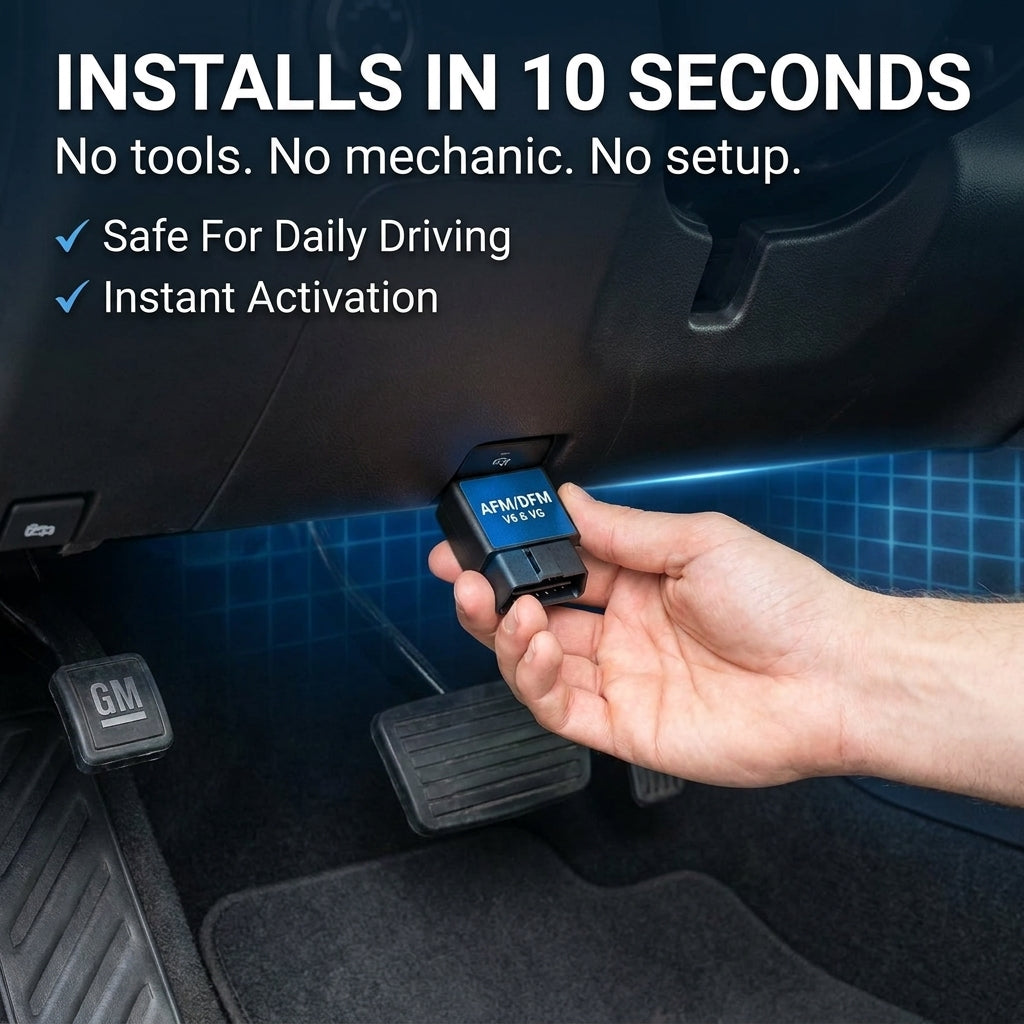
Eliminating cylinder switching wear does not require expensive mechanical changes or ECU flashing. By following this step-by-step installation process, you can lock your engine into full V8 power mode in less than 3 minutes.

Step 1: Locate the Diagnostic OBD-II Port

Inspect the driver's side floor area under the dashboard.

  • Purpose: To locate the vehicle's standard diagnostic connection port.
  • Tools needed: None.
  • Specific actions: Look directly underneath the lower steering wheel trim piece, near the left foot rest. Locate the black, trapezoidal 16-pin port. Ensure the engine is completely turned off and keys are out of the ignition before proceeding.
  • Expected results: The female OBD-II connector is found and cleared of any dust or debris.

Step 2: Connect the Disabler Module

Securely insert the disabler into the diagnostic port.

  • Purpose: To establish a direct electrical connection with the control module.
  • Tools needed: Gadon™ AFM/DFM Disabler.
  • Specific actions: Align the pins of your disabler device with the receiving holes on the port. Push the device straight in until it is fully seated. Do not wiggle the device sideways during installation to avoid bending the connector pins.
  • Expected results: The device sits flat in the socket and fits snug against the connector trim.

Step 3: Verify Connection and Diagnostics

Turn the engine key to confirm communication.

  • Purpose: To confirm the module has successfully intercepted the cylinder shutoff signals.
  • Tools needed: None.
  • Specific actions: Turn the vehicle ignition key to the run position or press the push-start button. Wait exactly 10 seconds. Check the LED lights on the disabler face. Verify the lights turn on, indicating active CAN-bus communications. Start the engine and verify that the dashboard displays full-time V8 operation mode.
  • Expected results: The engine starts smoothly, the LED lights remain steady, and no error codes or warning dashboard lights appear.
HEAVY DUTY UTILITY
Heavy Duty OBD2 Y-Splitter Cable

Cabling & Adapters

Heavy Duty OBD2 Y-Splitter Cable - Run Multiple Devices

Keep your disabler hidden under the dash while keeping your diagnostic port fully accessible for scanners and other accessories. Heavy-duty shielded wiring prevents data lag.


Multi-device Port

LEARN MORE

Mistakes to avoid when maintaining your GM V8 powertrain

Many GM truck owners accidentally shorten their engine's life by making common maintenance mistakes. Avoid these critical errors to keep your vehicle running smoothly:

  • Using incorrect oil viscosity: Running heavy oils like 10W-30 inside Gen V engines blocks the tiny passages in the oil control manifold. Gadon Store Advice: Always use high-quality SAE 0W-20 oil to maintain proper hydraulic pressure to all lifter banks.
  • Neglecting octane requirements: Forcing your 6.2L engine to run on regular 87-octane fuel causes persistent low-level knocking. Gadon Store Advice: Read our 6.2 premium gas guide to learn how proper octane choices extend valve life.
  • Assuming all lifters fail equally: Lifters in cylinder deactivation ports fail at a 4-to-1 higher rate compared to standard lifter positions. Gadon Store Advice: Install a high-quality electronic disabler early to prevent physical wear before it requires an expensive mechanical repair. Read our complete AFM guide to see how this system wears down internal parts.

Frequently Asked Questions about Silverado engines (FAQs)

Is the 5.3 or 6.2 more reliable?

Both are fundamentally strong. The 5.3 has a longer, broader track record; the 6.2 is proven but pricier. Both share the AFM/DFM lifter risk, which matters more than the gap between them.

Which should I buy?

The 5.3 for value and everyday capability; the 6.2 for maximum power and heavy towing.

Do both need premium fuel?

No. The 5.3 runs regular; the 6.2 is recommended premium for full power.

Does the disabler work on both?

Yes. It holds full-cylinder mode on the 5.3 and the 6.2, AFM or DFM.

Related guides

Elevate your driving experience with solutions from Gadon Store

Ensuring your GM V8 runs smoothly for years requires high-quality, precise diagnostic and mechanical protection tools. Do not wait for engine noises to appear and turn into expensive repair bills. Protect your vehicle with our premium, plug-and-play components today. For direct diagnostic checks, order support, or technical help, call the Gadon Store team at +1 813-408-1627.

Disclaimer: This article is for general informational purposes and reflects the experience of GM truck owners. A disabler prevents cylinder-switching wear but does not repair existing damage. Compatibility depends on your exact Year, Make, Model and Engine; confirm your fit at contact@gadon.store.

Back to blog