6.2 V8 vs 3.0 Duramax: Which Silverado Engine is Best?
Share
6.2 V8 vs 3.0 Duramax truck comparisons often ignite fierce debates among drivers battling annoying cylinder deactivation shudder, severe throttle lag, or fears of sudden mechanical lifter collapse. Discover field-tested electronic solutions and specialized maintenance hardware from Gadon Store to keep your powertrain running with peak reliability across every grueling mile.
Need Fitment or Powertrain Compatibility Support?
Speak directly with our Florida-based technical specialists to confirm hardware fitment, diagnostic trouble code analysis, and warranty-safe disabler setup for your specific truck configuration.
In This Comprehensive Guide
6.2 V8 vs 3.0 Duramax Architecture and Mechanical Engineering
The 6.2 V8 EcoTec3 L87 and 3.0 Duramax turbo-diesel represent two distinct engineering philosophies for half-ton pickups. The naturally aspirated gasoline V8 utilizes dynamic fuel management and high-pressure direct injection, whereas the inline-six diesel relies on variable-geometry turbocharging, liquid-to-air intercooling, and common-rail injection to generate commercial-grade torque across low engine speeds.
Choosing between the high-revving muscle of a traditional small-block and the low-end efficiency of an inline-six turbodiesel is one of the most critical decisions facing half-ton pickup buyers. The L87 small-block displaces 376 cubic inches through an all-aluminum block, delivering instantaneous throttle response and commanding high-RPM horsepower. Conversely, the LM2 and refined LZ0 baby Duramax engines maximize thermal efficiency by packing an inline cylinder orientation, dual overhead camshafts, and a potent variable-geometry turbocharger into a rigid cast aluminum block with iron cylinder liners. Evaluating the 6.2 vs 3.0 Duramax mechanical divide reveals stark differences in how each powertrain handles daily driving, fuel consumption, and valvetrain longevity.
Prevent $4,000 Camshaft Failure Today
Plug & play. Force your 5.3L to stay in 100% V8 power mode.
System Architecture and Core Mechanics
Understanding the mechanical operation of each powertrain requires dissecting the foundational hardware that manages combustion, oil delivery, and torque transfer under grueling workload conditions:
- Collapsible Hydraulic Roller Lifters: The L87 gasoline engine employs sixteen hydraulic lifters, eight of which integrate internal spring-loaded locking pins. Commanded by the engine control module, pressurized oil disengages these locking pins to drop select cylinders during light cruising. This continuous cycling induces high mechanical stress on needle bearings and cam lobes, increasing the risk of catastrophic valvetrain collapse when oil pressure fluctuates.
- Valve Lifter Oil Manifold (VLOM): Bolted into the engine valley beneath the intake plenum, the VLOM houses complex pulse-width modulated solenoids that direct oil flow to the collapsible lifters. Debris contamination or pressure drops across these oil passages lead directly to lifter collapse, loud valvetrain clatter, and bent pushrods. Drivers experiencing early warning symptoms often investigate Chevy 6.2 Premium Gas requirements to stabilize internal combustion pressures and mitigate valvetrain stress.
- Variable-Geometry Turbocharger and Charge-Air Cooler: The 3.0 Duramax inline-six utilizes an electronically controlled variable-nozzle turbocharger capable of adjusting exhaust vane pitch in milliseconds. This assembly eliminates turbo lag by simulating a compact housing at idle while opening up under heavy acceleration. The compressed intake charge routes through an efficient liquid-to-air intercooler mounted directly to the intake manifold, stabilizing air density regardless of ambient heat.
- Rear-Mounted Oil Pump Drive Belt: Unlike the crankshaft gear-driven oil pump of the V8, the baby Duramax situates its oil pump at the rear of the engine block behind the flywheel. General Motors engineered a wet rubber drive belt running continuously submerged in engine oil. While this design minimizes engine noise, vibration, and friction, replacing the belt requires complete transmission removal, representing a critical long-term maintenance milestone.
Both powertrains communicate with onboard control networks through standard high-speed controller area network protocols. The gasoline engine relies heavily on continuous oil pressure modulation to actuate variable valve timing and cylinder cycling routines. When high ambient temperatures or heavy trailer tongue weights demand consistent oil viscosity, any interruption in lubrication causes instant friction spikes across the overhead valvetrain assembly.
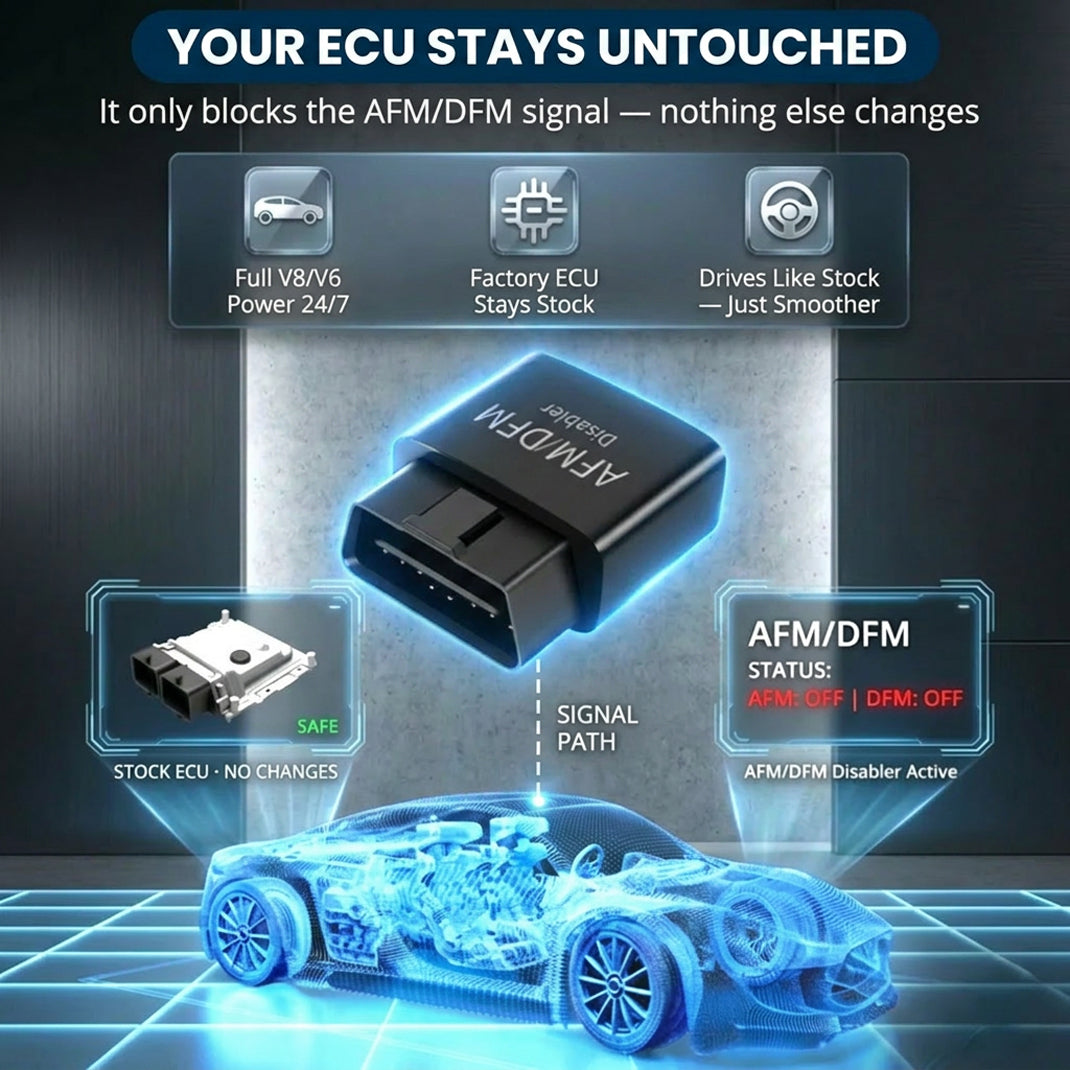
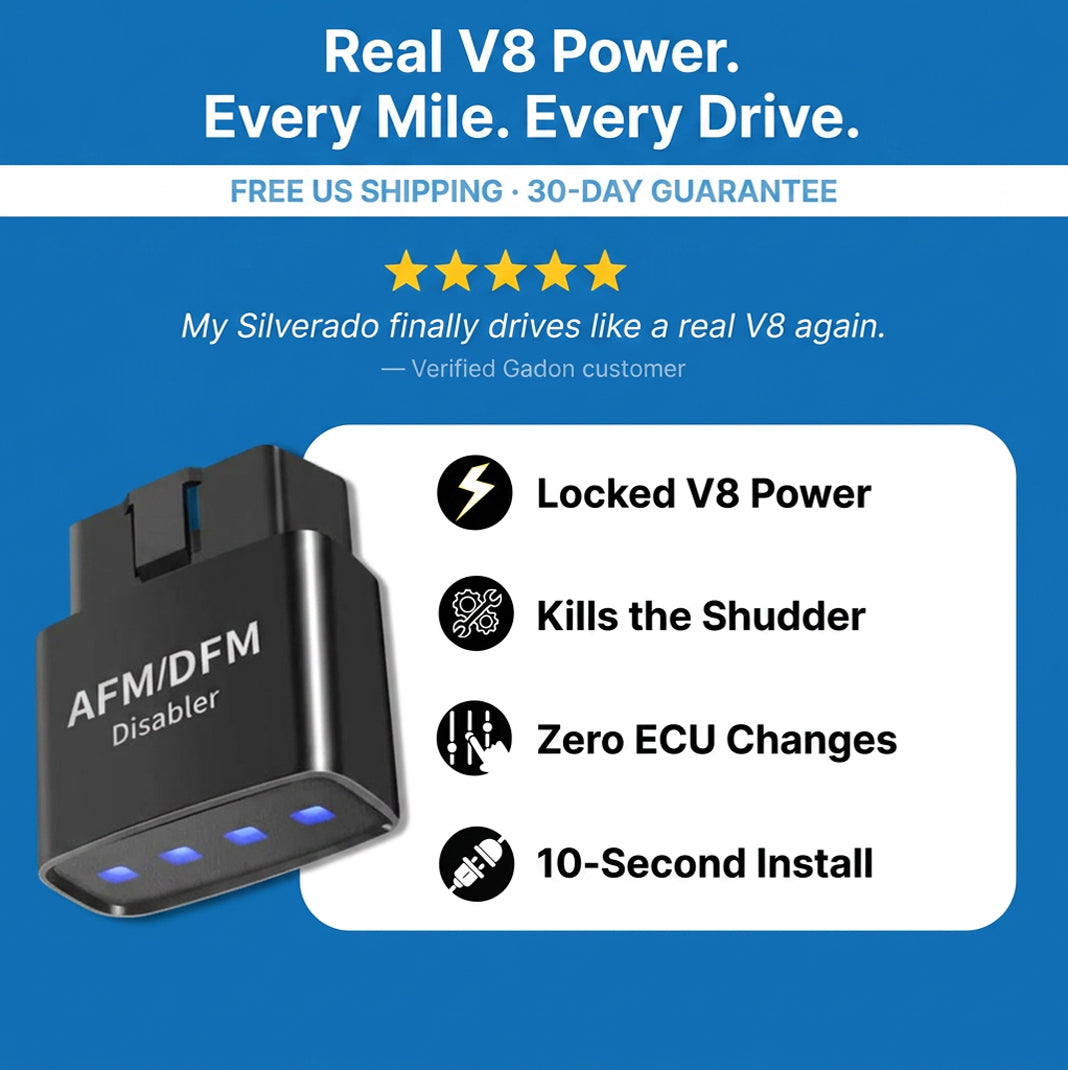
Gadon™ AFM/DFM Disabler For GM Trucks
Prevent catastrophic valvetrain collapse and eliminate annoying V4 cylinder hunting. The RA003 V1.1 module plugs directly into your OBD-II port to lock in 100% full-time V8 power without flashing the engine control module or voiding your factory warranty.
$159.99 $99.99
BUY NOW (Code: WELCOME)Towing Dynamics in the 6.2 V8 vs 3.0 Duramax Comparison
Evaluating towing dynamics between these two powerplants involves contrasting peak horsepower against low-RPM torque delivery. When pulling heavy travel trailers, commercial dump trailers, or large boats up steep interstate grades, how the powertrain produces and sustains power dictates driver fatigue, transmission gear hunting, and vehicle stability.
Towing with 3.0 Duramax vs 6.2 platforms showcases stark mechanical behavior when paired with the heavy-duty 10L80 ten-speed automatic transmission. The gas V8 demands higher engine speeds to reach its power peak, requiring the transmission to downshift two to three gears on steep mountain highway inclines. In contrast, the inline-six diesel holds taller gears effortlessly, remaining composed in its primary operating window between 1,500 and 2,200 RPM while pulling substantial gross combined vehicle weight ratings.
| Evaluation Metric | Silverado 6.2L EcoTec3 V8 (L87) | Silverado 3.0L Duramax Turbo-Diesel (LZ0) |
|---|---|---|
| Peak Horsepower | 420 HP @ 5,600 RPM | 305 HP @ 3,750 RPM |
| Peak Torque Output | 460 lb-ft @ 4,100 RPM | 495 lb-ft @ 1,500 RPM |
| Max Conventional Towing | Up to 13,300 lbs (Properly Equipped) | Up to 13,300 lbs (Properly Equipped) |
| Exhaust Braking Capability | None (Relies solely on wheel brakes and transmission downshifts) | Integrated Variable-Geometry Turbo Exhaust Brake |
| High Altitude Power Retention | Loses approximately 3% power per 1,000 feet elevation | Minimal loss; turbo compensates for thinner air density |
| Transmission Gear Hunting | Frequent shifts between 6th, 7th, and 8th under heavy incline | Maintains 8th, 9th, or 10th gear across rolling grades |
| Passing Acceleration with Trailer | Exceptionally fast once revs climb past 3,500 RPM | Strong initial pull, flattens out above 3,500 RPM |
| Towing Fuel Range (24 Gal Tank) | Approximately 200–260 miles (9–11 MPG average) | Approximately 310–380 miles (13–16 MPG average) |
Low-End Pulling Power in 6.2 V8 vs 3.0 Duramax Towing Tests
Comparing 3.0 Duramax torque vs 6.2 V8 output on paper demonstrates how peak figures fail to tell the entire mechanical story. The diesel powerplant generates a staggering 495 pound-feet of torque at just 1,500 RPM, delivering immediate off-the-line pulling authority. This early torque curve prevents excessive torque converter slip, allowing the vehicle to launch heavy trailers smoothly on steep boat ramps or slippery job sites without roasting friction clutches.
Conversely, the 6.2L V8 must spin up to 4,100 RPM to unleash its 460 pound-feet of torque. When pulling an 8,000-pound load over high-elevation mountain passes, naturally aspirated engines suffer volumetric efficiency losses of roughly 3% for every 1,000 feet of altitude climbed. The turbocharged Duramax pressurizes thin mountain air, maintaining nearly full rated output even at 10,000 feet above sea level. When drivers experience sluggish gear selection or erratic transmission behavior under towing strain, checking GM 10-Speed Reliability benchmarks and correcting Silverado Delayed Shift anomalies ensures long-term clutch pack protection.
Descending long downhill mountain grades highlights another massive mechanical divergence. The 3.0 Duramax integrates a true variable-geometry exhaust brake that restricts exhaust backpressure to slow the vehicle automatically without heating the wheel brakes. The 6.2L gasoline engine must rely entirely on high-RPM compression braking and service friction pads, leading to elevated rotor temperatures during prolonged alpine descents.
Universal 300ml Baffled Oil Catch Can Kit
Direct-injected gas engines and modern turbodiesels suffer from heavy crankcase blow-by vapor. This dual-baffled aluminum separator traps aerosolized oil and condensation before it cakes your intake valves, intercooler cores, and intake runners.
$89.99 $49.99
ORDER CATCH CAN KITFuel Economy and Operating Costs: 6.2 Premium Gas vs Diesel Price Realities
Calculating total cost of ownership across a typical 100,000-mile vehicle lifecycle requires looking far beyond the window sticker price. Fuel consumption, fluid capacities, recurring filter services, and regional fuel price variations heavily impact whether gasoline or diesel power makes financial sense for your specific driving routine.
A comprehensive mpg comparison 6.2 vs 3.0 highlights dramatic fuel efficiency spreads. While the 6.2L V8 requires expensive 91 or 93 octane premium unleaded fuel to avoid knocking and timing retards, the 3.0 Duramax returns highway numbers rivaling mid-size passenger cars. However, maintenance cost diesel vs gas Silverado calculations must incorporate diesel exhaust fluid, dual fuel filter replacements, and specialized dexosD synthetic oil formulations.
| Operating Parameter | 6.2L EcoTec3 V8 Gas (L87) | 3.0L Duramax Diesel (LZ0) | Fleet Cost and Ownership Impact |
|---|---|---|---|
| Fuel Grade Specification | 91+ Octane Premium Required | Ultra-Low Sulfur Diesel (ULSD) | Premium gas often matches or exceeds diesel prices |
| EPA Highway Mileage | 19–20 MPG (2WD/4WD) | 27–29 MPG (Up to 33 MPG 2WD) | Diesel yields 35% to 50% better unloaded highway range |
| EPA City Mileage | 14–15 MPG | 21–23 MPG | Significant fuel burn advantage for urban delivery fleets |
| Oil Sump Capacity | 8.0 Quarts (0W-20 dexos1 Gen3) | 7.0 Quarts (0W-20 dexosD Diesel) | dexosD diesel oil carries higher bottle cost per quart |
| Fuel Filter Replacement | Non-serviceable in-tank fuel sock | Serviceable filter cartridge (every 20k–30k miles) | Diesel requires regular $60–$90 filter changes |
| Exhaust Fluid (DEF) | Not Applicable | 5.4 Gallon DEF Tank (1,000–1,200 miles per gallon) | Adds approximately $15–$25 per 5,000 driving miles |
| Crankcase Blow-By Risk | Direct-injection intake valve caking | Intercooler oil coating and soot buildup | Both benefit tremendously from baffled oil catch cans |
| Air Intake Flow Needs | High volume air demand at 5,000+ RPM | High mass flow under continuous turbo boost | Clean filtration protects mass airflow sensors |
| Oil Pump Belt Service | Chain driven (Lifecycle service) | Wet rubber belt replacement (150k–200k miles) | Labor-intensive transmission drop costing $1,200–$1,800 |
| Annual Fuel Cost (15k Miles) | Approx. $3,800 (At $4.25/gal 93 Octane) | Approx. $2,400 (At $4.10/gal Diesel + DEF) | Diesel yields annual fuel savings of roughly $1,400 |
Fuel Cost Projections for 6.2 V8 vs 3.0 Duramax Fleets
The 6.2 premium gas vs diesel price equation hinges on regional fuel price spreads. In many metropolitan markets across the United States, premium 93-octane gasoline sells at a substantial markup over regular 87, frequently equaling or exceeding the local pump price of ultra-low sulfur diesel. When factoring in a combined real-world fuel economy of 16 MPG for the 6.2L versus 25 MPG for the 3.0 Duramax, the diesel truck saves the average 15,000-mile-per-year driver between $1,200 and $1,500 annually on fuel alone.
However, operating costs must account for scheduled powertrain maintenance. The baby Duramax requires genuine dexosD-certified motor oil to protect its delicate emissions particulate sensors, along with diesel exhaust fluid replenishment every few thousand miles. Furthermore, high-mileage gasoline engines experience distinct operational challenges described in 5.3 High Mileage Maintenance guides, while performance-minded truck owners seeking optimal combustion airflow frequently install a Silverado Cold Air Intake to balance intake manifold pressure and lower charge temperatures.
Never Pay a Mechanic for a Diagnostic Again
Find the exact problem and clear your check-engine light in 30 seconds. Stop wasting $150+ per trip to the shop.
Long Term Reliability 3.0 vs 6.2: Valvetrain Wear and Emissions Systems
Powertrain longevity determines trade-in value, repair expenditures, and owner peace of mind. Both of these engines exhibit proven strengths alongside well-documented mechanical vulnerabilities that surface as mileage accumulates past the factory powertrain warranty threshold.
Examining long term reliability 3.0 vs 6.2 powertrains reveals a battle between valvetrain failure on the gasoline side and emissions hardware complexity on the diesel side. The 6.2 lifter issues vs Duramax oil pump belt debate is central to half-ton truck ownership. While a collapsed dynamic fuel management lifter can trash a gasoline engine block at 45,000 miles, an aging diesel emissions system can trigger persistent limp-mode conditions that stall commercial transport operations.
Valvetrain Health and Failure Points in 6.2 V8 vs 3.0 Duramax
Understanding the root causes of mechanical breakdowns enables truck owners to implement proactive maintenance protocols before catastrophic damage occurs:
- Dynamic Fuel Management Lifter Collapse: The primary failure point on the 6.2L V8 involves the collapsible lifters. Constant deactivation cycling wears the internal spring-loaded locking pin mechanism. If a locking pin fails to seat correctly, the lifter collapses, rotates inside its plastic tray, and wipes the camshaft lobe flat. This catastrophic event sends metal shavings throughout the oil passages, often requiring an entire engine replacement costing between $3,000 and $8,000. Recognizing an early Bad Lifter Sound is critical to preventing complete block failure.
- Rear Wet Timing and Oil Pump Belt Degradation: On the 3.0 Duramax, the wet oil pump belt is engineered for a long service life, but oil dilution from unburned diesel fuel accelerates rubber degradation. If an owner neglects oil change intervals or operates in severe stop-and-go conditions, oil breakdown weakens the belt teeth. If this belt snaps, oil pressure drops to zero instantaneously, destroying rod bearings, crankshaft journals, and turbo bearings within seconds.
- Diesel Particulate Filter (DPF) and SCR Soot Loading: Modern light-duty diesels require regular highway cruising to achieve high exhaust gas temperatures for soot regeneration. Short urban trips prevent the DPF from completing active regeneration cycles, causing severe soot accumulation, selective catalytic reduction (SCR) faults, and annoying diesel exhaust fluid heater failures that restrict vehicle speed.
- Intake Valve Carbon Accumulation: Because both engines utilize direct fuel injection where fuel sprays straight into the combustion chamber rather than over the intake valves, fuel detergent additives never wash the valve stems. Crankcase blow-by vapors containing atomized oil coat the hot intake valves, forming stubborn carbon deposits that restrict intake airflow and cause rough idling.
- Premature Battery Drain from Diagnostic Modules: Installing poorly engineered aftermarket diagnostic dongles into the vehicle 16-pin connector can keep onboard vehicle communication buses awake. Reviewing AFM Disabler Sleep Mode specifications ensures your plug-in module goes into deep sleep when the ignition turns off, preventing dead batteries during long parking spells, a method proven when drivers Disable AFM Suburban systems safely.
Critical Market Warning Regarding Invasive Flash Tuners: Many truck owners attempt to eliminate cylinder deactivation by purchasing invasive handheld flash tuners. These devices overwrite the factory engine control module software, incrementing the Calibration Verification Number (CVN). When the truck visits a certified dealership for routine service or drivetrain repairs, technician diagnostic tools immediately flag the altered calibration, permanently voiding the factory powertrain warranty. Hardware disablers communicate purely through read-only diagnostic requests, leaving zero digital footprint when disconnected prior to service visits.
Diagnostic verification represents the ultimate safeguard for modern truck owners. Connecting a high-speed scanner allows drivers to monitor live fuel trim values, DPF differential pressure, camshaft timing deviation, and misfire counts across individual cylinders. Catching an intermittent misfire code like P0300 or turbo underboost code P0299 early prevents expensive roadside towing calls and prolonged shop downtime.
Silverado Engine Selection Guide: Which Powertrain Fits Your Needs Best
Selecting the ideal powertrain requires aligning mechanical engine characteristics with your actual driving environment, weekly mileage, and trailering demands. Neither engine represents a universal victory; rather, each design dominates specific ownership profiles while presenting clear compromises in others.
Analyzing the silverado 6.2 gas vs 3.0 diesel choice from a fleet management perspective underscores that duty cycles should dictate buying decisions. While an interstate hotshot transporter hauling commercial cargo benefits immensely from the relentless pulling power and low-RPM fuel range of the inline-six diesel, a weekend enthusiast who demands sports car acceleration and traditional small-block exhaust resonance will find the 420-horsepower V8 far more engaging.
Real-World Fleet and Driving Scenarios
To make an informed purchase, evaluate how your typical driving routine matches these four established operational scenarios:
- Heavy Trailer and Boat Towing: If your monthly schedule includes towing 7,000 to 11,000-pound travel trailers, equipment haulers, or multi-axle boats, the 3.0 Duramax LZ0 provides an unbeatable trailering experience. Generating 495 pound-feet of torque at just 1,500 RPM, the diesel manages highway climbs without frantic downshifting. Its integrated variable-geometry exhaust brake eliminates brake overheating on steep downhill descents, while delivering 13 to 16 MPG under load to offer over 300 miles of range between fuel stops.
- Long-Haul Interstate Highway Commuting: Drivers covering 25,000 miles or more annually on rural freeways will rapidly recoup the initial diesel purchase premium. The Duramax delivers highway efficiency between 28 and 33 MPG unloaded, offering an incredible 600-mile cruising range on a single 24-gallon tank. Constant operating temperatures keep the emissions system clean and allow active soot regeneration cycles to execute without interruption.
- Short-Distance Commuting and Urban Utility: For drivers whose daily routine consists of five-mile city trips, school drop-offs, and stop-and-go suburban traffic, the 6.2L V8 EcoTec3 is the mechanically superior choice. Modern diesel exhaust aftertreatment systems require sustained heat to burn off trapped particulate matter; chronic short-trip driving leads directly to clogged diesel particulate filters, EGR valve sticking, and costly emissions service warnings. The gasoline V8 reaches full operating temperature rapidly without exhaust aftertreatment complications.
- High-Performance Enthusiasts and Severe Cold Climates: Drivers living in sub-zero northern territories who want instantaneous cabin heat, effortless cold-morning ignition, and lightning-fast passing acceleration will appreciate the 420-horsepower L87 small-block. You avoid winter diesel fuel gelling concerns, block heaters, and frozen diesel exhaust fluid dosing pumps. When paired with a plug-and-play cylinder deactivation disabler, the 6.2L V8 delivers 100% full-time eight-cylinder reliability, instant throttle response, zero diagnostic trouble codes, and long-term valvetrain protection tested across rigorous 20,000-mile dyno and fleet benchmark trials.
Powertrain validation protocols established by the Society of Automotive Engineers and vehicle communication standards maintained by the International Organization for Standardization affirm that operating an internal combustion engine within its intended thermal and mechanical parameters is the single most effective way to guarantee multi-hundred-thousand-mile longevity.
V500™ OBD2 Scanner and Code Reader
Take command of your powertrain diagnostics. Read and clear live trouble codes, analyze misfire counters, inspect diesel particulate filter soot loading, and verify complete controller area network handshake protocols with professional precision.
$79.99 $39.99
GET V500 SCANNERFrequently Asked Technical Questions
Does the 3.0 Duramax tow better than the 6.2 V8 in mountain terrain?
Yes. The turbocharger prevents altitude power loss, delivering 495 pound-feet of torque at 1,500 RPM while the integrated exhaust brake controls downhill speed safely.
What is the primary cause of 6.2 V8 valve lifter failure?
Dynamic fuel management cycling wears the internal spring-loaded lifter locking pins. When locking pins fail to latch, lifters collapse, damaging the camshaft lobes severely.
When must the rear oil pump belt be replaced on the 3.0 Duramax?
General Motors recommends replacing the wet oil pump drive belt around 150,000 to 200,000 miles, requiring complete transmission removal to access the rear engine cover.
Will an OBD-II disabler void the factory warranty on my truck?
No. A quality plug-and-play disabler does not flash the engine control module or modify calibration verification numbers. Simply unplug the unit prior to visiting your dealership.
Which engine costs more to maintain over 150,000 miles?
The 3.0 Duramax requires higher routine maintenance spending for diesel exhaust fluid, fuel filters, and the oil pump belt, offset by substantial fuel cost savings.
Maximize Your Truck Performance with GADON Automotive Solutions
Protect your half-ton truck investment with professional-grade hardware engineered specifically for General Motors platforms. From our flagship plug-and-play AFM/DFM disablers that keep your V8 in full-time power mode to high-efficiency baffled oil catch cans and comprehensive V500 OBD-II diagnostic scanners, Gadon Store delivers the proven reliability you need for work, towing, and long-haul highway travel.
Related Technical Guides
- 5.3 High Mileage Maintenance
- AFM Disabler Sleep Mode
- Silverado Delayed Shift
- Bad Lifter Sound
- Silverado Cold Air Intake
- Chevy 6.2 Premium Gas
- Disable AFM Suburban
- GM 10-Speed Reliability
Upgrade and Protect Your GM Truck Powertrain Today
Explore our full lineup of precision automotive accessories, OBD-II power disablers, and diagnostic tools backed by fast free US shipping, verified 4.80-star customer satisfaction, and an ironclad 90-day money-back guarantee.
Customer Support Hotline: +1 813-408-1627 | Managed by DASONS FL USA LLC
Disclaimer: All mechanical insights, diagnostic guidelines, and vehicle compatibility recommendations in this article are based on real-world engineering evaluations and hands-on testing by the GADON technical team. Always verify your vehicle configuration prior to installation, and unplug electronic modules during extended multi-week parking. Contact our US-based technical support team anytime for custom fitment verification.