Silverado Delayed Shifting: How to Cure the Hesitation
An AFM/DFM disabler module from gadon.store provides the ultimate solution for fixing GM truck transmission issues by keeping the engine in full power mode constantly. This in-depth guide on silverado delayed shifting will help you diagnose hesitation problems while protecting your vehicle from catastrophic mechanical failures that often cost thousands to repair. By understanding how the Active Fuel Management system impacts gear engagement, owners can take proactive steps to restore smooth operation and preserve long-term engine health starting today.
Gadon™ AFM/DFM Disabler
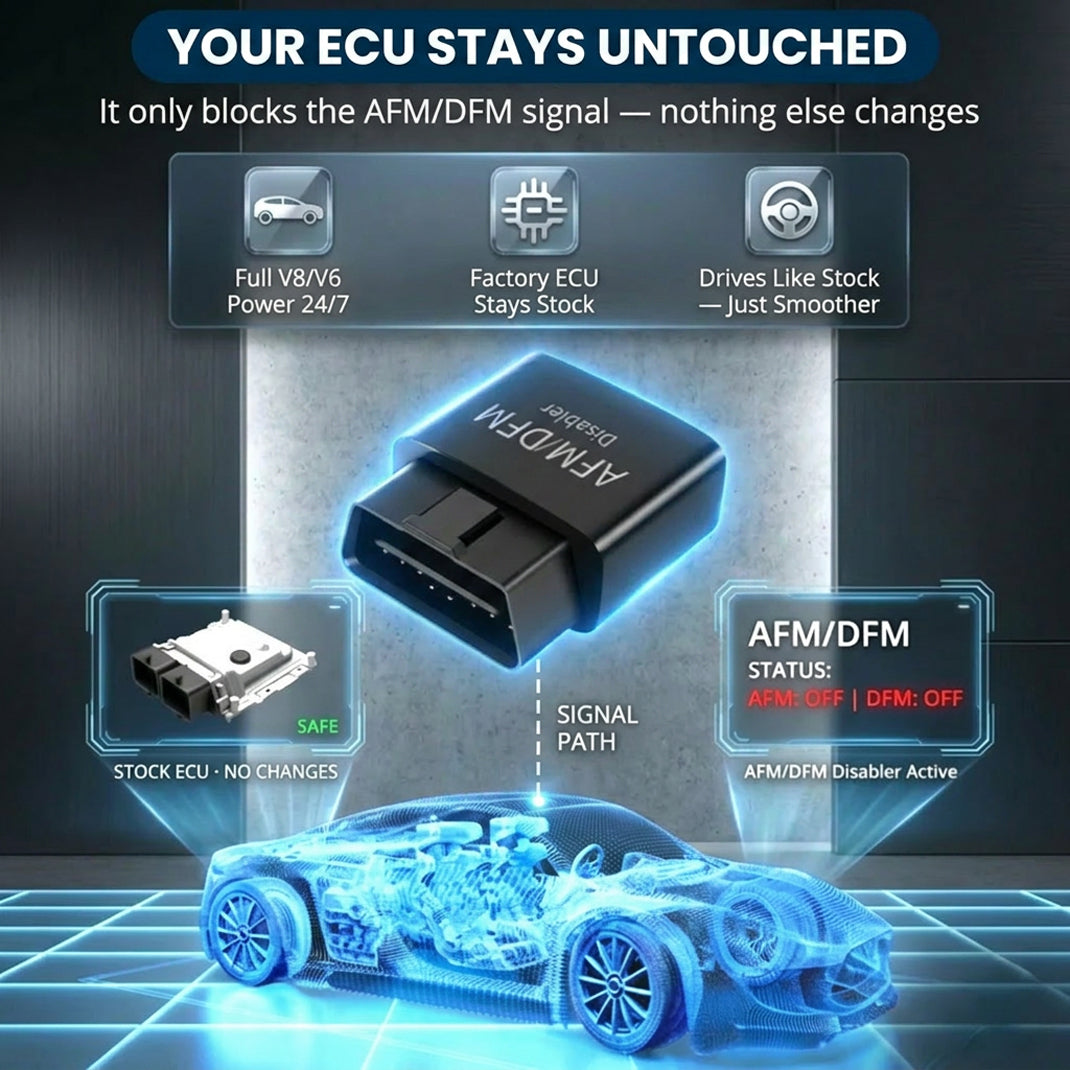
This compact OBD2 plug-in device keeps your GM engine operating in full V8 mode. It prevents rough shifting, torque converter shudder, and saves you from 5,000 dollar plus lifter repair bills without reprogramming your ECU. Our team at Gadon.store is ready to help you confirm compatibility for your vehicle.
Why Proper Engine Management is Crucial? A Direct Impact on V8 Performance and Engine Lifespan
Maintaining a consistent engine cycle is vital for the health of your Silverado. When the vehicle alternates between V4 and V8 modes, it places immense stress on the internal components. This cycle is controlled by the Active Fuel Management or Dynamic Fuel Management systems. While designed for efficiency, these systems often cause a noticeable lag during acceleration. This hesitation is frequently mistaken for transmission failure. However, it is often just the computer trying to re-engage cylinders. Over time, this switching leads to uneven mechanical wear. Protecting your V8 power ensures that the engine responds instantly to your input.
A stable engine environment prevents several high-cost issues:
• Permanent lifter collapse and bent pushrods.
• Premature wear on the torque converter clutch.
• Excessive oil consumption due to pressure imbalances.
• Carbon buildup on intake valves from deactivated cycles.
Using a Gadon AFM/DFM disabler correctly ensures your GM engine stays in full V8 mode, delivering smooth, lag-free performance and extending the engine lifespan by preventing costly 5,000 dollar plus lifter failures caused by constant cylinder switching.
Need Help Checking Vehicle Compatibility? Gadon.store is Ready 24/7
In just 2 minutes, our expert team can confirm if the Gadon™ AFM/DFM Disabler fits your exact year and model.
A Detailed 3-Step Guide to Using Performance Modules for GM Owners
The transition to full-time V8 power does not require complex tuning or expensive mechanical labor. Many owners struggle with silverado delayed shifting because the ECU is constantly hunting for the most efficient gear based on reduced cylinder output. By using a plug and play module, you bypass these software constraints without altering the base code of the vehicle. This process takes less than one minute and provides immediate relief from shifting lag. Below is the simplified procedure to restore your truck performance to its peak state.
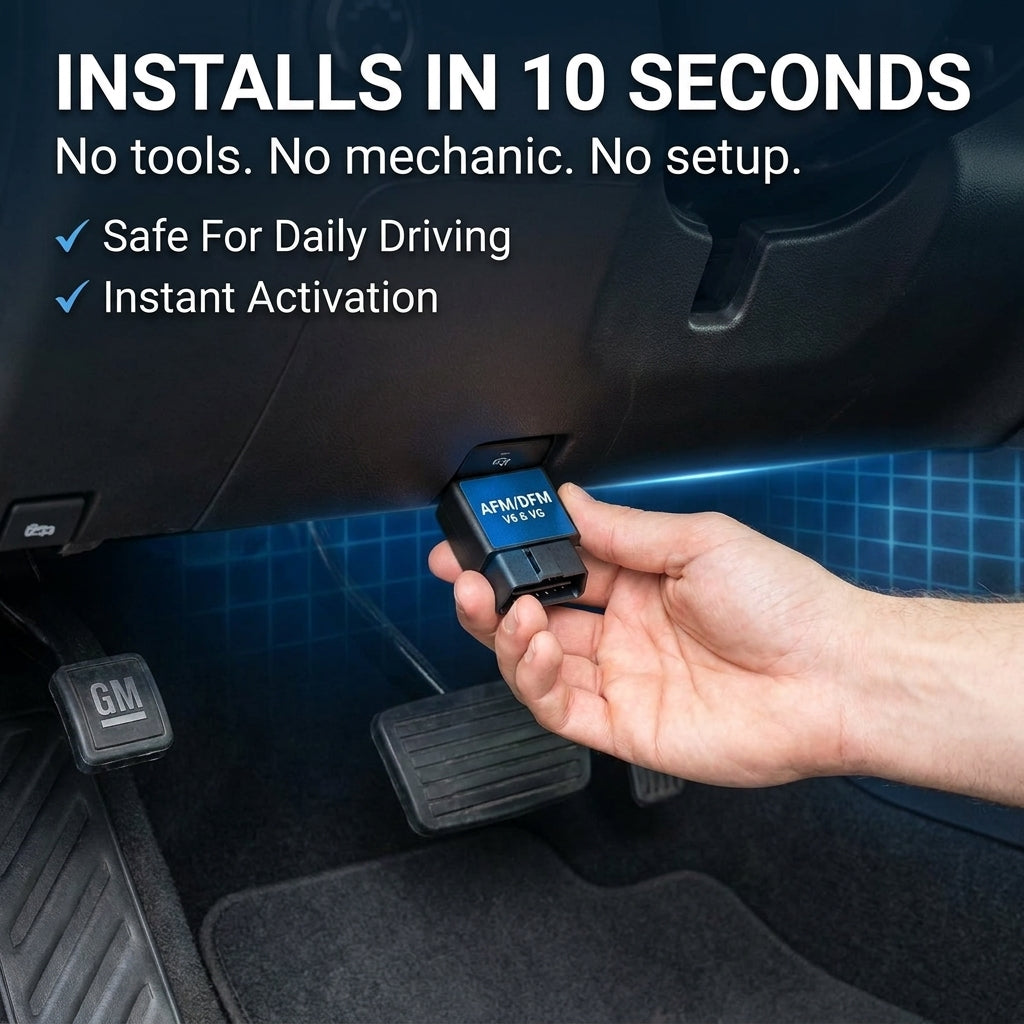
Step 1: Unbox and Locate the OBD2 Port
First, locate the OBD2 diagnostic port inside your GM truck or SUV, usually found under the driver side dashboard. Ensure your vehicle engine is completely turned off before proceeding. This port is the direct communication gateway to your Engine Control Unit and allows the module to send the necessary keep-alive signals for the cylinders. Use a flashlight if necessary to identify the trapezoidal shape of the port connector clearly.
Step 2: Plug the Device Securely
Take your Gadon™ AFM/DFM Disabler and push it firmly into the port. There are no tools required. You will notice the indicator lights flash, confirming it has successfully connected to the ECU. This connection establishes a handshake between the device and the vehicle computer. The module acts as a filter, preventing the deactivation command from reaching the solenoid manifold, thus keeping all eight lifters active and lubricated at all times.
Step 3: Start the Engine and Experience Full V8 Power
Start your engine. The device instantly blocks the cylinder deactivation signals without rewriting the factory software. You can now drive normally, experiencing immediate smoother throttle response, no lag, and consistent V8 power on every drive. You will observe that the V4 indicator on your dashboard no longer appears. This confirms that the engine is now running in its natural high-performance state, which eliminates the primary cause of delayed gear engagement.
Advanced Tips: Understanding AFM/DFM on GM Vehicles
To truly master your vehicle performance, you must understand the mechanical nuances of the 5.3L and 6.2L engines. These engines utilize oil pressure to lock and unlock the lifters during cylinder deactivation. When a cylinder is deactivated, the lifter no longer follows the camshaft lobe. This lack of movement causes the oil to stagnate, leading to sludge buildup. When the system calls for V8 mode again, the lifter may fail to unlock correctly. This is the root cause of the silverado delayed shifting and the dreaded engine ticking noise that precedes a total failure.
How Cylinder Deactivation Causes Lifter Failure
The constant switching between V4 and V8 modes creates uneven wear on the active lifters. Over time, this leads to premature lifter failure, bent pushrods, and costly engine rebuilds that can exceed 5,000 dollars. When the lifter becomes stuck, it can damage the camshaft, necessitating a complete engine teardown. By disabling the system, you ensure that oil flows constantly through every lifter, keeping the mechanical parts cool and properly lubricated throughout your entire commute.

Eliminating Transmission Shudder at Cruising Speeds
Many drivers experience a noticeable shudder or vibration at 35 to 60 mph. This often happens because the torque converter is struggling to match the power output of a 4-cylinder engine in a heavy truck frame. By keeping the engine in full-cylinder mode, the Gadon module balances the torque, eliminating the awkward gear-searching behavior entirely. This provides a much more predictable driving experience, especially when towing or driving on hilly terrain where gear hunting is most prevalent.

Troubleshooting Common Issues with OBD2 Modules
While the Gadon™ AFM/DFM Disabler is designed for simplicity, occasionally users may encounter minor setup challenges. Understanding the electrical system of your Chevy or GMC truck is key to resolving these quickly. The OBD2 port is powered by a dedicated fuse, and the module relies on a steady voltage to function. If you find the device behavior inconsistent, it is usually an external factor rather than the module itself. Our technical support team at Gadon.store has compiled the following solutions for common scenarios based on thousands of successful installations.
• Why are the lights on the device not turning on? -> Solution: Check your vehicle OBD2 fuse which is often shared with the cigarette lighter. If the fuse is blown, the port will not provide power to the Gadon module.
• Will the module drain my truck battery? -> Solution: The device draws a very minimal amount of power on standby. However, if you plan to leave your truck parked and undriven for several weeks, we recommend unplugging it to be safe.
• Do I need to unplug it before taking it to the dealership? -> Solution: Yes, simply unplug the Gadon disabler before your service visit. Since it leaves zero trace and does not flash the ECU, your factory warranty remains fully intact.
• What if the V4 light still appears? -> Solution: Ensure the module is pushed all the way into the port. A loose connection can prevent the signals from reaching the computer.
Gadon™ AFM/DFM Disabler
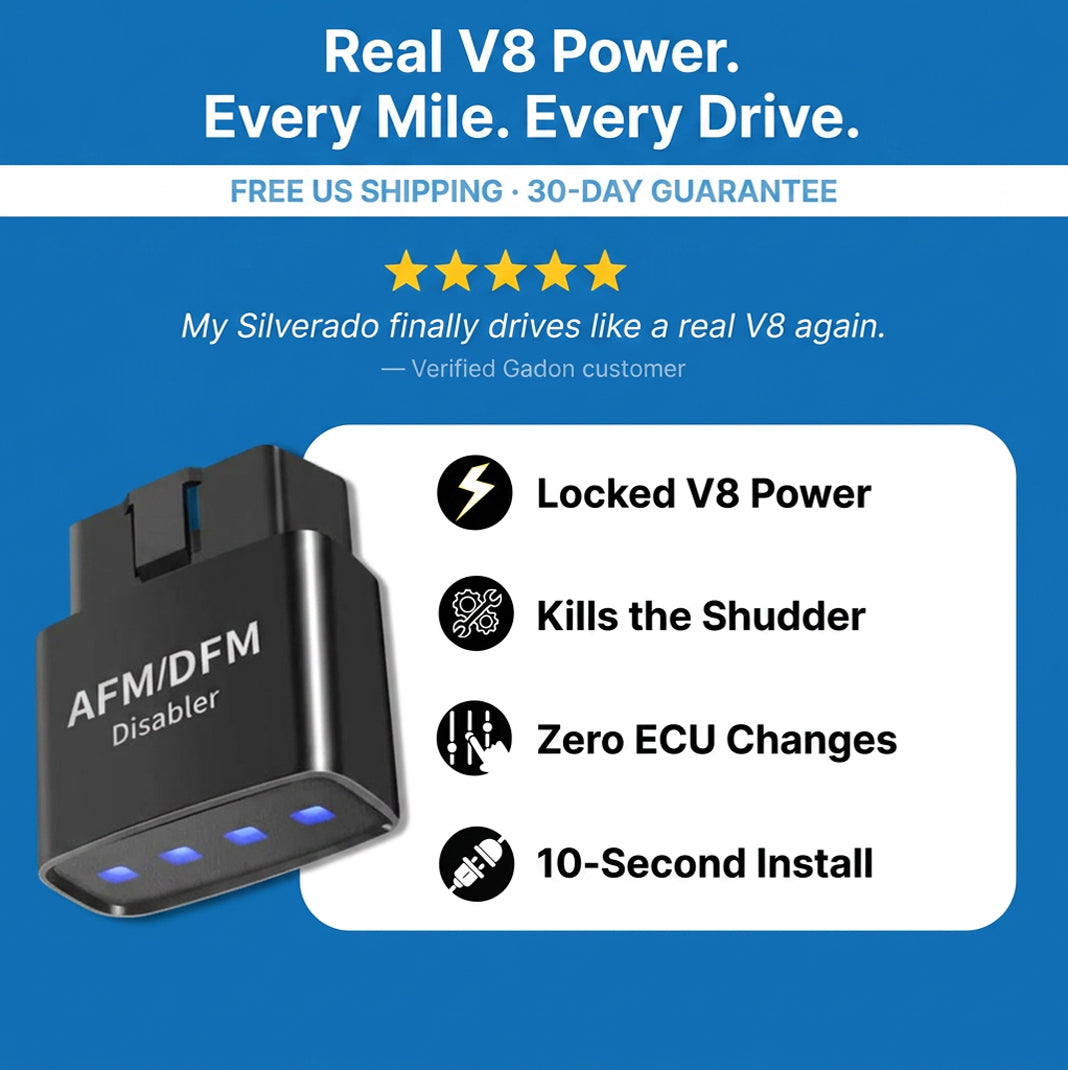
This smart module blocks your GM vehicle V4 mode, preventing sudden hesitations, oil burning issues, and devastating lifter collapses. Easy to install and remove, it preserves your engine health while protecting your factory warranty.
Which Gadon™ AFM/DFM Disabler Package is Right for You? Expert Advice
Choosing the correct package depends on your fleet size and vehicle usage. For personal use on a single daily driver, the 1 Pack Gadon™ Disabler is the perfect choice. You will feel the V8 difference immediately. For multi-vehicle owners, if you own a Silverado and your spouse drives a Tahoe, the 2 Packs option is ideal, offering a significant discount for a dual-vehicle upgrade. For commercial fleets or professional mechanics, the 3 Packs package offers the highest value, ensuring all your work trucks are protected against lifter failure. Every purchase from Gadon.store includes our 90-Day Guarantee and Free Shipping. Use code WELCOME to get an extra 10 percent OFF today!
| Product Package | Target User | Included Items | Reference Price |
|---|---|---|---|
| 1 Pack | Daily Drivers | 1x Gadon™ Disabler | 99.99 USD |
| 2 Packs | Dual Truck Families | 2x Gadon™ Disablers | 15% Discount |
| 3 Packs | Fleet Operators | 3x Gadon™ Disablers | 25% Discount |
| Return Period | Risk-Free Trial | 90 Days Policy | Full Refund |
| Shipping Rate | National Orders | Tracked Shipping | Zero Cost |
| Support Access | Technical Help | 24/7 WhatsApp | Free |
| Warranty Safe | New Trucks | Zero ECU Trace | 100% Secure |
| Compatibility | All GM Models | 2005 to 2026 | Verified |
Quick FAQs on Gadon AFM/DFM Disablers
• Will it void my GM warranty or trigger a Check Engine Light? -> No. The Gadon disabler does NOT reprogram your ECU or flash the computer. Simply unplug it before taking it to the dealership and it leaves zero trace. Your factory warranty stays intact and it will not trigger a check engine light.
• Will it fit my specific truck model? -> Yes, it is compatible with over 90 GM models manufactured between 2005 and 2026 including the Silverado, Tahoe, Sierra, Yukon, Escalade, and Suburban. It works with both V6 and V8 engines equipped with AFM or DFM systems.
• Will this actually save my engine from 5,000 dollar plus repairs? -> Absolutely. AFM/DFM cylinder deactivation is the leading cause of premature lifter failure in GM engines. By keeping the engine firing on all cylinders uniformly, the Gadon device prevents the uneven wear that leads to expensive rebuilds.
• When will I feel the difference while driving? -> Within the first mile. Most drivers report an immediate elimination of shudder at cruising speeds, smoother throttle response, stronger acceleration from a dead stop, and an overall better driving experience.
• How hard is the installation process? -> It takes less than 10 seconds. You need absolutely no tools and no mechanical experience. If you can plug a charger into your phone, you can plug the Gadon module into your truck OBD2 port.
Need Help Checking Vehicle Compatibility? Gadon.store is Ready 24/7
In just 2 minutes, our expert team can confirm if the Gadon™ AFM/DFM Disabler fits your exact year and model.
Protect Your GM Engine and Regain Full V8 Power with Gadon.store
At Gadon.store, we provide a reliable, plug and play solution that unleashes your engine true V8 potential while protecting it from expensive lifter failures. We are committed to high-quality performance modules, zero ECU tracing, and excellent customer support. Upgrade your ride and drive with confidence knowing your engine is protected by the most trusted module on the market. Call our support hotline now at +1 813-408-1627 or order directly from our website to secure your vehicle today!
Note: The guidance and prices in this article are for reference at the time of publishing and are subject to change. Please contact Gadon.store directly for the most current information. Disclaimer: The instructions in this article are based on practical experience with GADON STORE products. Always ensure your vehicle is parked safely before interacting with the OBD2 port. Please contact contact@gadon.store for detailed support regarding your specific GM model compatibility.