What Does a Bad Lifter Sound Like? (Audio Guide)
Bad lifter sound identification is the first step toward saving your GM engine from catastrophic mechanical failure and expensive repair bills. This in-depth guide on identifying engine noises will help you distinguish between normal operation and dangerous ticking while providing a clear path to protection through gadon.store. Understanding these acoustics ensures your V8 engine remains healthy and reliable for every mile ahead without expensive shop visits.
Need Help Checking Vehicle Compatibility? Gadon.store is Ready 24/7
In just 2 minutes, our expert team can confirm if the Gadon™ AFM/DFM Disabler fits your exact year and model.
Why Proper Bad Lifter Sound Identification is Crucial? A Direct Impact on V8 Performance and Engine Lifespan
Early detection of engine noises prevents complete internal collapse and preserves the integrity of your valvetrain components. A mechanical ticking sound often signals that the hydraulic lifters are no longer maintaining proper oil pressure or contact. Ignoring these rhythmic metal sounds leads to damaged camshaft lobes and metal debris throughout the oiling system.
Using a Gadon AFM/DFM disabler correctly ensures your GM engine stays in full V8 mode, delivering smooth performance and extending the engine lifespan by preventing costly lifter failures caused by constant cylinder switching. This proactive approach saves truck owners from the stress of unexpected breakdowns and massive financial burdens at the dealership.
Modern GM engines use complex oil flow systems to manage cylinder deactivation but these systems create inherent weaknesses. When a lifter fails, it often locks in a collapsed position which prevents the valve from opening. This results in a dead misfire and a very distinct audible signature that every truck owner should recognize immediately.
- Preventing lifter failure saves over 5000 dollars in labor and parts.
- Consistent V8 power reduces stress on the engine rotating assembly.
- Early diagnosis prevents the camshaft from being ground down by a stuck roller.
- Protecting the factory warranty is easier when you avoid major internal repairs.
Gadon™ AFM/DFM Disabler
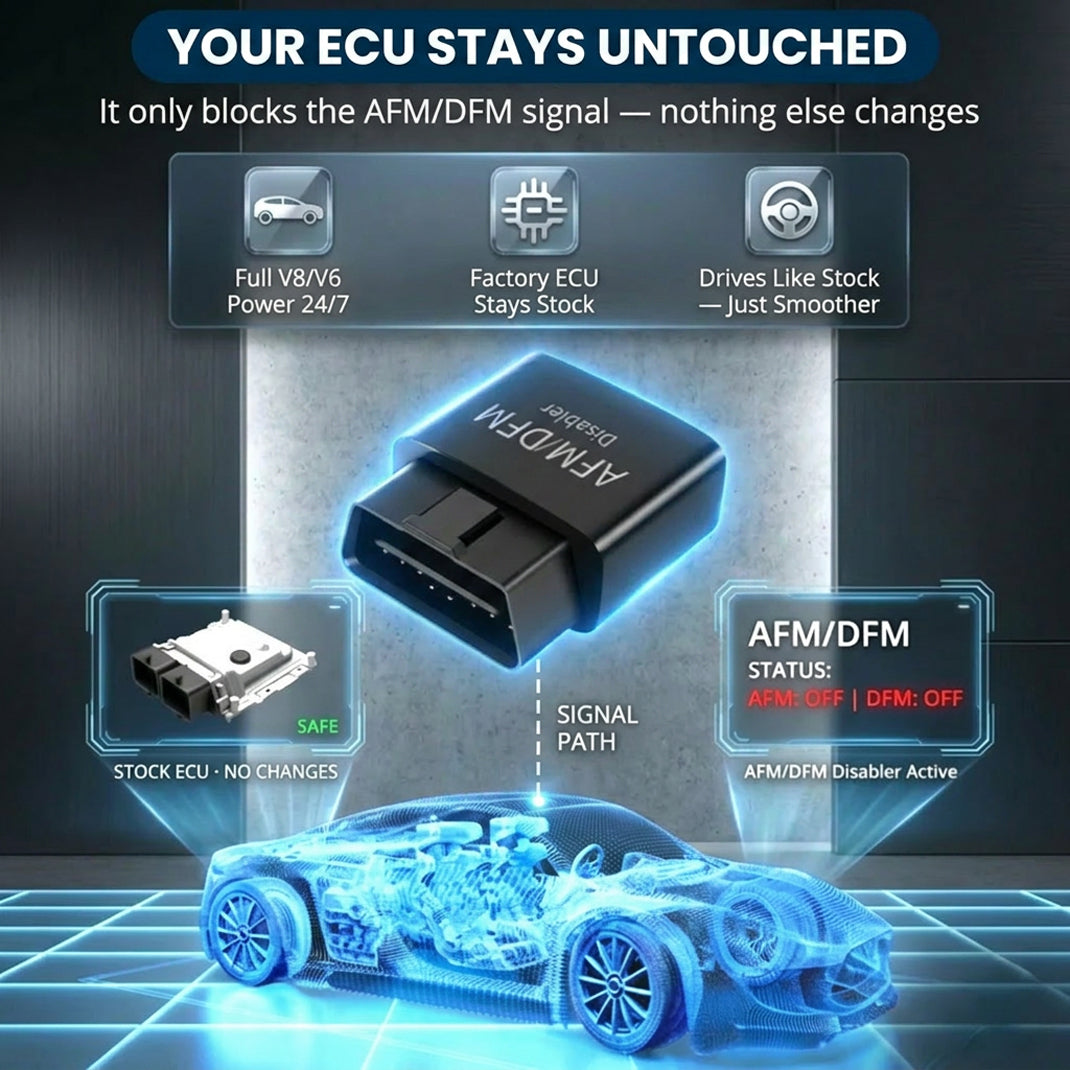
This compact OBD2 plug-in device keeps your GM engine operating in full V8 mode. It prevents rough shifting, torque converter shudder, and saves you from 5000 dollar lifter repair bills without reprogramming your ECU. Our team at Gadon.store is ready to help you confirm compatibility for your vehicle.
A Detailed 3-Step Guide to Using the Gadon Disabler for GM Owners
Installing the Gadon module is the most effective way to stop the cylinder deactivation process that leads to mechanical noise. Most drivers report that the engine feels more responsive immediately after the first installation. The process requires no mechanical tools and can be completed by any vehicle owner in less than one minute.
By bypassing the complex electronic signals that tell the lifters to collapse, you ensure that oil pressure remains consistent across the entire valvetrain. This prevents the characteristic tick from developing in the first place and provides peace of mind during long drives. Follow these steps to secure your engine performance.
Step 1: Unbox and Locate the OBD2 Port
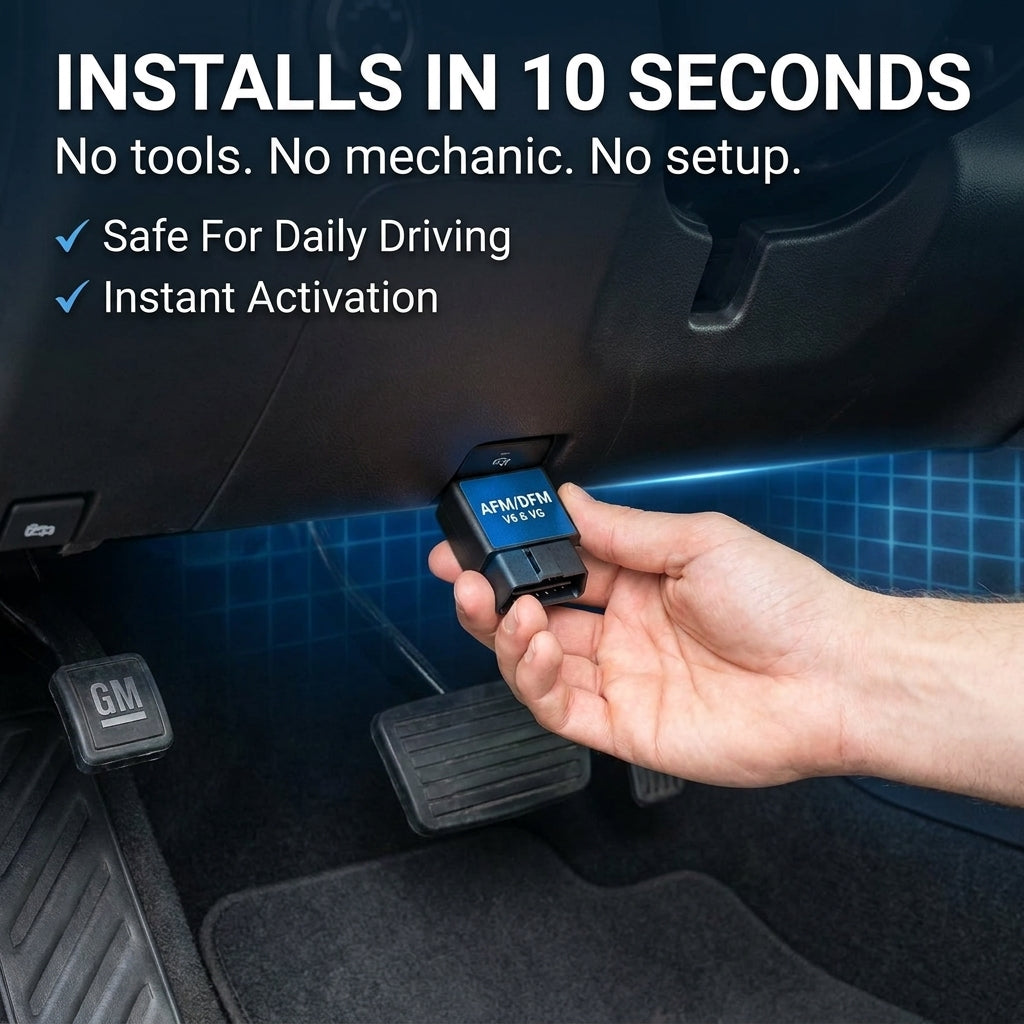
First, locate the OBD2 diagnostic port inside your GM truck or SUV, usually found under the driver side dashboard. Ensure your vehicle engine is completely turned off before proceeding. This port is the direct interface to the ECU and allows the module to communicate with the engine management system without making permanent changes.
Step 2: Plug the Device Securely
Take your Gadon™ AFM/DFM Disabler and push it firmly into the port. There are no tools required for this process. You will notice the indicator lights flash, confirming it has successfully connected to the vehicle electrical system. The plug and play nature of this module ensures a secure connection every time you drive.
Step 3: Start the Engine and Experience Full V8 Power
Start your engine and observe the smooth idle. The device instantly blocks the cylinder deactivation signals without rewriting the factory software. You can now drive normally, experiencing immediate smoother throttle response, no lag, and consistent V8 power on every drive. Your truck will no longer hunt for gears or vibrate during light cruising.
Advanced Tips: Understanding AFM/DFM on GM Vehicles
To truly protect your vehicle, you must understand the engineering behind Active Fuel Management and Dynamic Fuel Management. These systems were designed for fuel economy but they introduce significant mechanical complexity. The constant cycling of specialized lifters leads to metal fatigue and oil aeration which eventually causes the dreaded ticking noise.
Our experts at Gadon.store recommend keeping the engine in full power mode to balance internal pressures. When all eight cylinders fire continuously, the heat distribution is even and the oil stays at a consistent temperature. This environment is ideal for long term engine health and prevents the buildup of carbon on inactive intake valves.
How Cylinder Deactivation Causes Lifter Failure
The constant switching between V4 and V8 modes creates uneven wear on the active lifters. Over time, this leads to premature lifter failure, bent pushrods, and costly engine rebuilds that can exceed 5000 dollars. The locking pin inside the lifter can become stuck due to debris or lack of oil pressure during the transition phase.
Eliminating Transmission Shudder at Cruising Speeds
Many drivers experience a noticeable shudder or vibration at 35 to 60 mph. By keeping the engine in full cylinder mode, the Gadon module balances the torque, eliminating the awkward gear searching behavior entirely. This also reduces the wear on the torque converter clutch which often fails alongside AFM systems.

| Engine Noise Type | Sound Description | Location | Risk Level |
|---|---|---|---|
| Bad Lifter Tick | Rhythmic metallic tapping | Top of engine valve cover | High - Immediate attention |
| Rod Knock | Heavy thudding or banging | Bottom of engine block | Critical - Stop driving |
| Exhaust Leak | Hissing or puffing sound | Exhaust manifold area | Moderate - Performance loss |
| Injector Pulse | Very faint rapid clicking | Fuel rail area | Normal - Expected noise |
| Piston Slap | Hollow clattering when cold | Engine cylinders | Low - Common in LS engines |
| Belt Squeal | High pitched shrieking | Front accessory drive | Moderate - Replace belt |
| Power Steering Whine | Moaning sound when turning | Power steering pump | Moderate - Check fluid |
| Lifter Chatter | Irregular tapping sounds | Valvetrain area | High - Potential failure |
Troubleshooting Common Issues with Bad Lifter Sounds
Differentiating between a bad lifter and other engine noises is vital for correct repairs. A lifter tick usually follows the speed of the camshaft, meaning it occurs at half the frequency of the crankshaft rotation. If the sound disappears after the engine warms up, it may be a lifter that is slow to pump up with oil, which is a warning sign of future trouble.

We often see customers confuse an exhaust manifold leak with a lifter tick. A simple way to check is to listen closely near the wheel wells. Exhaust leaks often change in volume under heavy load, while a mechanical lifter tick remains constant regardless of throttle position. Using a mechanic stethoscope can help pinpoint the exact location of the noise.
- Why are the lights on the device not turning on? Solution: Check your vehicle OBD2 fuse which is often shared with the cigarette lighter. If the fuse is blown the port will not provide power to the Gadon module.
- Will the module drain my truck battery? Solution: The device draws a very minimal amount of power on standby. If you plan to leave your truck parked for several weeks we recommend unplugging it to be safe.
- Do I need to unplug it before taking it to the dealership? Solution: Yes, simply unplug the Gadon disabler before your service visit. Since it leaves zero trace and does not flash the ECU your factory warranty remains intact.
- Does the device work with diesel engines? Solution: No, this device is designed specifically for GM gasoline V6 and V8 engines equipped with AFM or DFM systems.
Need Help Checking Vehicle Compatibility? Gadon.store is Ready 24/7
In just 2 minutes, our expert team can confirm if the Gadon™ AFM/DFM Disabler fits your exact year and model.
Which Gadon™ AFM/DFM Disabler Package is Right for You? Expert Advice
Choosing the right protection package depends on your fleet size and vehicle usage. Every purchase from Gadon.store includes our 90 Day Guarantee and Free Shipping. Use code WELCOME to get an extra 10 percent OFF today and secure your engine against mechanical failure. We offer solutions for every type of GM owner from daily drivers to commercial fleets.
Our technical support team is available to help you select the package that provides the best value for your situation. Protecting multiple vehicles with our multi-pack options is a smart investment that prevents tens of thousands of dollars in potential repair costs across your entire vehicle lineup. Every module undergoes strict quality control to ensure reliable operation.
- For Multi-Vehicle Owners: If you own a Silverado and your spouse drives a Tahoe the 2 Packs package is ideal offering a 15 percent discount for a dual vehicle upgrade.
- For Fleets and Workshops: For commercial fleets or professional mechanics the 3 Packs package offers a 25 percent discount ensuring all your work trucks are protected against lifter failure.
- For Personal Use: The 1 Pack Gadon™ Disabler is the perfect choice for a single daily driver providing immediate results.
Gadon™ AFM/DFM Disabler
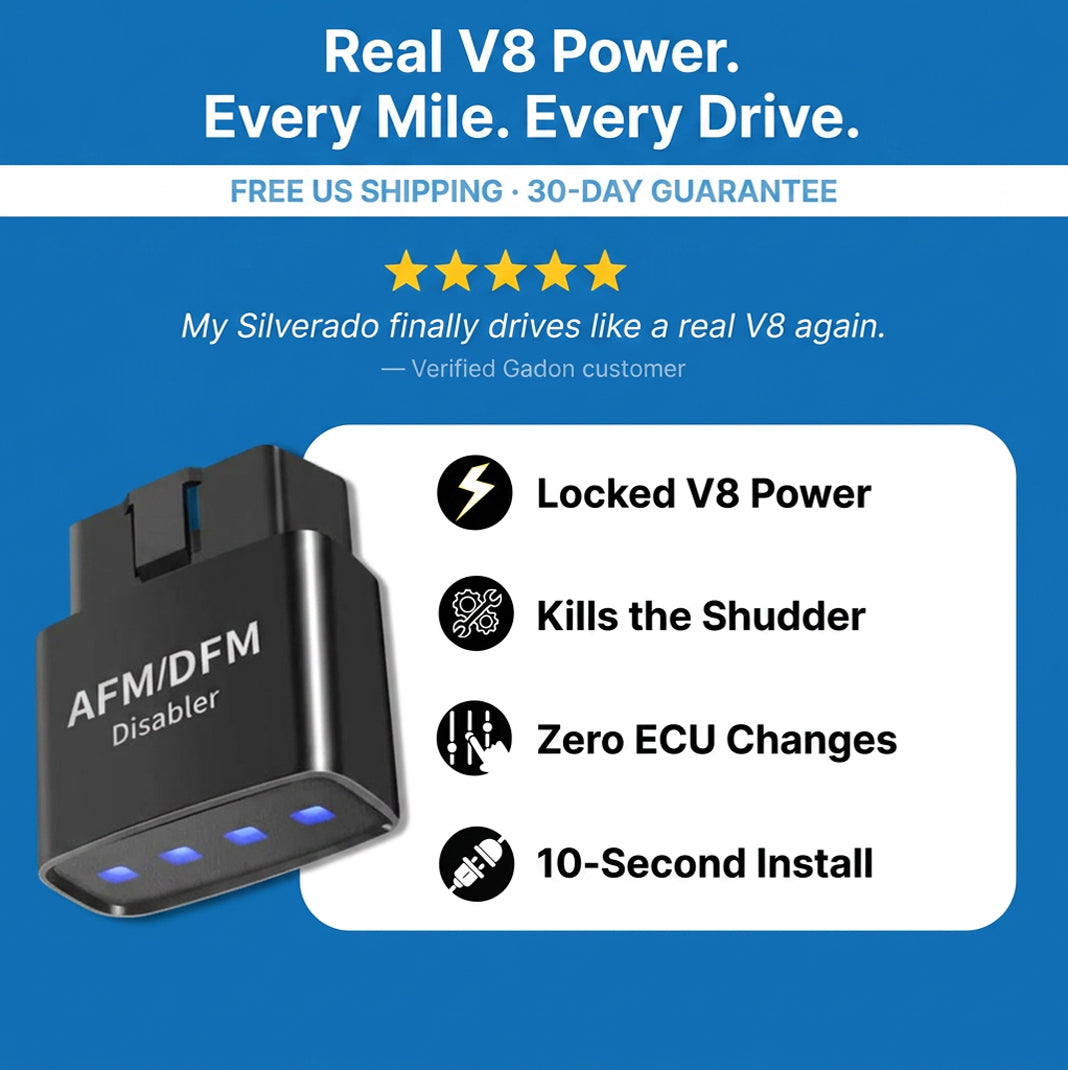
This smart module blocks your GM vehicle V4 mode, preventing sudden hesitations, oil burning issues, and devastating lifter collapses. Easy to install and remove, it preserves your engine health while protecting your factory warranty.
Quick FAQs on Gadon AFM/DFM Disablers
To properly disable AFM, insert the module directly into the OBD2 port located under the steering wheel while the vehicle is turned off, and ensure the indicator LEDs light up when you turn the key. This ensures the communication link is established before the engine control sequence begins. Most common questions from our users are addressed below to help you drive with confidence.
Our team has analyzed thousands of user reports to provide the most accurate guidance for GM truck owners. We understand the technical nuances of the LS and LT engine platforms and how they interact with electronic bypass modules. If your question is not listed please reach out to our support line for immediate assistance.
- Will it void my GM warranty or trigger a Check Engine Light? No. The Gadon disabler does not reprogram your ECU. Simply unplug it before service visits and it leaves zero trace.
- Will it fit my specific truck model? Yes, it is compatible with over 90 GM lines from 2005 to 2026 including Silverado, Sierra, Tahoe, and Yukon models.
- Will this actually save my engine from 5000 dollar repairs? Absolutely. By keeping the lifters pressurized and active you prevent the mechanical failure caused by constant cylinder switching.
- When will I feel the difference while driving? You will notice smoother acceleration and the absence of transmission shudder during your very first drive after installation.
- How hard is the installation process? It takes ten seconds. If you can plug in a phone charger you can install this module without any professional help.
Protect Your GM Engine and Regain Full V8 Power with Gadon.store
At Gadon.store, we provide a reliable, plug and play solution that unleashes your engine true V8 potential while protecting it from expensive lifter failures. We are committed to high quality performance modules, zero ECU tracing, and excellent customer support. Upgrade your ride and drive with confidence knowing your engine is safe. Call our support hotline now at +1 813-408-1627 or order directly from our website to secure your vehicle today!
Disclaimer: The instructions and prices in this article are for reference at the time of publishing and are subject to change. Please contact contact@gadon.store directly for the most current information. Always ensure your vehicle is parked safely before interacting with the OBD2 port. Contact Gadon.store for precise support for your GM vehicle compatibility.