Chevy 5.3 Engine Ticking: Lifter Failure or Exhaust?
An AFM/DFM disabler module is the primary solution for resolving issues related to the chevy 5.3 engine ticking while maintaining full V8 performance and preventing catastrophic internal damage. This comprehensive technical guide provided by experts at gadon.store explores the critical differences between exhaust leaks and lifter failure, ensuring owners understand how to protect their investment. By following these professional recommendations, you can avoid expensive repairs and enjoy a smooth driving experience across all road conditions while maximizing your truck reliability and power.
Gadon™ AFM/DFM Disabler
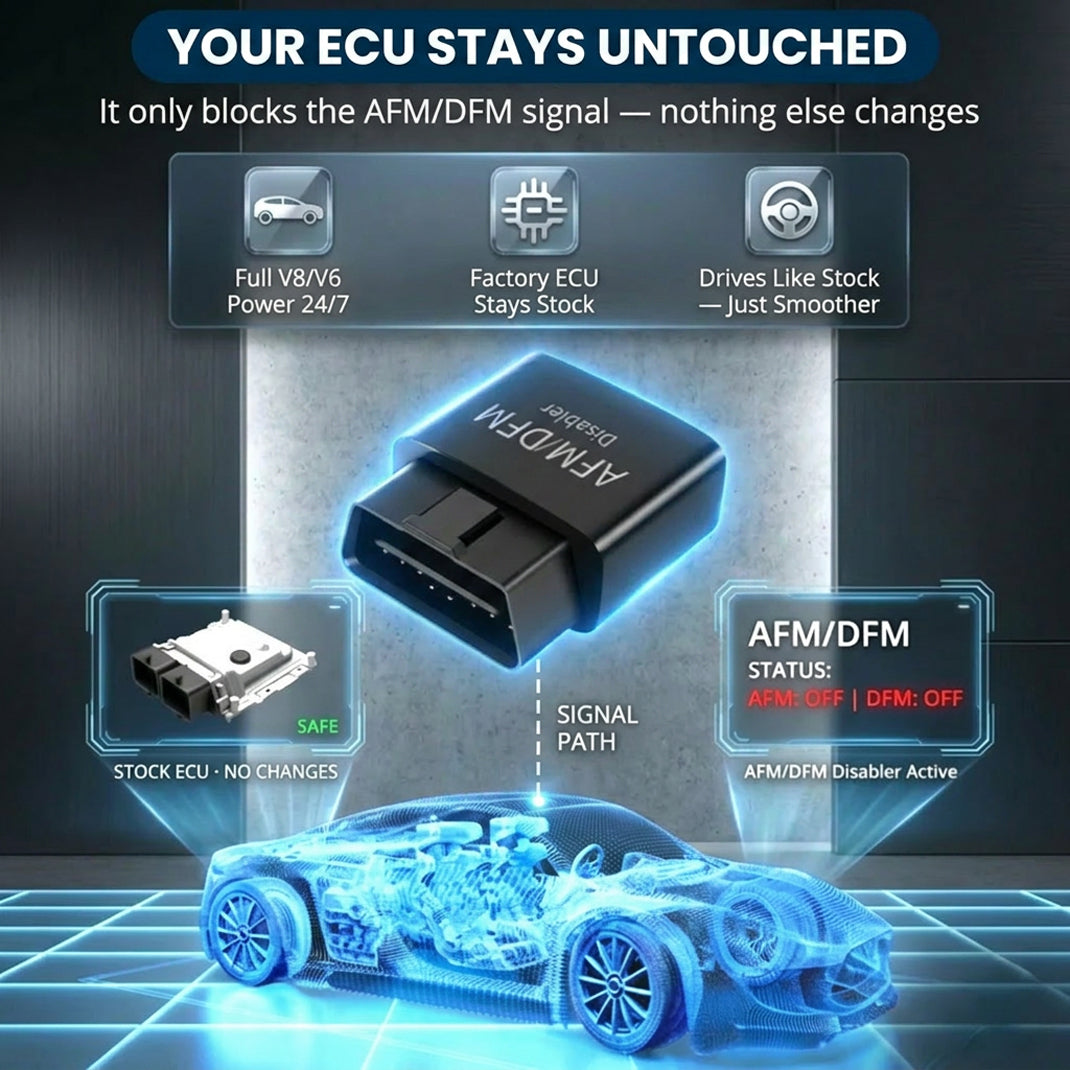
This compact OBD2 plug-in device keeps your GM engine operating in full V8 mode. It prevents rough shifting, torque converter shudder, and saves you from 5000 dollar lifter repair bills without reprogramming your ECU. Our team at Gadon.store is ready to help you confirm compatibility for your vehicle.
Why Proper Diagnosis of Chevy 5.3 Engine Ticking is Crucial? A Direct Impact on V8 Performance and Engine Lifespan
Using a Gadon AFM/DFM disabler correctly ensures your GM engine stays in full V8 mode, delivering smooth, lag-free performance and extending the engine lifespan by preventing costly 5000 dollar lifter failures caused by constant cylinder switching. Identifying the root cause of engine noise is the first step toward long-term vehicle health.

The 5.3L V8 engine is a legendary powerplant, but it faces significant challenges due to the Active Fuel Management and Dynamic Fuel Management systems. When the engine begins to make a rhythmic ticking or tapping sound, it typically signals one of two major issues. The first is an exhaust manifold leak, often caused by broken bolts, which is a relatively simple fix. The second, and far more dangerous, is a collapsed lifter within the AFM system. Failing to address a lifter tick immediately can lead to a destroyed camshaft and metal debris circulating through your entire lubrication system, resulting in total engine failure.
- Monitoring oil pressure stability to detect VLOM oil flow inconsistencies.
- Inspecting exhaust manifold bolts for breakage near the rear cylinders.
- Evaluating the frequency of the tick to determine if it matches camshaft or crankshaft speeds.
- Preventing the V4 mode transition to stop internal hardware stress.
Need Help Checking Vehicle Compatibility? Gadon.store is Ready 24/7
In just 2 minutes, our expert team can confirm if the Gadon™ AFM/DFM Disabler fits your exact year and model.
A Detailed 3-Step Guide to Using Gadon Technology for GM Owners
Implementing a plug and play solution is the most effective way to manage your engine performance without needing advanced mechanical skills. The Gadon module is designed to interface directly with your vehicle computer, sending a high-speed signal that keeps all eight cylinders firing at all times. This prevents the mechanical lifters from locking and unlocking, which is the exact moment when most failures occur. By keeping the system in a consistent state, you reduce the physical wear on the internal components and ensure that oil flows correctly to every part of the valvetrain. This process is entirely reversible and leaves no permanent changes to the vehicle factory settings.
Step 1: Unbox and Locate the OBD2 Port
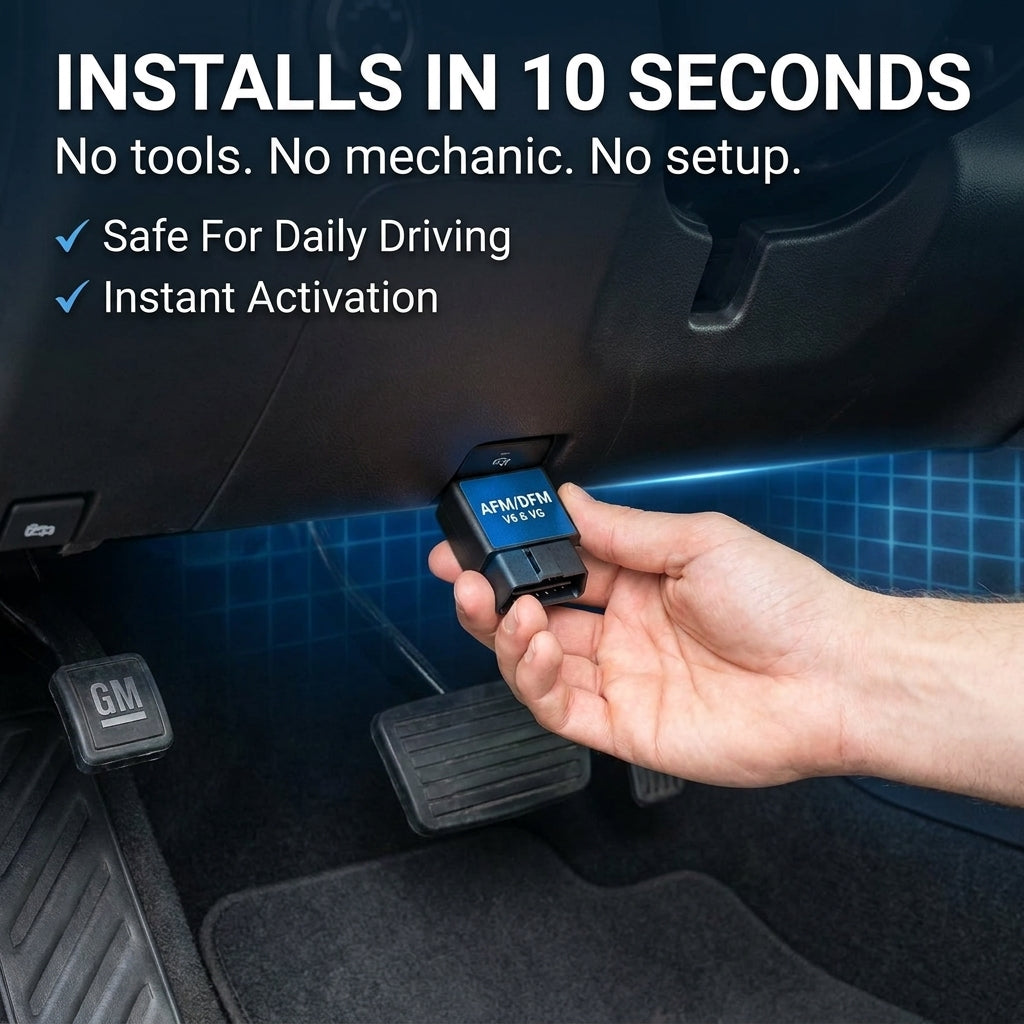
First, locate the OBD2 diagnostic port inside your GM truck or SUV, usually found under the driver side dashboard near the steering column. Ensure your vehicle engine is completely turned off before proceeding. This port is the universal gateway to your vehicle ECU and is the same port used by technicians for scanning codes. It is typically a black or white 16-pin connector. Clear any dust or debris from the port area to ensure a solid electrical connection for the module data pins.
Gadon™ AFM/DFM Disabler
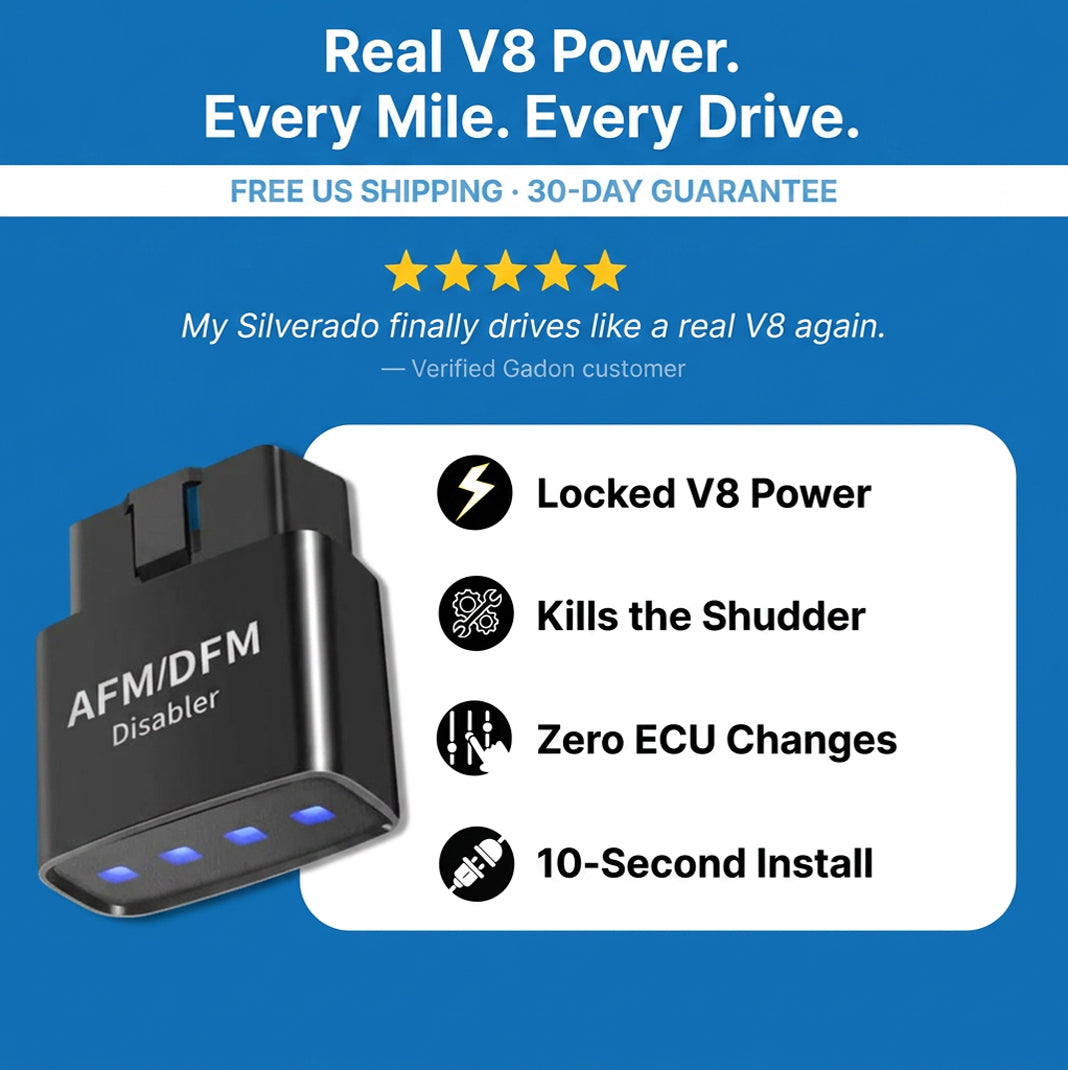
This smart module blocks your GM vehicle V4 mode, preventing sudden hesitations, oil burning issues, and devastating lifter collapses. Easy to install and remove, it preserves your engine health while protecting your factory warranty.
Step 2: Plug the Device Securely
Take your Gadon™ AFM/DFM Disabler and push it firmly into the port. There are no tools required for this installation. You will notice the indicator lights flash in a specific sequence, confirming it has successfully connected to the ECU and is beginning to communicate with the vehicle network. Ensure the module is seated squarely and does not wiggle, as a loose connection could cause intermittent signals. Once the lights stabilize, the device is active and monitoring the data bus for any cylinder deactivation commands.
Step 3: Start the Engine and Experience Full V8 Power
Start your engine. The device instantly blocks the cylinder deactivation signals without rewriting the factory software. You can now drive normally, experiencing immediate smoother throttle response, no lag, and consistent V8 power on every drive. Watch your dashboard or driver information center; you will see that the vehicle remains in V8 mode even when cruising on the highway or decelerating. This stability is what prevents the mechanical stress on the lifter pins and ensures the long-term health of your valvetrain.
Advanced Tips: Understanding AFM/DFM on GM Vehicles
The transition between V4 and V8 modes is managed by the Engine Control Module and a complex series of oil solenoids located in the valley of the engine. While designed for fuel economy, the real-world application often results in uneven thermal expansion and lubrication issues. Drivers frequently report that the fuel savings are negligible compared to the high cost of replacing an entire engine bank. Understanding these mechanics helps you realize why disabling the system is a proactive maintenance step rather than just a performance upgrade. By maintaining a constant V8 state, you also keep exhaust temperatures more consistent, which can prolong the life of your catalytic converters.
How Cylinder Deactivation Causes Lifter Failure
The constant switching between V4 and V8 modes creates uneven wear on the active lifters. These specialized lifters use a spring-loaded pin mechanism to disconnect the pushrod. Over time, oil sludge or mechanical fatigue causes these pins to fail in the retracted position, leading to premature lifter failure, bent pushrods, and costly engine rebuilds that can exceed 5000 dollars. Keeping the engine in V8 mode prevents these pins from ever having to move, effectively locking them in their strongest state for the duration of your drive.
Eliminating Transmission Shudder at Cruising Speeds
Many drivers experience a noticeable shudder or vibration at 35 to 60 mph. This often happens because the torque converter clutch is struggling to compensate for the reduced power output of only four cylinders. By keeping the engine in full-cylinder mode, the Gadon module balances the torque output, eliminating the awkward gear-searching behavior and vibration entirely. This not only makes the ride more comfortable but also reduces the heat and stress placed on the transmission internal clutches and fluid.
Troubleshooting Common Issues with Chevy 5.3 Engine Ticking Diagnosis

When dealing with engine noises, it is important to differentiate between mechanical failure and electrical interference. If you have installed a disabler and still hear a noise, it is vital to perform a manual inspection. A common tip from professional GM mechanics is to use a mechanic stethoscope to pinpoint exactly where the sound originates. If the sound is coming from the top of the engine near the intake manifold, it is likely a lifter. If it is coming from the side of the engine near the wheel wells, it is almost certainly an exhaust leak. Gadon store support is always available to help you interpret these signs based on thousands of customer cases.
- Why are the lights on the device not turning on? Solution: Check your vehicle OBD2 fuse, which is often shared with the cigarette lighter or accessory power outlet. If the fuse is blown, the port will not provide the necessary power to the Gadon module.
- Will the module drain my truck battery? Solution: The device draws a very minimal amount of power on standby, roughly equivalent to a small clock. However, if you plan to leave your truck parked and undriven for several weeks, we recommend unplugging it to be safe.
- Do I need to unplug it before taking it to the dealership? Solution: Yes, simply unplug the Gadon disabler before your service visit. Since it leaves zero trace and does not flash the ECU, your factory warranty remains 100 percent intact.
- What if the ticking persists after installation? Solution: If the module is active and the tick continues, the lifter may already be mechanically damaged or you have an exhaust leak. The module prevents future failure but cannot fix a part that is already physically broken.
Which Gadon™ AFM/DFM Disabler Package is Right for You? Expert Advice
Selecting the right package depends on your fleet size and vehicle usage. For personal use on a single daily driver, the 1 Pack Gadon™ Disabler is the perfect choice. You will feel the V8 difference immediately. If you own multiple GM vehicles, such as a Silverado for work and a Tahoe for the family, our multi-pack options provide significant value and protection for your entire garage. Every purchase from Gadon.store includes our 90-Day Guarantee and Free Shipping. Using a high-quality module is an investment in the longevity of your vehicle, potentially saving you thousands in labor and parts over the coming years.
| Product Package | Target User | Included Items | Value Proposition |
|---|---|---|---|
| 1 Pack Module | Individual Truck Owners | 1x Gadon™ Disabler | Full V8 Mode Instantly |
| 2 Packs Bundle | Two Vehicle Households | 2x Gadon™ Disablers | 15 Percent Discount Applied |
| 3 Packs Fleet | Small Business Fleets | 3x Gadon™ Disablers | 25 Percent Bulk Savings |
| 90-Day Guarantee | All Customers | Full Refund Option | Risk-Free Testing Period |
| Free Shipping | Global Shipping | Tracked Delivery | No Hidden Delivery Costs |
| Support Access | All Customers | 24/7 Expert Hotline | Professional Technical Aid |
| ECU Protection | Warranty Conscious | Zero Trace Signal | Safe for Factory Warranty |
| Durability | Long-term Users | High-grade Shell | Built for Truck Environments |
Quick FAQs on Gadon AFM/DFM Disablers
- Will it void my GM warranty or trigger a Check Engine Light? No. The Gadon device does not reprogram or flash your computer. Because it functions as a pass-through module, once you unplug it, the vehicle returns to its original factory state with no digital footprint. It will not cause a check engine light under normal operating conditions.
- Will it fit my specific truck model? This technology is compatible with a wide range of GM vehicles from 2005 to 2026, including the Chevy Silverado, GMC Sierra, Tahoe, Yukon, and Cadillac Escalade. If your vehicle features a 5.3L, 6.2L, or 6.0L V8 with cylinder deactivation, this module is designed for you.
- Will this actually save my engine from 5000 dollar repairs? Yes, by preventing the mechanical lifters from entering the deactivation phase, you eliminate the primary cause of lifter collapse. Preventing this failure is significantly cheaper than the alternative of a complete engine teardown and camshaft replacement.
- When will I feel the difference while driving? Most drivers notice a change the moment they leave their driveway. The throttle feels more responsive, the exhaust note remains consistent, and the annoying hesitation when accelerating from a cruising speed is completely gone.
- How hard is the installation process? It takes less than 10 seconds. If you can plug a USB drive into a computer, you can install this module. It is a simple matter of alignment and firm pressure into the existing OBD2 port.
Need Help Checking Vehicle Compatibility? Gadon.store is Ready 24/7
In just 2 minutes, our expert team can confirm if the Gadon™ AFM/DFM Disabler fits your exact year and model.
Protect Your GM Engine and Regain Full V8 Power with Gadon.store
At Gadon.store, we provide a reliable, plug-and-play solution that unleashes your engine true V8 potential while protecting it from expensive lifter failures. We are committed to high-quality performance modules, zero ECU tracing, and excellent customer support for all Chevy and GMC owners. Upgrade your ride and drive with confidence today. Call our support hotline now at +1 813-408-1627 or order directly from our website to secure your vehicle for the long haul.
Disclaimer: The instructions in this article are based on practical experience with GADON STORE products. Always ensure your vehicle is parked safely before interacting with the OBD2 port. Please contact contact@gadon.store for detailed support regarding your specific GM model compatibility. Note: The guidance and prices in this article are for reference at the time of publishing and are subject to change. Please contact Gadon.store directly for the most current information.