5 Ways to Prevent AFM Lifter Failure in Your GM V8
Prevent afm lifter failure by using a plug and play module from gadon.store to ensure your truck remains in full V8 mode. This in depth guide on how to prevent afm lifter failure will help you understand the risks of cylinder deactivation and provide actionable solutions to protect your engine from expensive repairs. By visiting gadon.store you gain access to professional tools that eliminate transmission shudder and maintain peak performance for your General Motors vehicle.
Need Help Checking Vehicle Compatibility? Gadon.store is Ready 24/7
In just 2 minutes, our expert team can confirm if the Gadon™ AFM/DFM Disabler fits your exact year and model.
Why Proper Preventative Maintenance is Crucial? A Direct Impact on V8 Performance and Engine Lifespan
Using a Gadon AFM/DFM disabler correctly ensures your GM engine stays in full V8 mode, delivering smooth, lag free performance and extending the engine lifespan by preventing costly 5,000 dollar lifter failures caused by constant cylinder switching.

Active Fuel Management and Dynamic Fuel Management are technologies designed by General Motors to improve fuel economy by deactivating specific cylinders under light load conditions. While the intent is efficiency, the mechanical reality for many owners of the Silverado, Sierra, Tahoe, and Yukon involves significant risks. When the system shifts between V4 and V8 modes, it puts immense stress on the complex lifters. This mechanical fatigue often results in a collapsed lifter, which leads to a ticking sound, misfires, and potentially a complete engine failure. The cost to repair these components often exceeds 5,000 dollars because the process requires removing the cylinder heads and replacing the entire lifter tray and associated hardware. Maintaining the engine in full power mode is the most effective way to avoid these structural vulnerabilities. By eliminating the cycle of deactivation, the oil pressure remains consistent across all internal components, reducing uneven wear. Owners who prioritize performance and longevity choose to disable these systems to ensure their vehicle operates as a true V8 at all times. This approach protects the investment and provides peace of mind during long hauls or heavy towing operations.
- Avoid the 5,000 dollar average cost for mechanical lifter replacement and engine teardown.
- Eliminate the annoying vibration and hesitation associated with the transition between modes.
- Maintain consistent lubrication and oil pressure for all sixteen lifters simultaneously.
- Protect the long term value of the truck or SUV by ensuring the motor remains healthy.
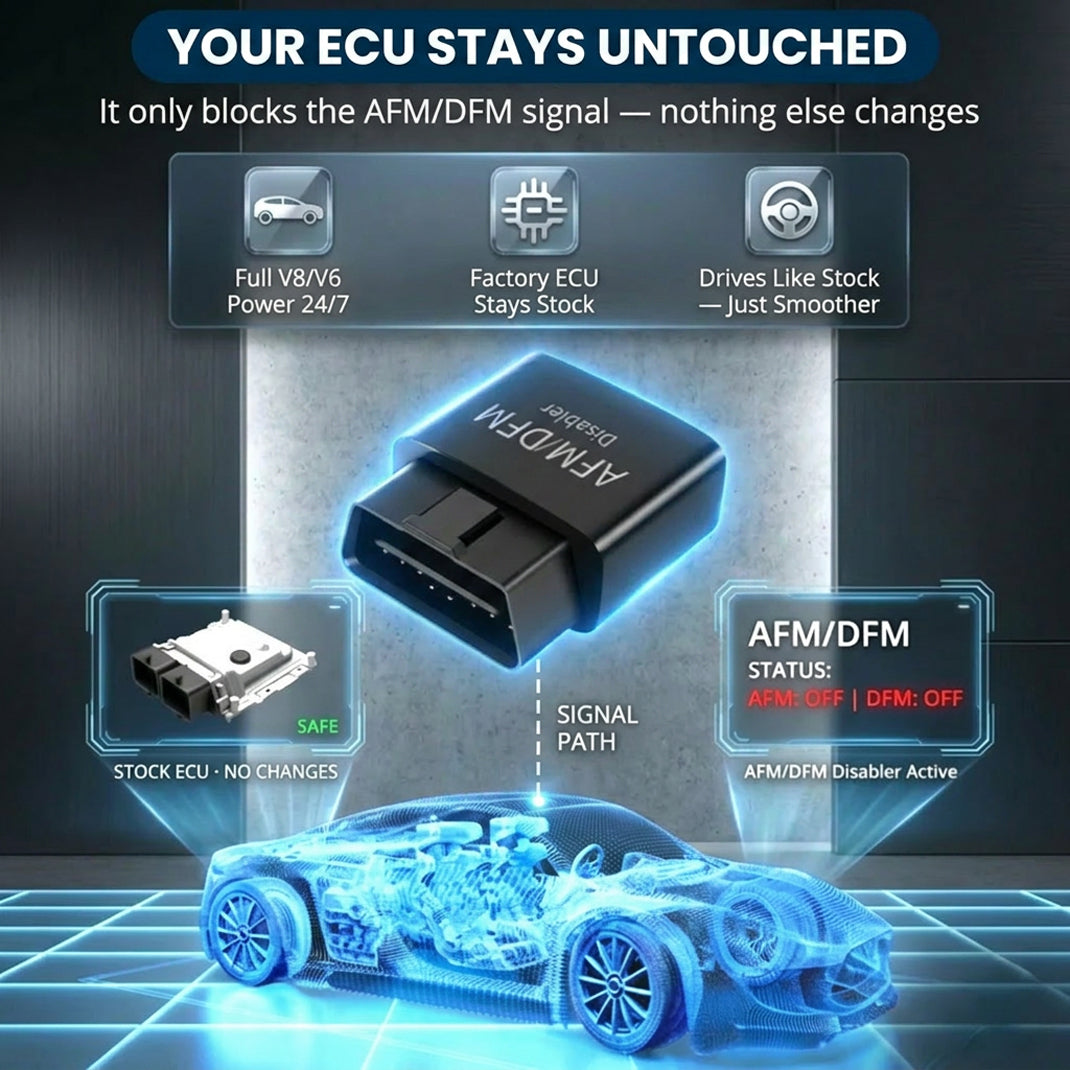
Gadon™ AFM/DFM Disabler
This compact OBD2 plug in device keeps your GM engine operating in full V8 mode. It prevents rough shifting, torque converter shudder, and saves you from 5,000 dollar lifter repair bills without reprogramming your ECU. Our team at Gadon.store is ready to help you confirm compatibility for your vehicle.
A Detailed 3-Step Guide to Using High Performance Modules for GM Owners
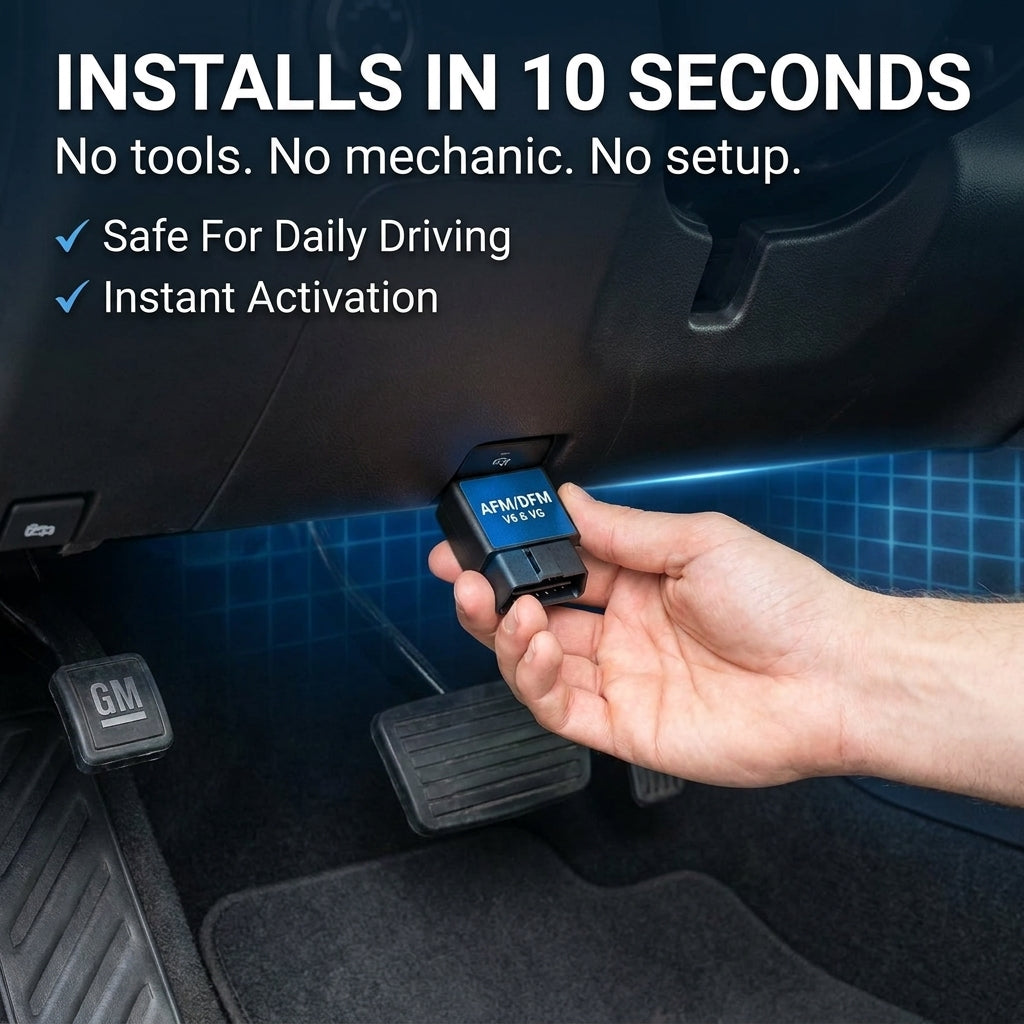
The installation of the Gadon module is a simplified process that requires no specialized tools or professional mechanical background. By following these three steps, you can immediately bypass the cylinder deactivation software safely and effectively. This method is preferred by enthusiasts because it does not involve flashing the computer, which preserves the original factory settings. Many drivers find that the ten second installation provides the most significant improvement in vehicle driveability for the lowest effort. Whether you are a casual driver or a dedicated truck enthusiast, these steps ensure that your vehicle remains in full power mode during every journey.
Step 1: Unbox and Locate the OBD2 Port
First, locate the OBD2 diagnostic port inside your GM truck or SUV, usually found under the driver side dashboard near the steering column. Ensure your vehicle engine is completely turned off before proceeding with the installation. The port is a trapezoidal female connector that serves as the communication hub for the vehicle internal networks. In most Chevrolet and GMC models, this port is easily accessible without removing any plastic trim. Verify that the port is clean and free of debris to ensure a solid electrical connection. Taking a moment to identify the exact orientation of the port will make the next step effortless.
Step 2: Plug the Device Securely
Take your Gadon™ AFM/DFM Disabler and push it firmly into the port. There are no tools required for this process. You will notice the indicator lights flash, confirming it has successfully connected to the ECU and is receiving power. The module is designed to fit snugly to prevent it from vibrating loose during travel. Once the lights stabilize or begin their sequence, the device is communicating with the vehicle computer to block deactivation signals. This physical connection is the only requirement to initiate the protection protocol for your lifters and pushrods. It is a true plug and play experience that respects the vehicle electrical architecture.
Step 3: Start the Engine and Experience Full V8 Power
Start your engine and observe the dashboard display. The device instantly blocks the cylinder deactivation signals without rewriting the factory software or leaving any trace. You can now drive normally, experiencing immediate smoother throttle response, no lag, and consistent V8 power on every drive. You will notice that the indicator for V4 mode no longer appears on your instrument cluster. This confirms that all eight cylinders are firing in unison, providing the torque and balance that the engine was fundamentally designed to deliver. Enjoy the elimination of the awkward gear searching and the rhythmic vibration that used to plague your cruising speeds.
Advanced Tips: Understanding AFM/DFM on GM Vehicles
To properly maintain a General Motors V8 engine, one must understand how the internal deactivation hardware functions. The Active Fuel Management system uses high pressure oil to collapse special lifters on specific cylinders, effectively turning them into air springs. While this reduces fuel consumption slightly, it creates an environment where certain engine parts work harder than others. Over thousands of miles, this imbalance leads to carbon buildup on the inactive valves and uneven thermal expansion across the engine block. Advanced owners recognize that preventing this cycle is a form of proactive insurance. By keeping the engine in a constant state of operation, you ensure that oil flows through every passage and that every component remains at an optimal operating temperature. This technical insight helps explain why a simple electronic bypass is so effective at preventing mechanical catastrophe.
How Cylinder Deactivation Causes Lifter Failure
The constant switching between V4 and V8 modes creates uneven wear on the active lifters and the locking pins inside the AFM hardware. Over time, this leads to premature lifter failure, bent pushrods, and costly engine rebuilds that can exceed 5,000 dollars in total shop labor and parts. When the locking pin fails to engage or disengage correctly, the lifter can get stuck in a collapsed position, preventing the valve from opening. This causes an immediate loss of power and a loud metallic ticking sound. By utilizing a disabler module, you prevent the locking pins from ever being commanded to move, which keeps them securely locked in the V8 position for the life of the engine. This is the most effective preventative measure available for the 5.3L and 6.2L powerplants.

Eliminating Transmission Shudder at Cruising Speeds
Many drivers experience a noticeable shudder or vibration at 35 to 60 mph when the vehicle tries to balance the load in V4 mode. By keeping the engine in full cylinder mode, the Gadon module balances the torque output, eliminating the awkward gear searching behavior and the torque converter shudder entirely. This vibration is often mistaken for a transmission fault, but it is actually the result of the engine struggling to provide enough torque with only half of its cylinders active. When all cylinders fire, the harmonic balance is restored, and the transmission can shift more predictably. This improvement not only makes the drive more comfortable but also reduces the physical wear on the torque converter clutch and the driveline joints.
Which Gadon™ AFM/DFM Disabler Package is Right for You? Expert Advice
Selecting the appropriate package depends on your specific fleet size and maintenance goals. Every purchase from Gadon.store includes our 90 Day Guarantee and Free Shipping to ensure you are satisfied with the performance. If you have a single vehicle for daily commuting, the standard pack provides immediate protection. For households with multiple GM trucks or professional workshops, the multi pack options offer significant savings. Investing in this technology is a small price to pay compared to the thousands required for a top end engine overhaul. Use the table below to compare the different offerings and find the value that matches your needs.
| Product Package | Target User | Included Items | Reference Value |
|---|---|---|---|
| 1 Pack Base | Single Vehicle Owners | 1x Gadon™ AFM/DFM Disabler | Optimal for Daily Drivers |
| 2 Packs Selection | Families / Dual GM Trucks | 2x Gadon™ AFM/DFM Disablers | High Popularity Choice |
| 3 Packs Value | Work Fleets and Shops | 3x Gadon™ AFM/DFM Disablers | Significant Multi-Unit Savings |
| Refund Policy | All Purchases | Full Support and Returns | 90 Days Protection |
| Delivery Option | Standard Shipping | Tracked Global Shipping | Zero Cost Delivery |
| Verification Service | Prospective Buyers | Compatibility Confirmation | Free Expert Consultation |
| Direct Support | Post Purchase | Technical Hotline Access | Available 24/7 |
| ECU Safety | Warranty Protection | Non-Permanent Modification | Zero Trace Technology |
Troubleshooting Common Issues with Performance Modules
Based on our team experience at Gadon.store, most issues are related to the physical connection or the vehicle electrical health rather than the module software. If you encounter a situation where the module does not seem to activate, the first step is to verify the condition of the OBD2 port itself. This port relies on a specific fuse that is often shared with the auxiliary power outlets. If the fuse is blown, the module will not receive the necessary voltage to operate. Additionally, ensuring that the module is fully seated in the port is vital for consistent communication. We recommend checking the port pins for any signs of corrosion if the vehicle has been operated in high humidity or coastal environments. Following these professional troubleshooting tips will resolve the vast majority of user concerns quickly.
- Why are the lights on the device not turning on? Solution: Check your vehicle OBD2 fuse which is often shared with the cigarette lighter. If the fuse is blown, the port will not provide power to the Gadon module.
- Will the module drain my truck battery? Solution: The device draws a very minimal amount of power on standby. However, if you plan to leave your truck parked and undriven for several weeks, we recommend unplugging it to be safe.
- Do I need to unplug it before taking it to the dealership? Solution: Yes, simply unplug the Gadon disabler before your service visit. Since it leaves zero trace and does not flash the ECU, your factory warranty remains fully intact.
- Can I use this on a vehicle with a custom tune? Solution: We recommend using the Gadon module on vehicles with factory software. If you have an aftermarket tune, please consult with our technical team first.
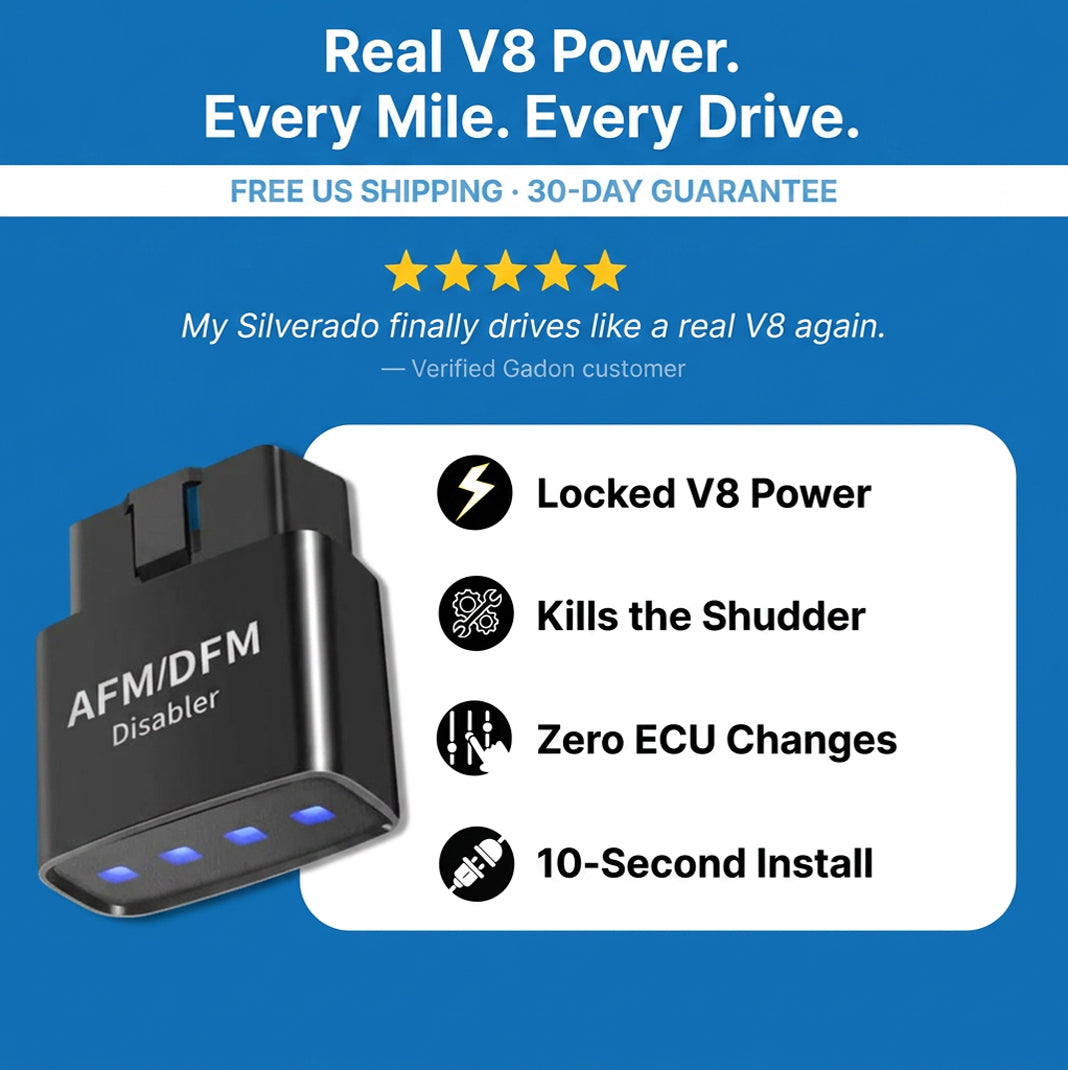
Gadon™ AFM/DFM Disabler
This smart module blocks your GM vehicle V4 mode, preventing sudden hesitations, oil burning issues, and devastating lifter collapses. Easy to install and remove, it preserves your engine health while protecting your factory warranty.
Quick FAQs on Gadon AFM/DFM Disablers
Finding the right solution for engine longevity involves answering critical questions about compatibility and safety. At Gadon.store, we prioritize transparency and technical accuracy to help you make the right choice for your GM vehicle. Here are the most frequent inquiries from our community of over 50,000 satisfied customers.
Will it void my GM warranty or trigger a Check Engine Light?
No. The Gadon disabler does NOT reprogram your ECU or flash the computer. Simply unplug it before taking it to the dealership, and it leaves zero trace. Your factory warranty stays 100 percent intact and it will not trigger a check engine light during normal operation. This makes it a preferred choice for owners of newer trucks who want to maintain their protection while improving engine performance.
Will it fit my specific truck model?
Yes, it is compatible with a wide range of GM models manufactured between 2005 and the current year, including the Silverado, Tahoe, Sierra, Yukon, Escalade, and Suburban. It works with both V6 and V8 engines equipped with AFM or DFM systems. Our technical team is available to verify your specific VIN and model year to ensure a perfect match before you place an order.
Will this actually save my engine from 5,000 dollar repairs?
Absolutely. AFM/DFM cylinder deactivation is the leading cause of premature lifter failure in GM engines. By keeping the engine firing on all cylinders uniformly, the Gadon device prevents the uneven wear that leads to expensive engine rebuilds. Preventive maintenance via electronic bypass is a strategic way to avoid the mechanical vulnerabilities inherent in the factory cylinder deactivation software.
When will I feel the difference while driving?
Within the first mile of driving. Most drivers report an immediate elimination of shudder at cruising speeds between 35 and 60 mph. You will also notice smoother throttle response, stronger acceleration from a dead stop, and an overall more consistent driving experience. The truck will feel more powerful because it no longer has to wait for cylinders to reactivate before providing acceleration.
How hard is the installation process?
It takes less than 10 seconds to complete. You need absolutely no tools and no mechanical experience. If you can plug a charger into your mobile phone, you can plug the Gadon module into your truck OBD2 port. The design is intuitive and fits perfectly into the standard diagnostic connector found in all modern General Motors vehicles.
Protect Your GM Engine and Regain Full V8 Power with Gadon.store
At Gadon.store, we provide a reliable, plug and play solution that unleashes your engine true V8 potential while protecting it from expensive lifter failures. We are committed to high quality performance modules, zero ECU tracing, and excellent customer support. Upgrade your ride and drive with confidence knowing your engine is safe. To unlock full V8 power and protect your engine, order yours today! Call our support hotline now at +1 813-408-1627 or order directly from our website to secure your vehicle today!
Need Help Checking Vehicle Compatibility? Gadon.store is Ready 24/7
In just 2 minutes, our expert team can confirm if the Gadon™ AFM/DFM Disabler fits your exact year and model.
Disclaimer: The instructions and prices in this article are for reference at the time of publishing and are subject to change. Please contact Gadon.store directly for the most current information. Always ensure your vehicle is parked safely before interacting with the OBD2 port. Contact Gadon.store for precise support for your GM vehicle.