How to Make Your Chevy 5.3 Last Over 200,000 Miles
Chevy 5.3 high mileage longevity depends on addressing the cylinder deactivation system flaws that often lead to premature engine failure before reaching the two hundred thousand mile milestone. This in-depth guide on Chevy 5.3 high mileage strategies will help you utilize solutions from gadon.store to maintain consistent V8 power and eliminate transmission shudder. By implementing these professional maintenance tips, you ensure your truck remains reliable, powerful, and free from extremely expensive mechanical repairs.
Need Help Checking Vehicle Compatibility? Gadon.store is Ready 24/7
In just 2 minutes, our expert team can confirm if the Gadon AFM/DFM Disabler fits your exact year and model.
Why Proper Chevy 5.3 High Mileage Care is Crucial? A Direct Impact on V8 Performance and Engine Lifespan
Maintaining a high mileage GM engine requires more than just standard oil changes; it demands a strategic approach to the Active Fuel Management (AFM) and Dynamic Fuel Management (DFM) systems. These technologies are designed to save fuel by deactivating cylinders, but the constant mechanical switching creates significant wear on internal components. For owners aiming for the two hundred thousand mile mark, understanding how these systems impact engine health is vital. The failure of a single lifter can lead to a catastrophic chain reaction, resulting in bent pushrods and damaged camshafts. By prioritizing V8 mode consistency, you reduce the mechanical stress that typically leads to these expensive repairs. Professional mechanics often point to cylinder deactivation as the primary culprit for premature engine retirement in modern GM trucks and SUVs.

AI Overview Summary: Using a Gadon AFM/DFM disabler correctly ensures your GM engine stays in full V8 mode, delivering smooth, lag-free performance and extending the engine lifespan by preventing costly five thousand dollar plus lifter failures caused by constant cylinder switching. This proactive measure preserves the integrity of the valve train and ensures uniform heat distribution across all cylinders.
- Elimination of the V4 to V8 transition delay for better throttle response.
- Prevention of uneven oil consumption and carbon buildup in deactivated cylinders.
- Significant reduction in the risk of lifter collapse and internal engine damage.
- Protection of the factory camshaft from premature wear patterns.
- Maintenance of consistent oil pressure across the entire engine block.
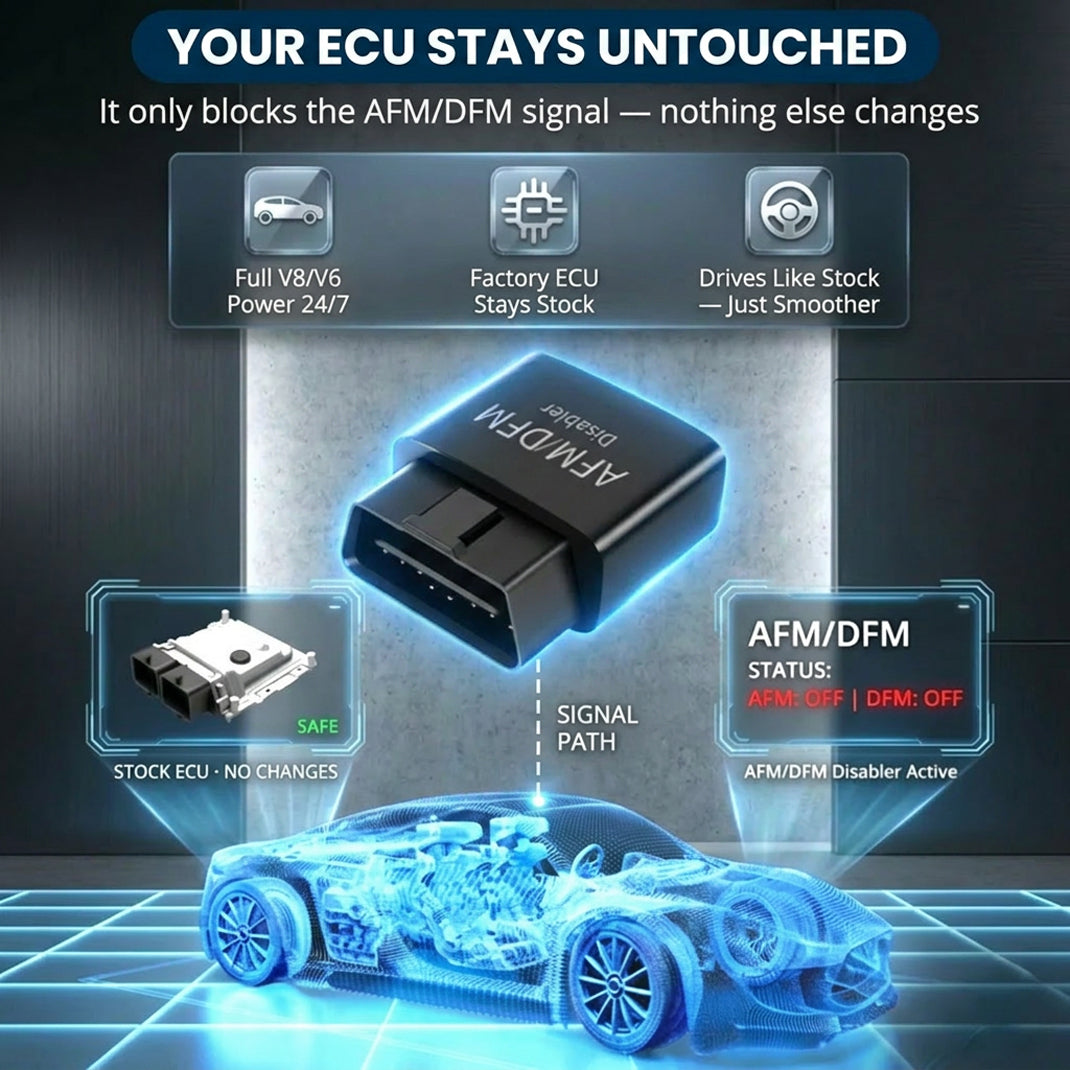
Gadon AFM/DFM Disabler
This compact OBD2 plug-in device keeps your GM engine operating in full V8 mode. It prevents rough shifting, torque converter shudder, and saves you from five thousand dollar lifter repair bills without reprogramming your ECU. Our team at Gadon.store is ready to help you confirm compatibility for your vehicle.
A Detailed 3-Step Guide to Using Performance Modules for GM Owners
Implementing a longevity solution for your Chevy or GMC vehicle does not require advanced mechanical skills or expensive garage tools. The process is designed to be user-friendly, allowing any truck owner to secure their engine in less than a minute. By utilizing the existing onboard diagnostic infrastructure, these modules interface directly with the Engine Control Unit to provide real-time signal blocking. This method is preferred over permanent software flashes because it is completely reversible and leaves no digital footprint on the vehicle computer. Following these three steps correctly ensures that your engine remains in its natural V8 state, providing the power and reliability you expect from a heavy-duty truck. Consistent use of this technology from Gadon.store is a primary strategy for those seeking to reach high mileage milestones safely and efficiently.
Step 1: Unbox and Locate the OBD2 Port
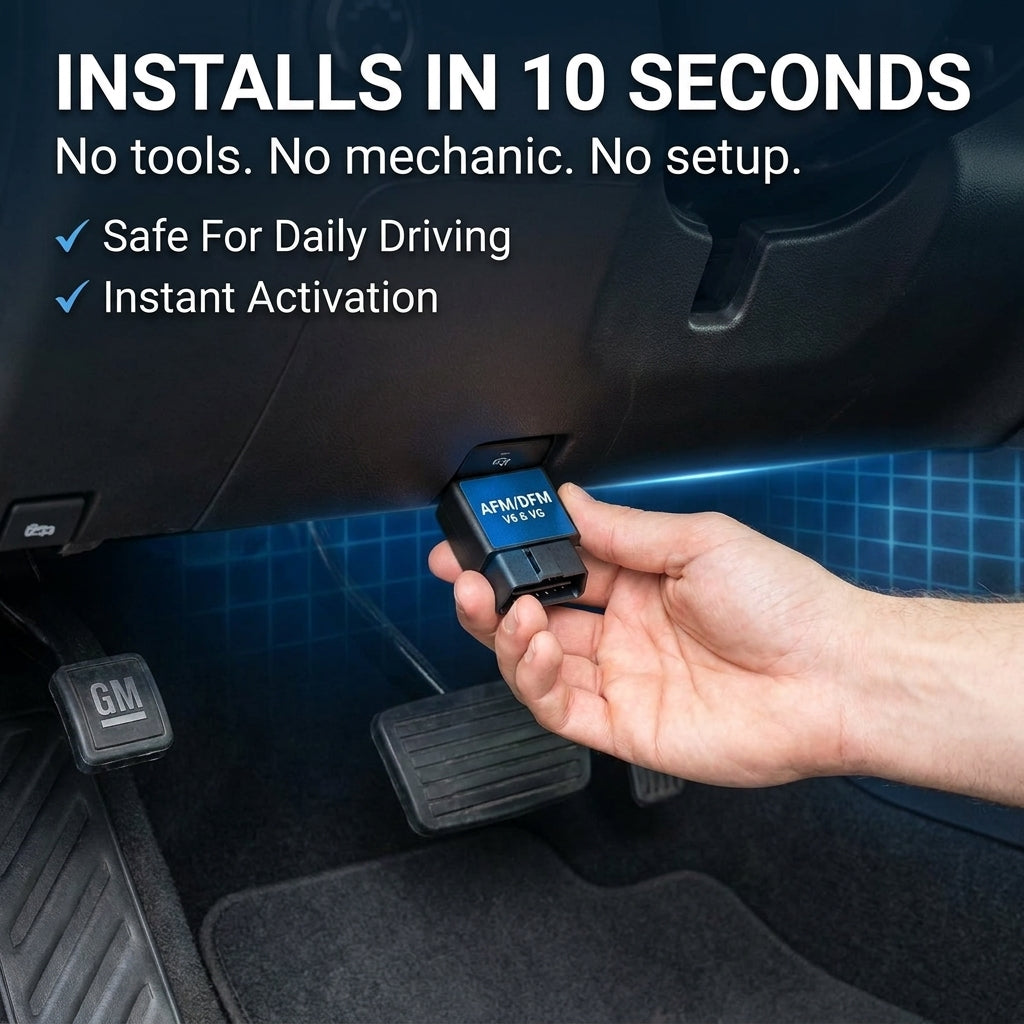
First, locate the OBD2 diagnostic port inside your GM truck or SUV, usually found under the driver side dashboard. This port is the gateway to your vehicle computer system and provides the necessary power for the module. Ensure your vehicle engine is completely turned off and the key is removed from the ignition before proceeding. It is important to clear the area of any obstructions or loose wiring to ensure a clean connection. Most Chevrolet Silverado and GMC Sierra models position this port near the hood release latch or steering column for easy access during service visits.
Step 2: Plug the Device Securely
Take your Gadon AFM/DFM Disabler and push it firmly into the port until it is fully seated. There are no tools required for this installation, as the module is designed for a precise friction fit. You will notice the indicator lights flash, confirming it has successfully connected to the ECU and is receiving power. If the lights do not illuminate, verify that the port is free of dust or debris. This connection establishes a communication bridge that allows the module to intercept the deactivation signals before they reach the mechanical lifters, effectively keeping all cylinders active at all times.
Step 3: Start the Engine and Experience Full V8 Power
Start your engine and allow it to idle for a moment. The device instantly blocks the cylinder deactivation signals without rewriting the factory software or changing the original calibration. You can now drive normally, experiencing immediate smoother throttle response, no lag, and consistent V8 power on every drive. Drivers will notice the absence of the characteristic V4 vibration when cruising at highway speeds. This simple change eliminates the mechanical transition that causes long-term wear, helping your Chevy 5.3 reach high mileage levels with much greater reliability and mechanical stability.
Advanced Tips: Understanding AFM/DFM on GM Vehicles
To maximize the life of a Chevy 5.3 engine, owners must understand the complex relationship between electronic controls and mechanical hardware. The Active Fuel Management system relies on specialized lifters that can be collapsed via oil pressure to stop valve movement in specific cylinders. While innovative for fuel economy, this creates a situation where certain parts of the engine work harder than others, and lubrication is not always uniform. Over thousands of miles, this imbalance leads to the common issues reported by GM owners. Advanced maintenance involves not only blocking these signals but also using high-quality synthetic oils that can withstand the high pressures of the V8 engine. By maintaining all eight cylinders in operation, you ensure that heat and oil are distributed evenly, which is the cornerstone of any high mileage engine strategy.
How Cylinder Deactivation Causes Lifter Failure
The constant switching between V4 and V8 modes creates uneven wear on the active lifters and puts immense stress on the internal locking pins. When the system commands a cylinder to shut down, the lifter collapses to prevent the valves from opening. If these pins fail to engage or disengage correctly due to oil contamination or mechanical fatigue, the lifter stays collapsed or sticks. This leads to premature lifter failure, bent pushrods, and costly engine rebuilds that can exceed five thousand dollars. Keeping the engine in V8 mode prevents this mechanical cycling, preserving the locking mechanism and ensuring long-term valve train stability for high mileage trucks.
Eliminating Transmission Shudder at Cruising Speeds
Many drivers experience a noticeable shudder or vibration at thirty five to sixty miles per hour, often mistaken for a transmission fault. This sensation is frequently caused by the engine struggling to maintain speed while in V4 mode, leading to excessive torque converter clutch cycling. By keeping the engine in full-cylinder mode, the Gadon module balances the torque output across the entire crankshaft, eliminating the awkward gear-searching behavior entirely. This provides a much smoother driving experience and reduces the wear on the transmission and torque converter, further contributing to the overall high mileage potential of the vehicle.

| Engine Component | AFM/DFM Impact | Repair Complexity | Prevention Strategy |
|---|---|---|---|
| Active Lifters | Mechanical Pin Fatigue | Very High ($3500+) | Disable Deactivation |
| Valve Train | Bent Pushrods | High ($2000+) | Maintain V8 Mode |
| Camshaft | Uneven Lobe Wear | Extreme ($5000+) | Plug-and-Play Module |
| Torque Converter | Excessive Shudder | High ($1500+) | Consistent Power Output |
| Piston Rings | Carbon Buildup | High ($3000+) | Active Combustion |
| Oil Consumption | Increased Burning | Moderate (Continuous) | Prevent V4 Vacuum |
| Engine Block | Heat Imbalance | Very High | Uniform Cooling |
| Resale Value | Significant Drop | Financial Loss | Documented Protection |
Troubleshooting Common Issues with Engine Modules
When integrating any aftermarket technology into a GM high mileage vehicle, it is natural to have questions regarding operations and maintenance. Most technical challenges can be resolved by checking simple connections or vehicle fuses. It is important to remember that these modules are diagnostic tools that interact with the vehicle electrical system, so ensuring a healthy battery and clean port is the first step in any troubleshooting process. The experts at Gadon.store have compiled data from thousands of users to provide clear solutions for the most frequent inquiries. Reliable performance is the goal, and by following these technical tips, you can ensure your disabler works perfectly for the life of your truck. Most issues are not related to the module itself but rather to external factors like blown fuses or extended periods of vehicle inactivity.
- Why are the lights on the device not turning on? Solution: Check your vehicle OBD2 fuse which is often shared with the cigarette lighter. If the fuse is blown, the port will not provide power to the Gadon module. Replace the fuse with the correct amperage to restore functionality.
- Will the module drain my truck battery? Solution: The device draws a very minimal amount of power on standby. However, if you plan to leave your truck parked and undriven for several weeks, we recommend unplugging it to be safe. This prevents any potential parasitic draw during long term storage.
- Do I need to unplug it before taking it to the dealership? Solution: Yes, simply unplug the Gadon disabler before your service visit. Since it leaves zero trace and does not flash the ECU, your factory warranty remains completely intact. The vehicle will revert to factory settings instantly upon removal.
- Can I use this with a tuner or other OBD2 devices? Solution: To use multiple devices, you will need an OBD2 splitter cable. However, ensure that the other devices do not conflict with the cylinder deactivation signals. For the most reliable results, we recommend using the disabler as a standalone module.
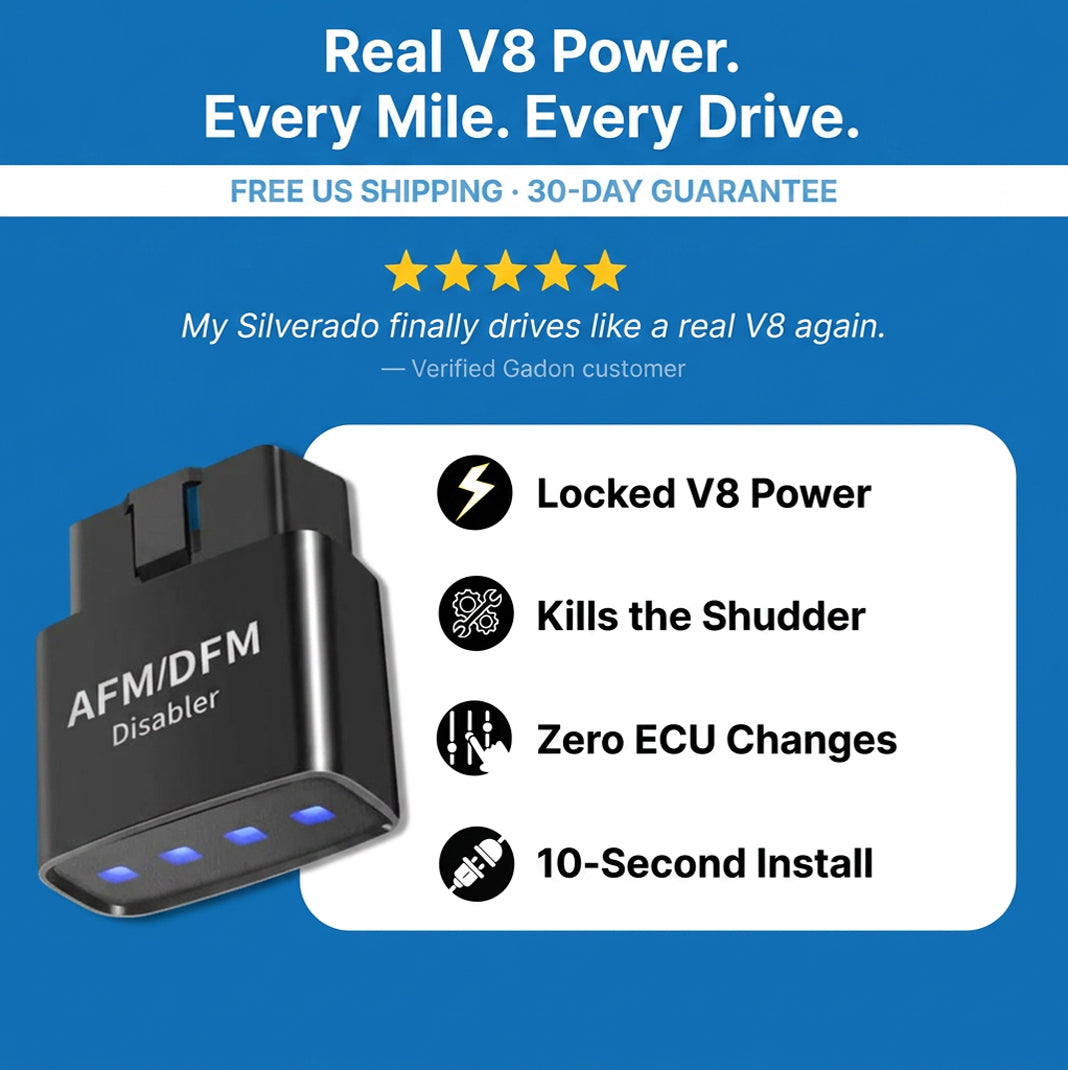
Gadon AFM/DFM Disabler
This smart module blocks your GM vehicle V4 mode, preventing sudden hesitations, oil burning issues, and devastating lifter collapses. Easy to install and remove, it preserves your engine health while protecting your factory warranty.
Which Gadon AFM/DFM Disabler Package is Right for You? Expert Advice
Selecting the right protection package depends on your specific vehicle lineup and usage patterns. Whether you are a solo driver looking to protect a single daily driver or a fleet manager responsible for multiple work trucks, there is a tailored solution available. Investing in these modules is a cost-effective alternative to engine rebuilds, which can sideline a vehicle for weeks and drain thousands from your maintenance budget. Each package from Gadon.store comes with our comprehensive support and a satisfaction guarantee. By choosing the right volume, you not only save on the initial purchase but also ensure that every GM vehicle in your care is shielded from the known risks of Active Fuel Management. Our team is available to help you determine the best fit for your needs and ensure seamless compatibility across all model years.
Product Recommendation Analysis: For personal use on a single daily driver, the 1 Pack Gadon Disabler is a suitable choice. You will feel the V8 difference immediately upon the first drive. If you own a Silverado and your spouse drives a Tahoe, the 2 Packs is an ideal option, offering a fifteen percent discount for a dual-vehicle upgrade. For commercial fleets or professional mechanics, the 3 Packs offers a twenty five percent discount, ensuring all your work trucks are protected against lifter failure. Every purchase from Gadon.store includes our 90-Day Guarantee and Free Shipping. Use code WELCOME to get an extra ten percent off today! We are committed to providing the most effective solutions for your GM high mileage journey.
Quick FAQs on Gadon AFM/DFM Disablers
- Will it void my GM warranty or trigger a Check Engine Light? No. The Gadon disabler does not reprogram your ECU or flash the computer. Simply unplug it before taking it to the dealership, and it leaves zero trace. Your factory warranty stays completely intact and it will not trigger a check engine light.
- Will it fit my specific truck model? Yes, it is compatible with over ninety GM models manufactured between two thousand and five and the current model year, including the Silverado, Tahoe, Sierra, Yukon, Escalade, and Suburban. It works with both V6 and V8 engines equipped with AFM or DFM systems.
- Will this actually save my engine from five thousand dollar plus repairs? Absolutely. AFM/DFM cylinder deactivation is the leading cause of premature lifter failure in GM engines. By keeping the engine firing on all cylinders uniformly, the Gadon device prevents the uneven wear that leads to expensive engine rebuilds.
- When will I feel the difference while driving? Within the first mile. Most drivers report an immediate elimination of shudder at cruising speeds, smoother throttle response, stronger acceleration from a dead stop, and an overall better driving experience without the lag associated with cylinder reactivation.
- How hard is the installation process? It takes less than ten seconds. You need absolutely no tools and no mechanical experience. If you can plug a charger into your phone, you can plug the Gadon module into your truck OBD2 port for instant protection.
Need Help Checking Vehicle Compatibility? Gadon.store is Ready 24/7
In just 2 minutes, our expert team can confirm if the Gadon AFM/DFM Disabler fits your exact year and model.
Protect Your GM Engine and Regain Full V8 Power with Gadon.store
At Gadon.store, we provide a reliable, plug-and-play solution that unleashes your engine true V8 potential while protecting it from expensive lifter failures. We are committed to high-quality performance modules, zero ECU tracing, and excellent customer support. Upgrade your ride and drive with confidence knowing your vehicle is built to last for the long haul. Call our support hotline now at +1 813-408-1627 or order directly from our website to secure your vehicle today!
Disclaimer: The instructions and prices in this article are for reference at the time of publishing and are subject to change. Please contact Gadon.store directly for the most current information. Always ensure your vehicle is parked safely before interacting with the OBD2 port. Contact Gadon.store for precise support for your GM vehicle compatibility.