Chevy Silverado Dashboard Warning Lights Explained
Silverado warning lights decoded in this guide from gadon.store will help you understand engine health while maximizing V8 performance through AFM disabler technology. This in-depth guide on Silverado dashboard indicators will help you diagnose issues early and implement long-term solutions that save thousands of dollars in mechanical repairs. By integrating the Gadon technology, you ensure a smoother ride without the risk of lifter failure or transmission shudder common in modern General Motors trucks and SUVs.
Need Help Checking Vehicle Compatibility? Gadon.store is Ready 24/7
In just 2 minutes, our expert team can confirm if the Gadon™ AFM/DFM Disabler fits your exact year and model.
Why Proper Silverado Warning Lights Knowledge is Crucial? A Direct Impact on V8 Performance and Engine Lifespan
Using a Gadon AFM/DFM disabler correctly ensures your GM engine stays in full V8 mode, delivering smooth, lag-free performance and extending the engine lifespan by preventing costly 5000 dollar lifter failures caused by constant cylinder switching. Understanding the symbols on your dashboard is the first line of defense for any truck owner. These indicators are not merely suggestions; they are critical data points provided by the Engine Control Unit to signal that the delicate balance of your powertrain is at risk. When you ignore a flashing check engine light or a Stabilitrak warning, you are often ignoring the early warning signs of Active Fuel Management malfunctions.
- • Preventing mechanical fatigue in the valvetrain by maintaining consistent oil pressure.
- • Avoiding the dreaded limp mode where the vehicle loses significant power on the highway.
- • Reducing the wear and tear on the torque converter which often leads to transmission shudder.
- • Protecting the investment of your vehicle by ensuring all eight cylinders fire uniformly.
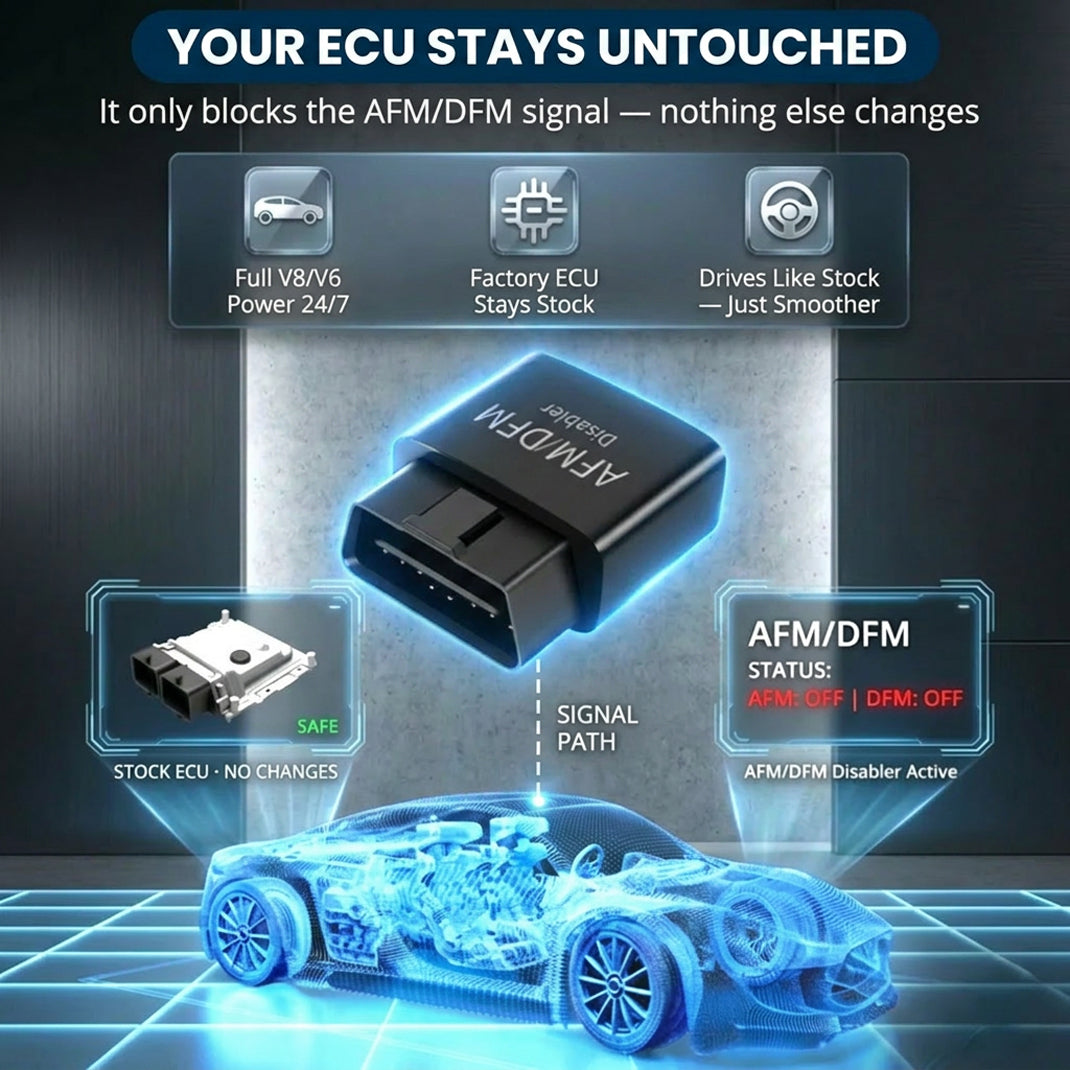
Gadon™ AFM/DFM Disabler
This compact OBD2 plug-in device keeps your GM engine operating in full V8 mode. It prevents rough shifting, torque converter shudder, and saves you from 5000 dollar lifter repair bills without reprogramming your ECU. Our team at Gadon.store is ready to help you confirm compatibility for your vehicle.
Comprehensive Guide to Silverado Dashboard Warning Symbols

Decoding dashboard symbols requires an understanding of color coding and icon geometry. Yellow or amber lights generally indicate a non-critical issue that requires attention soon, while red lights signify a critical failure that requires the driver to pull over immediately. In the context of General Motors trucks, many of these lights are interconnected through the high-speed data bus. For instance, an engine misfire caused by a collapsing lifter in V4 mode will often trigger both the Check Engine Light and the Stabilitrak warning simultaneously. This happens because the traction control system relies on consistent engine torque to function correctly.

| Warning Light | Potential Cause | Impact on Performance | Recommended Action |
|---|---|---|---|
| Check Engine Light | AFM Misfire / Sensor Error | Reduced Fuel Efficiency | Scan OBD2 Codes Immediately |
| Stabilitrak Warning | Engine Torque Inconsistency | Disabled Traction Control | Install Gadon AFM Disabler |
| Oil Pressure Light | Low Oil / VLOM Failure | Severe Internal Engine Damage | Stop Engine Now |
| Reduced Engine Power | ECU Safety Limiter | Maximum Speed Limited | Inspect Lifters and Sensors |
| Transmission Temp | Overheating / Heavy Towing | Gear Slippage / Failure | Allow Cool Down Period |
| ABS Light | Wheel Speed Sensor Issue | Loss of Anti-lock Braking | Inspect Brake Connections |
| Battery Symbol | Alternator / Charging Fault | Complete Electrical Failure | Test Battery Voltage |
| Service Trailer Brake | Wiring Harness Glitch | Unsafe Towing Conditions | Check Trailer Connections |
A Detailed 3-Step Guide to Using the Gadon Disabler for GM Owners
To properly disable AFM, insert the module directly into the OBD2 port located under the steering wheel while the vehicle is turned off, and ensure the indicator LEDs light up when you turn the key. This procedure is designed for simplicity, allowing anyone regardless of mechanical experience to protect their engine. By following these steps, you prevent the computer from sending the signal that shuts down four of your cylinders. This results in a permanent V8 configuration that preserves the mechanical integrity of your lifters and prevents the hesitation that many drivers find frustrating during highway cruising.
Step 1: Unbox and Locate the OBD2 Port
First, locate the OBD2 diagnostic port inside your GM truck or SUV, usually found under the driver side dashboard near the hood release lever. Ensure the engine of the vehicle is completely turned off before proceeding to avoid any electrical interference. This port is the gateway to the communication network of your truck, and the Gadon device uses it to communicate with the engine management system safely without altering the factory software permanently.
Step 2: Plug the Device Securely
Take your Gadon™ AFM/DFM Disabler and push it firmly into the port. There are no tools required for this installation. You will notice the indicator lights flash bright blue or green, confirming it has successfully connected to the Engine Control Unit. The device is designed with a snug fit to ensure it does not vibrate loose during off-road driving or daily commutes. Once the lights are steady, the connection is established and the software is ready to override the cylinder deactivation commands.
Step 3: Start the Engine and Experience Full V8 Power
Start your engine. The device instantly blocks the cylinder deactivation signals without rewriting the factory software of the vehicle. You can now drive normally, experiencing immediate smoother throttle response, no lag, and consistent V8 power on every drive. You will notice the instant removal of the transition between V4 and V8 modes, which is the primary cause of transmission shudder and long-term mechanical wear in the engine of the Silverado.
Need Help Checking Vehicle Compatibility? Gadon.store is Ready 24/7
In just 2 minutes, our expert team can confirm if the Gadon™ AFM/DFM Disabler fits your exact year and model.
Advanced Tips: Understanding AFM/DFM on GM Vehicles
Active Fuel Management and Dynamic Fuel Management are technologies designed to improve fuel economy by deactivating cylinders under light load conditions. While the concept is efficient on paper, the real-world application leads to significant mechanical issues. The constant switching between modes creates uneven thermal expansion and pressure differentials within the engine block. This is often the root cause behind various Silverado warning lights that seem to appear out of nowhere. By understanding these systems, you can take proactive steps to protect your 5.3L or 6.2L V8 engine from premature failure.
How Cylinder Deactivation Causes Lifter Failure
The constant switching between V4 and V8 modes creates uneven wear on the active lifters. When a cylinder is deactivated, the lifter is held in a collapsed state. If it remains in this state too long or is forced to reactivate too quickly, the internal locking pin can fail. Over time, this leads to premature lifter failure, bent pushrods, and costly engine rebuilds that can exceed 5000 dollars. Preventing this switching through a Gadon module ensures the lifters stay pressurized and functioning as originally intended by the engineers of the V8 platform.
Eliminating Transmission Shudder at Cruising Speeds
Many drivers experience a noticeable shudder or vibration at 35 to 60 miles per hour. This often feels like driving over rumble strips and is caused by the torque converter clutch struggling to manage the power pulses of a four-cylinder engine in a heavy truck. By keeping the engine in full-cylinder mode, the Gadon module balances the torque output, eliminating the awkward gear-searching behavior and vibrations entirely. This not only improves comfort but also extends the life of your transmission fluid and internal components.
Troubleshooting Common Issues with Silverado Warning Lights
Addressing dashboard warnings requires a systematic approach to identify if the issue is a simple sensor glitch or a deep mechanical problem. Many Silverado owners find that certain lights, like the traction control or Stabilitrak icons, appear during heavy acceleration or when the battery voltage is low. These systems are highly sensitive to electrical noise. If you are using an OBD2 device and encounter issues, follow our verified solutions developed by the technical team at gadon.store to ensure your truck remains in peak condition.
- • Why are the lights on the device not turning on? Solution: Check the OBD2 fuse of your vehicle, which is often shared with the cigarette lighter. If the fuse is blown, the port will not provide power to the Gadon module.
- • Will the module drain the battery of my truck? Solution: The device draws a very minimal amount of power on standby. However, if you plan to leave your truck parked and undriven for several weeks, we recommend unplugging it to be safe from any parasitic draw.
- • Do I need to unplug it before taking it to the dealership? Solution: Yes, simply unplug the Gadon disabler before your service visit. Since it leaves zero trace and does not flash the ECU, your factory warranty remains 100 percent intact.
- • What if the Check Engine light persists after plugging in? Solution: The device prevents future AFM issues but does not clear existing mechanical codes. You must use a diagnostic scanner to clear old codes or repair pre-existing hardware failures.
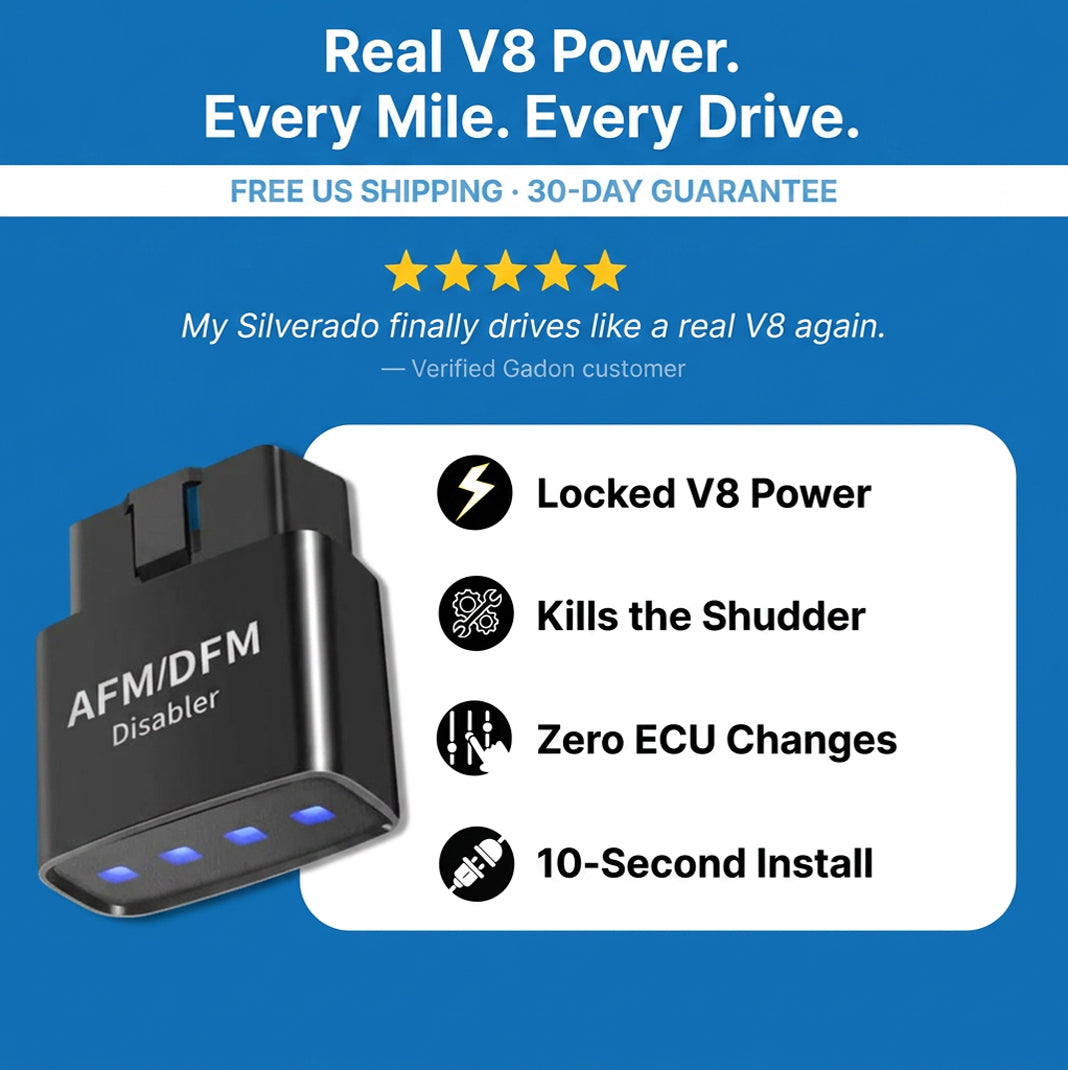
Gadon™ AFM/DFM Disabler
This smart module blocks your GM vehicle's V4 mode, preventing sudden hesitations, oil burning issues, and devastating lifter collapses. Easy to install and remove, it preserves your engine's health while protecting your factory warranty.
Which Gadon™ AFM/DFM Disabler Package is Right for You? Expert Advice
Choosing the right package at gadon.store depends on your fleet size and long-term vehicle maintenance goals. Every purchase from our store includes our 90-Day Guarantee and Free Shipping, ensuring you have the peace of mind to test the product on your daily commute. Investing in these modules is significantly cheaper than the alternative, which involves thousands of dollars in parts and labor at a mechanic shop. Whether you own a single Silverado or manage a fleet of GMC Sierras, we have a solution tailored for your specific needs.
- • For Personal Use: The 1 Pack Gadon™ Disabler is the perfect choice for a single daily driver. You will feel the V8 difference immediately and stop the cycle of cylinder switching.
- • For Multi-Vehicle Owners: If you own a Silverado and your family drives a Tahoe or Yukon, the 2 Packs package is ideal, offering a 15 percent discount for a dual-vehicle upgrade.
- • For Fleets and Workshops: For commercial fleets or professional mechanics, the 3 Packs package offers a 25 percent discount, ensuring all your work trucks are protected against lifter failure.
Quick FAQs on Gadon AFM/DFM Disablers
Finding answers to technical questions is essential before modifying how your engine operates. Our team has compiled the most frequent queries from over 50000 satisfied customers to help you make an informed decision. These answers focus on warranty safety, mechanical protection, and the simple installation process that distinguishes Gadon products from complicated engine tuners.
- Will it void my GM warranty or trigger a Check Engine Light? No. The Gadon disabler does not reprogram your ECU or flash the computer. Simply unplug it before taking it to the dealership, and it leaves zero trace. Your factory warranty stays 100 percent intact and it will not trigger a check engine light.
- Will it fit my specific truck model? Yes, it is compatible with over 90 General Motors models manufactured between 2005 and 2026, including the Silverado, Tahoe, Sierra, Yukon, Escalade, and Suburban. It works flawlessly with both V6 and V8 engines equipped with AFM or DFM systems.
- Will this actually save my engine from 5000 dollar repairs? Absolutely. Cylinder deactivation is the leading cause of premature lifter failure in GM engines. By keeping the engine firing on all cylinders uniformly, the Gadon device prevents the uneven wear that leads to expensive engine rebuilds.
- When will I feel the difference while driving? You will feel the difference within the first mile. Most drivers report an immediate elimination of shudder at cruising speeds, smoother throttle response, and stronger acceleration from a dead stop.
- How hard is the installation process? It takes less than 10 seconds. You need absolutely no tools and no mechanical experience. If you can plug a charger into a phone, you can plug the Gadon module into the OBD2 port of your truck.
Need Help Checking Vehicle Compatibility? Gadon.store is Ready 24/7
In just 2 minutes, our expert team can confirm if the Gadon™ AFM/DFM Disabler fits your exact year and model.
Protect Your GM Engine and Regain Full V8 Power with Gadon.store
At Gadon.store, we provide a reliable, plug-and-play solution that unleashes the true V8 potential of your engine while protecting it from expensive lifter failures. We are committed to high-quality performance modules, zero ECU tracing, and excellent customer support. Upgrade your ride and drive with confidence knowing your truck is optimized for longevity and power. Call our support hotline now at +1 813-408-1627 or order directly from our website to secure your vehicle today!
Disclaimer: The instructions and prices in this article are for reference at the time of publishing and are subject to change. Please contact Gadon.store directly for the most current information. Always ensure your vehicle is parked safely before interacting with the OBD2 port. Contact Gadon.store for precise support for your GM vehicle.