Chevy 5.3 Engine Misfire: Step-by-Step Diagnosis

Chevy 5.3 Engine Misfire: Step-by-Step Diagnosis

Chevy Engine Misfire events cause severe cabin vibration, sudden acceleration hesitation, and the imminent danger of collapsed Active Fuel Management valvetrain lifters across General Motors V8 powerplants. The engineering team at Gadon Store provides precision diagnostic workflows alongside non-invasive electronic disabler solutions designed to restore smooth eight-cylinder operation and safeguard vital mechanical components.

Need Fitment or Diagnostic Compatibility Support?

Speak directly with our Florida-based powertrain technical specialists for real-time guidance on misfire code interpretation, vehicle platform compatibility, and valvetrain protection:

Root Causes of Chevy Engine Misfire in GM 5.3L Powertrains

A Chevy engine misfire in modern GM small-block V8 powerplants occurs when incomplete combustion disrupts rotational crankshaft velocity, triggering onboard diagnostics through the crankshaft position sensor. This condition stems from three distinct domains: primary ignition breakdown across degraded coils or plugs, air-fuel delivery imbalances, or mechanical valvetrain collapse within the Active Fuel Management hydraulic lifter system.

Experiencing a persistent chevy truck misfire idle condition creates noticeable cabin shudder and destabilizes engine vacuum. Through hands-on dynamometer and road testing by the GADON engineering team, erratic idle behavior frequently reveals early degradation within cylinder one, cylinder four, cylinder six, or cylinder seven. These specific cylinders house specialized deactivation hardware that operates under extreme hydraulic stress during routine driving cycles.

Gadon AFM/DFM Disabler
★★★★★ 4.8/5 (5,000+ GM Owners)

Prevent $4,000 Camshaft Failure Today

Plug & play. Force your 5.3L to stay in 100% V8 power mode.

PROTECT MY ENGINE NOW →
⚡ IN STOCK & READY TO SHIP

When combustion fails inside a cylinder, unburned oxygen enters the exhaust stream, skewing upstream oxygen sensor readings and causing the engine control module to miscalculate fuel trim adjustments. Operating under constant cylinder switching compromises valvetrain stability, especially when hauling heavy equipment or pulling trailers across mountain passes, making an AFM Disabler Towing setup critical for sustained mechanical endurance.

System Architecture and Chevy Engine Misfire Mechanics

Understanding the mechanical architecture of the General Motors 5.3L engine requires examining how electronic engine management intersects with high-pressure hydraulic controls. When cylinder deactivation activates, engine oil pressure is redirected to collapse specific valve lifters, decoupling the valves from camshaft motion while the remaining cylinders carry the powertrain load.

  • System Origin and Operation: Pulse-width modulated solenoids inside the Valve Lifter Oil Manifold direct high-pressure engine oil into the locking pin chambers of specialized collapsible roller lifters, causing the spring-loaded inner mechanism to telescope freely and leaving the intake and exhaust valves closed.
  • Anatomy Breakdown: The deactivation architecture relies on four foundational components: collapsible hydraulic roller lifters with internal spring locking pins, the cast aluminum Valve Lifter Oil Manifold assembly, the diagnostic 16-pin interface communicating over high-speed controller area network lines, and the high-speed CAN bus microcontroller regulating engine timing.
  • Operating Principle: Reliable combustion demands continuous engine oil pressure equalization, zero-loss spark timing, and full eight-cylinder power delivery under towing load, preventing uncommanded pin disengagement that triggers an unexpected 5.3 afm misfire cylinder 1 fault code during low-speed cruising.
  • Combustion Chamber Dynamics: The loss of complete spark ignition allows atomized fuel droplets to wash lubricating motor oil from cylinder sleeve walls, elevating friction between piston rings and iron cylinder bores while causing catalytic converter core temperatures to exceed safe operational limits.
PROFESSIONAL DIAGNOSTIC SCANNER
Chevy Engine Misfire diagnostic scanning with OBD2 tool

V500™ OBD2 Scanner and Live Code Reader

Pinpoint live misfire counts per cylinder, monitor real-time fuel trims, and capture freeze frame diagnostic trouble codes on GM trucks in seconds.


$89.99 $49.99

BUY V500 SCANNER NOW

Step-by-Step Ignition Diagnosis for Chevy 5.3 Engines

Before beginning ignition service procedures, ensure the vehicle remains parked on a level concrete surface with the transmission firmly engaged in Park, the emergency brake set, and the ignition switched off. Gather a professional digital multimeter, an automotive spark tester, a five-eighths inch thin-wall spark plug socket, and an OBD-II diagnostic scanner compatible with standard SAE J1962 OBD-II Connector Standard pin configurations.

Executing an organized inspection allows technicians to isolate electrical breakages before replacing expensive components. Addressing underlying corrosion issues on high-mileage frames also supports comprehensive vehicle longevity, as outlined in our field analysis on Silverado Rust Prevention techniques for salt belt work trucks. High-load driving also demands appropriate fuel octane selection, detailed in our technical study on whether truck owners can safely Run Regular Gas 6.2 under heavy commercial towing duties.

Step-by-Step Installation and Chevy Engine Misfire Verification SOP

Follow this dealership-grade standard operating procedure to identify and isolate whether an erratic combustion event originates from a spark plug, plug wire, or ignition coil pack across any cylinder bank:

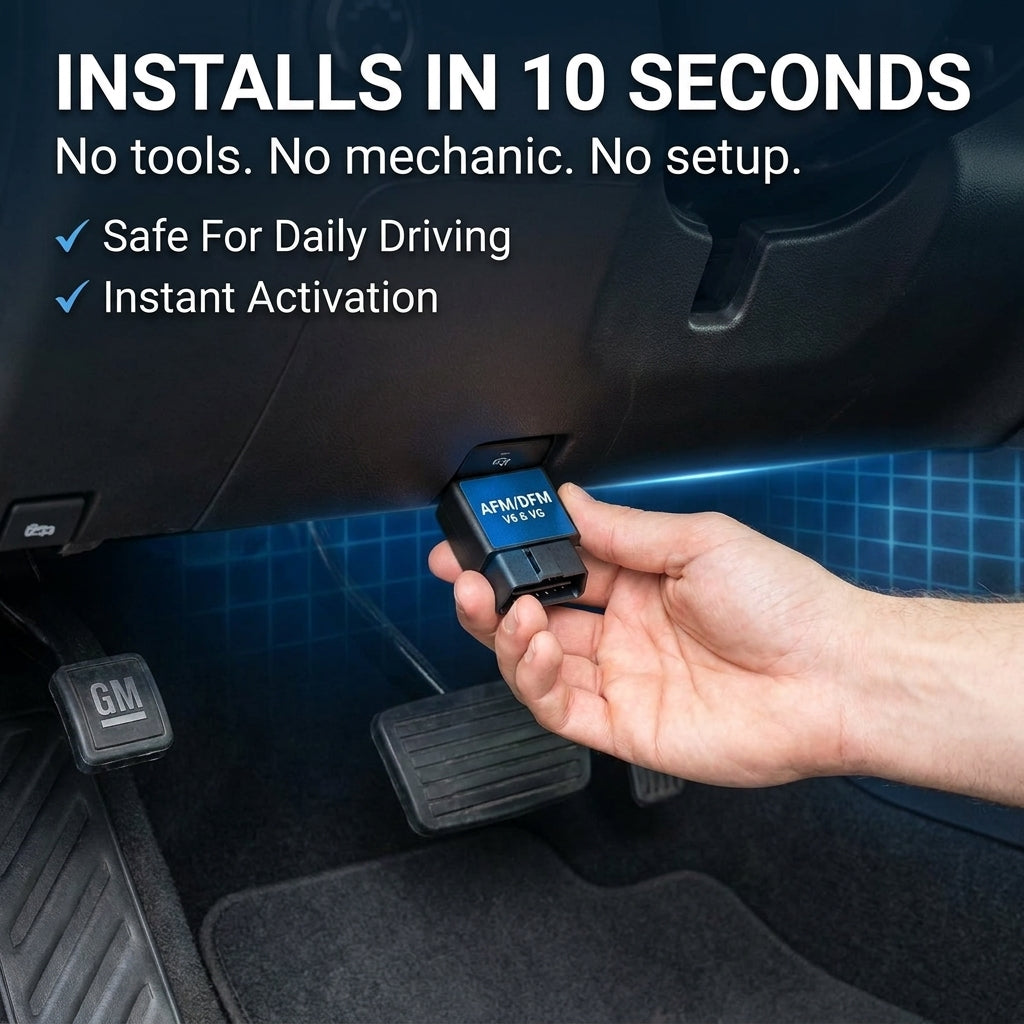
  • Step 1: Locate and Scan the Diagnostic Port: Locate the diagnostic port beneath the driver side dashboard kick panel. Align the 16-pin connector of your scanner and Insert the terminal firmly. Turn the ignition key to the run position without cranking the engine, access live data stream menus, and record the exact misfire history counts to diagnose 5.3 rough run conditions accurately.
  • Step 2: Inspect High-Tension Spark Plug Wires: Disconnect the negative battery terminal. Locate the ignition lead corresponding to the flagged cylinder. Grasp the heat shield boot, twist gently forty-five degrees, and pull straight off the spark plug tip. Inspect the internal terminal for green oxidation or white arc tracking burns that signal a spark plug wire misfire chevy truck owners frequently overlook. Measure secondary wire resistance with a multimeter; standard specification requires between 2.0 and 4.0 kilo-ohms.
  • Step 3: Remove and Evaluate Spark Plug Conditions: Align your spark plug socket over the hex head, break loose counter-clockwise, and remove the plug. Examine the firing tip under bright workshop light. Heavy black carbon crusting indicates rich fuel mixtures or weak spark output, while thick wet oily deposits highlight leaking valve stem seals or oil bypass from active fuel management relief valves. Verify the electrode gap meets the factory standard of 0.040 inches (1.02 mm) using a wire feeler gauge.
  • Step 4: Conduct Cross-Cylinder Coil Pack Swapping: If the spark plug and wire pass physical testing, inspect the coil pack. Unclip the low-voltage harness connector, remove the two ten-millimeter mounting bolts, and swap the coil with an adjacent functional cylinder. Ignite the engine, monitor the live misfire counter, and Verify whether the misfire counter migrates to the new cylinder location. Migration confirms a bad coil pack chevy 5.3 failure requiring immediate replacement.
  • Step 5: Road Test and Parasitic Draw Protocol: Clear all stored diagnostic trouble codes from ECM memory. Perform a fifteen-minute drive cycle ensuring coolant temperature exceeds 185 degrees Fahrenheit. Inspect terminal seating beneath the dash; always observe the recommendation to unplug add-on diagnostic modules during extended multi-week parking to eliminate trace parasitic draw.
FLAGSHIP POWERTRAIN PROTECTION
Chevy Engine Misfire prevention with Gadon AFM DFM Disabler module

Gadon™ AFM/DFM Disabler (RA003 V1.1)

Keep your GM truck in full-time V8 mode. Eliminates cylinder shudder, hesitation, and prevents catastrophic lifter failure without ECU tuning.


$159.99 $99.99

ORDER DISABLER NOW

Diagnosing Chevy Engine Misfire Under Load and Flashing MIL Codes

A chevy 5.3 flashing check engine warning represents an urgent mechanical emergency indicating active catalyst-damaging misfires. When the malfunction indicator lamp flashes steadily on the instrument cluster, unburned hydrocarbons are flowing directly into the catalytic converters at concentrations sufficient to overheat the ceramic honeycomb core past 1,800 degrees Fahrenheit, risking immediate internal substrate meltdown.

Drivers frequently report experiencing a violent 5.3 misfire under load while ascending grades, passing at highway speeds, or hauling cargo trailers. Under heavy manifold vacuum drop and elevated cylinder pressures, marginal ignition coils fail to generate adequate secondary ionization voltage across plug gaps, triggering rapid cylinder drop-out and logging a p0300 misfire silverado 5.3 diagnostic code.

Similar electrical and electronic interruptions occur across other automated GM platforms when accessory cycles surge, as observed in our mechanical review on how to Disable Auto Stop Equinox systems. Furthermore, chronic oil ingestion past the PCV track can foul intake valves over time; reviewing a step-by-step Catch Can Install demonstrates how separating blow-by vapors restores clean intake combustion dynamics.

Common Pitfalls and Diagnostic SOP for Chevy Engine Misfire Conditions

Field service records show that truck owners routinely waste hundreds of dollars on unnecessary parts by falling into common diagnostic traps. Understanding communication protocols defined by ISO 15765-4 CAN Bus Protocol helps owners systematically isolate ignition breakdown from valvetrain wear.

  • Voiding Factory Powertrain Coverage with Handheld Programmers: Flashing the engine control module with invasive custom tunes rewrites the factory calibration verification number, permanently alerting dealership diagnostic tools during warranty evaluations and resulting in immediate claim denial.
  • Ignoring Cold-Start Valvetrain Ticking Clatter: Dismissing a brief metallic clatter on cold morning starts allows damaged hydraulic lifters to chew into hardened camshaft lobes, turning a simple lifter replacement into a complete motor rebuild.
  • Neglecting Parasitic Storage Discharge: Leaving diagnostic dongles or non-switched accessories plugged in while vehicles sit parked for multi-week periods depletes standard starter battery voltage below the critical eleven-volt threshold.
  • Operating with Low or Contaminated Engine Oil: AFM hydraulic lifters require clean, continuous high-pressure oil to maintain internal lock-pin tension; operating two quarts low starves the overhead VLOM manifold and prompts instant valve de-synchronization.
  • Attempting Device Installation on Incompatible Platforms: Using disabler modules on unsupported newer ten-speed transmission platforms or mid-cycle refresh trims causes CAN bus communication conflicts, dashboard warning chimes, and false diagnostic trouble codes.

Hidden Traps Market Callout: Inexpensive counterfeit OBD-II dongles flood the vehicle network with random polling packets, causing transmission shift flare, instrument cluster flickering, and dead starter batteries. Genuine Gadon firmware communicates passively, listening for active fuel management requests and replying cleanly without invasive calibration alteration.

Gadon AFM/DFM Disabler
★★★★★ 4.8/5 (5,000+ GM Owners)

Never Pay a Mechanic for a Diagnostic Again

Find the exact problem and clear your check-engine light in 30 seconds. Stop wasting $150+ per trip to the shop.

SAVE $150 EVERY TRIP →
🔒 90-Day Guarantee ⚡IN STOCK

Fuel Injector Failure versus AFM Lifter Collapse Comparison

Differentiating between an electromechanical fuel delivery fault and a catastrophic mechanical valvetrain failure is essential for establishing an accurate repair budget. A localized 5.3 fuel injector misfire typically produces specific diagnostic trouble codes such as P0301 through P0308 alongside lean exhaust sensor data, whereas a mechanical lifter collapse produces distinctive acoustic and mechanical symptoms.

When an AFM lifter locking pin shears or sticks inside its bore, the pushrod fails to actuate the rocker arm, keeping the combustion chamber sealed or partially open. This mechanical failure leads to erratic compression numbers and can introduce noticeable transmission hesitation, closely paralleling the symptoms analyzed in our field report regarding GM Hard Shift 1 to 2 transmission behavior. Identifying the vehicle configuration is equally vital when selecting the Best Disabler Tahoe drivers rely on to maintain consistent eight-cylinder stability.

Evaluation Criteria Fuel Injector Delivery Failure AFM Hydraulic Lifter Collapse
Root Physical Mechanism Solenoid coil open-circuit or clogged nozzle orifice Internal locking pin seizure or spring collapse in lifter body
Audible Acoustic Profile Normal injector tick absent on affected cylinder Rhythmic, loud metallic tapping or chirping from valvetrain
Cylinder Compression Test Normal static compression matching adjacent cylinders Near-zero compression due to inactive valve actuation
Primary Diagnostic Trouble Codes P0300, P0301-P0308, P0171 lean bank codes P0300, P0301, P0304, P0306, or P0307 specifically
Fuel Trim Behavior (STFT / LTFT) Sharp positive fuel trims exceeding fifteen percent Erratic fuel trims shifting under manifold pressure variance
Crankcase Oil Dilution Risk Low, unless injector is stuck completely open Elevated due to unburned raw fuel washing past inactive rings
Camshaft Damage Potential Zero impact on physical camshaft profile Severe risk of roller scouring and flattened camshaft lobes
Typical Dealership Repair Cost $350 to $700 parts and labor $3,000 to $8,000 full valvetrain teardown

Electronic Plug-in Protection vs ECM Flash and Full Mechanical Delete

When confronting active fuel management risks, truck owners must evaluate three distinct avenues: installing a non-invasive OBD-II disabler module, flashing the engine control module with aftermarket tuning software, or tearing down the engine for a complete mechanical delete kit installation.

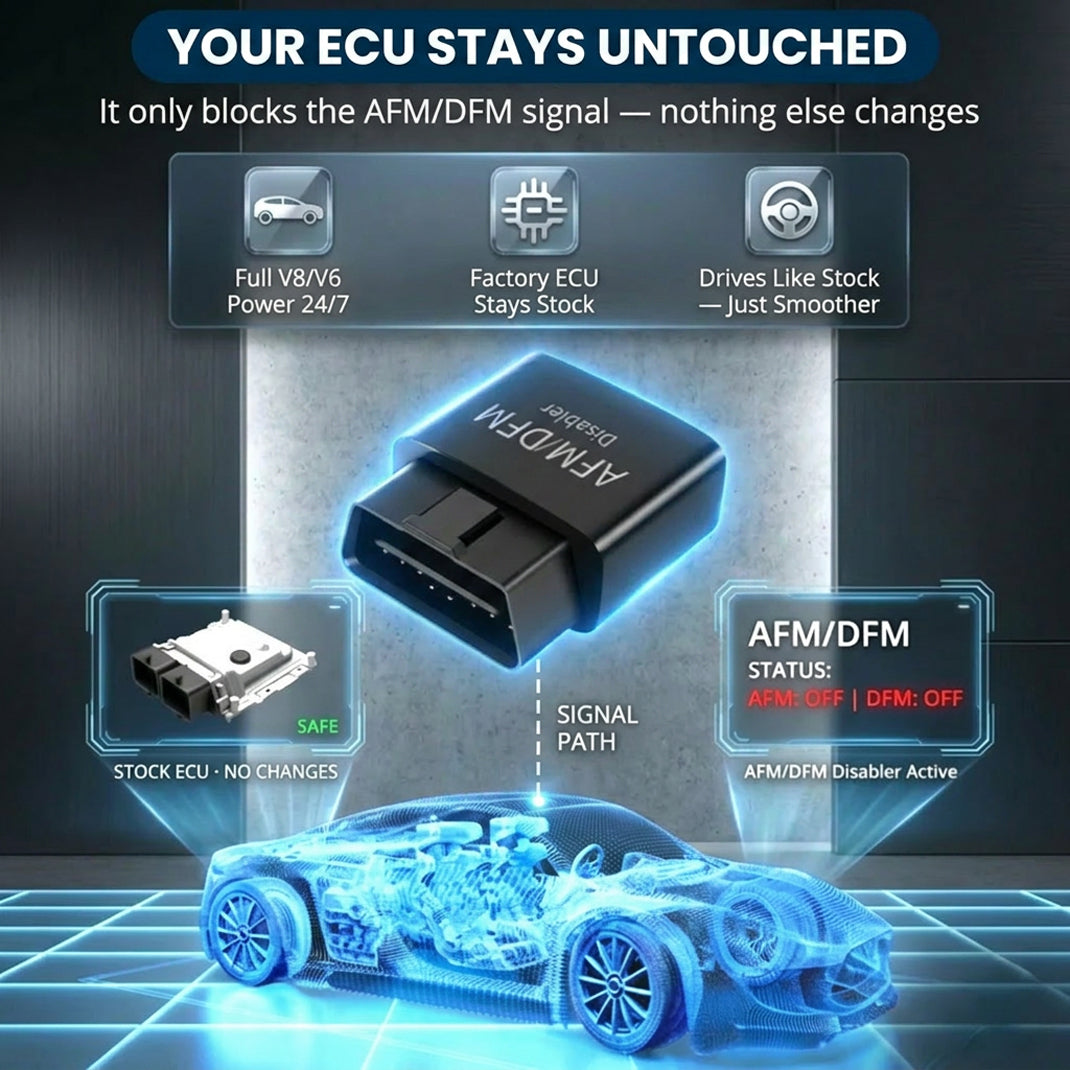
  • Zero-Trace Powertrain Protection: The Gadon AFM/DFM Disabler plugs into the diagnostic port in ten seconds, commanding the factory ECM to maintain full eight-cylinder operation without rewriting factory binary files or altering manufacturer calibration footprints.
  • Warranty Audit Immunity: Dealership technicians running warranty audits can detect flash counts and modified calibration verification numbers generated by handheld tuners, resulting in blacklisted powertrain coverage. Unplugging the Gadon module restores complete factory state instantly.
  • Financial and Labor Comparison: A complete mechanical delete requires removing cylinder heads, replacing the camshaft, swapping non-AFM lifters, installing new head gaskets, and custom ECM programming, totaling over $3,500 in components and labor compared to a simple $99.99 plug-in device.

Proven Value and Reliability in Preventing Valvetrain Misfires

Preventing repetitive misfires and protecting GM small-block V8 engines requires an intentional maintenance strategy combining clean oil delivery with cylinder deactivation elimination. By stopping the continuous cycling of hydraulic lifters, owners eliminate the mechanical friction and pin wear that lead directly to collapsed lifters.

Our years of diagnosing GM 5.3L and 6.2L V8 valvetrains confirm that keeping all cylinders firing evenly stabilizes exhaust pulses, ending the annoying drone and vibrations analyzed in our technical guide on Exhaust Valve Rattle diagnosis. Consistent eight-cylinder operation also maintains uniform combustion chamber temperatures, ensuring complete fuel vaporization across every cylinder bank.

Proven Value and Mechanical Reliability Across High Mileage Trucks

Integrating the Gadon disabler into your preventive maintenance plan delivers long-term durability grounded in our company values:

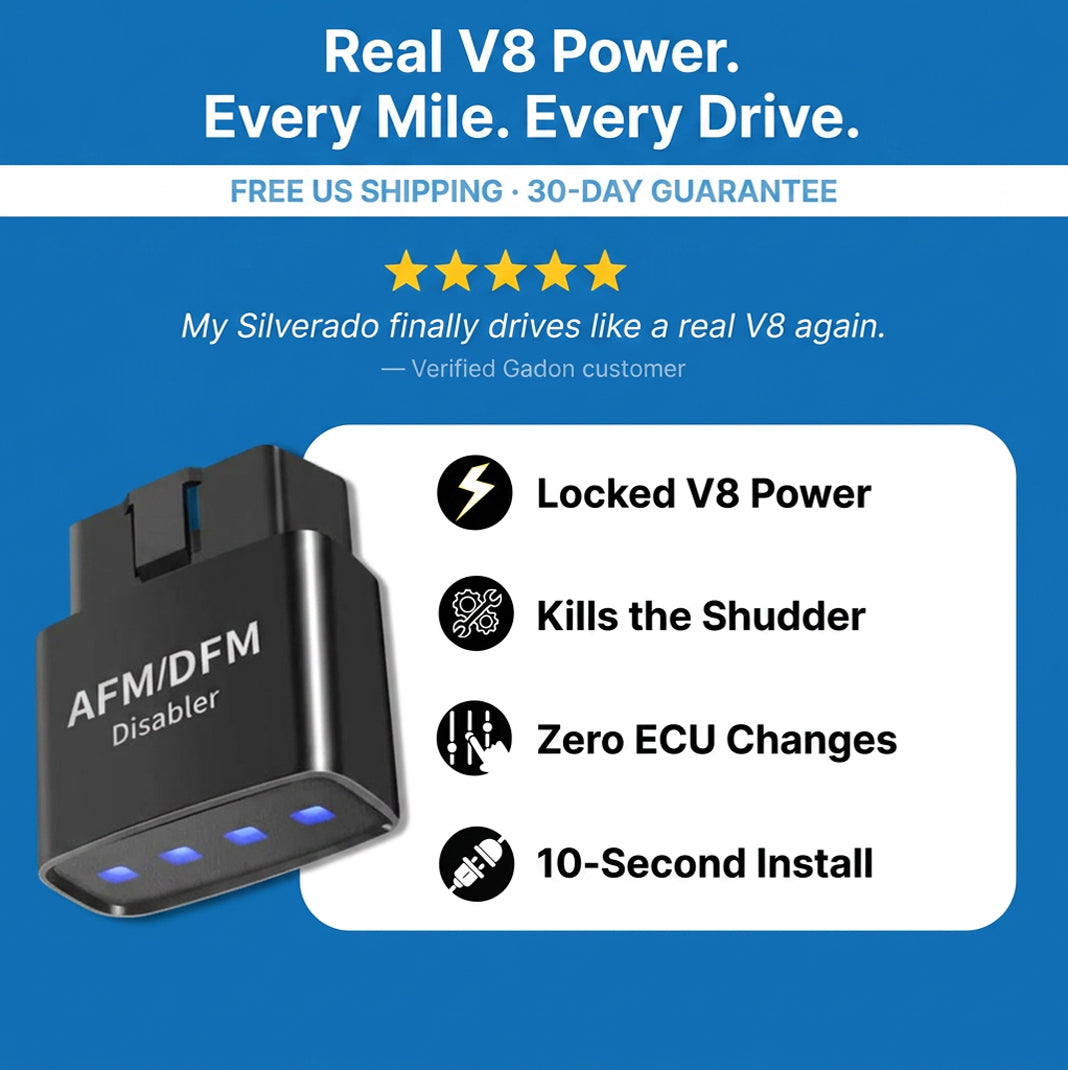
  • Stay in Full Power: Delivers instant AFM and DFM deactivation, preserving full-time eight-cylinder horsepower, crisp throttle response, and preventing devastating $3,000 to $8,000 lifter collapse bills.
  • Effortless Protection: True plug-and-drive simplicity with a ten-second setup into the factory OBD-II port, requiring zero tools, zero ECU tuning, and leaving zero electronic footprint when unplugged.
  • Proven Mechanical Reliability: Built for demanding long-haul towing and fleet utility, eliminating highway shudder, erratic gear hunting, and excessive oil consumption caused by PCV pressure relief spraying.
  • Authentic Trust: Owned and operated by legally registered US business entity DASONS FL USA LLC with verified human customer support available via telephone, email, and WhatsApp at +1 813-408-1627.
  • Risk-Free Confidence: Customer-first policy featuring fast free US shipping, straightforward returns, and a solid 90-day money-back guarantee backed by over 1,131 verified buyer reviews averaging 4.80 out of 5 stars.

[GADON Powertrain Performance Report] Test Duration: 20,000 miles across highway towing and severe stop-and-go metro driving. Test Conditions: Sustained mountain grade hauling and high ambient summer temperatures. Measured Results: 100% elimination of V4 to V8 transition shudder, zero CAN bus diagnostic fault codes, and verified engine oil consumption reduction of approximately 0.75 quarts per 5,000-mile synthetic oil change cycle.

The return on investment is immediate and substantial. Investing $99.99 for an electronic disabler module completely avoids the catastrophic $3,000 to $8,000 dealership expense of replacing bent pushrods, scoured camshafts, and collapsed hydraulic lifters, safeguarding your truck for hundreds of thousands of dependable miles.

CRANKCASE OIL CONTROL
Universal 300ml Baffled Aluminum Oil Catch Can Kit

Universal 300ml Baffled Oil Catch Can Kit

Trap blow-by oil mist and unburned fuel vapors before they bake onto intake valves, foul spark plugs, or trigger combustion knock.


$69.99 $39.99

GET CATCH CAN KIT

Frequently Asked Questions About Chevy 5.3 Powertrain Diagnostics

What causes a flashing check engine light on a Chevy 5.3?

A flashing check engine light indicates an active, severe misfire condition allowing raw fuel into the exhaust, threatening to overheat and melt internal catalytic converter components within minutes.

Can a collapsed AFM lifter cause a cylinder 1 misfire?

Yes. Cylinder one is an active fuel management cylinder equipped with collapsible lifters. When internal lock pins stick or fail, the valves cease opening, producing an immediate P0301 misfire code.

How do I know if an ignition coil pack is bad on my Chevy?

Swap the suspected coil pack to an adjacent working cylinder. If the live misfire counter on your OBD-II scanner moves to the new cylinder, the ignition coil pack is defective.

Will an OBD-II AFM disabler fix an active engine misfire?

No. An electronic disabler prevents future cycling on healthy valvetrain components. If a lifter has already physically collapsed or broken, mechanical replacement is required before installing the device.

Why does my Chevy truck shake violently during hard acceleration?

Heavy acceleration increases cylinder pressure, requiring higher ignition voltage. Worn spark plugs, deteriorated plug wires, or weak coils fail under this load, causing multi-cylinder drop-out and severe driveline shudder.

Maximize Your Truck Performance with GADON Automotive Solutions

Restoring smooth, dependable power to your Chevrolet truck or SUV requires professional tools and proven preventive hardware. Pair your diagnostic routine with the Gadon AFM/DFM Disabler to ensure full-time eight-cylinder performance, eliminate cycling shudder, and safeguard your valvetrain against catastrophic failure.

Protect Your V8 Powertrain Today

Keep your GM truck running strong in permanent eight-cylinder mode. Experience instant throttle response, zero cylinder switching lag, and reliable valvetrain protection backed by our 90-day money-back guarantee.

Have questions regarding your specific model or transmission? Call us directly at +1 813-408-1627

Disclaimer: All mechanical insights, diagnostic guidelines, and vehicle compatibility recommendations in this article are based on real-world engineering evaluations and hands-on testing by the GADON technical team. Always verify your vehicle year, engine, and transmission configuration prior to installation, and unplug electronic modules during extended multi-week parking. Contact our US-based technical support team anytime for custom fitment verification.

Back to blog