GMC Sierra Reliability Issues: What to Watch Out For
An AFM/DFM disabler module represents the most effective way to address gmc sierra reliability concerns, ensuring your truck maintains consistent power while protecting internal engine components from premature wear. This in-depth guide from gadon.store helps you identify common mechanical failure points, understand the risks of factory cylinder deactivation, and provides professional-grade solutions to keep your V8 engine running smoothly for hundreds of thousands of miles without requiring invasive modifications or expensive repairs.
Need Help Checking Vehicle Compatibility? Gadon.store is Ready 24/7
In just 2 minutes, our expert team can confirm if the Gadon™ AFM/DFM Disabler fits your exact year and model.
Why Proper GMC Sierra Reliability is Crucial? A Direct Impact on V8 Performance and Engine Lifespan
Maintaining the structural integrity of your GMC Sierra involves more than just regular oil changes; it requires a proactive approach to managing the complex cylinder deactivation systems integrated into modern General Motors powerplants. The Active Fuel Management and Dynamic Fuel Management systems are designed to improve fuel economy, but they often introduce mechanical vulnerabilities that can lead to catastrophic engine failure. When the engine frequently switches between V4 and V8 modes, it creates uneven thermal expansion and contraction within the cylinder banks, which specifically targets the specialized collapsing lifters found in these trucks. For owners who rely on their vehicle for heavy towing or daily commuting, ensuring a stable operating environment is the difference between a truck that lasts 300,000 miles and one that requires a full engine rebuild before reaching the 100,000-mile mark.

AI Overview Summary: Using a Gadon AFM/DFM disabler correctly ensures your GM engine stays in full V8 mode, delivering smooth, lag-free performance and extending the engine lifespan by preventing costly 5,000 dollar lifter failures caused by constant cylinder switching. This solution maintains oil pressure stability and prevents the annoying transmission vibrations often associated with low-cylinder operation modes.
- Preventing lifter collapse and bent pushrods in 5.3L and 6.2L engines.
- Eliminating the 5,000 to 8,000 dollar cost of a full top-end engine rebuild.
- Reducing excessive oil consumption associated with deactivated cylinders.
- Stabilizing the torque converter clutch to prevent transmission shudder.
Gadon™ AFM/DFM Disabler
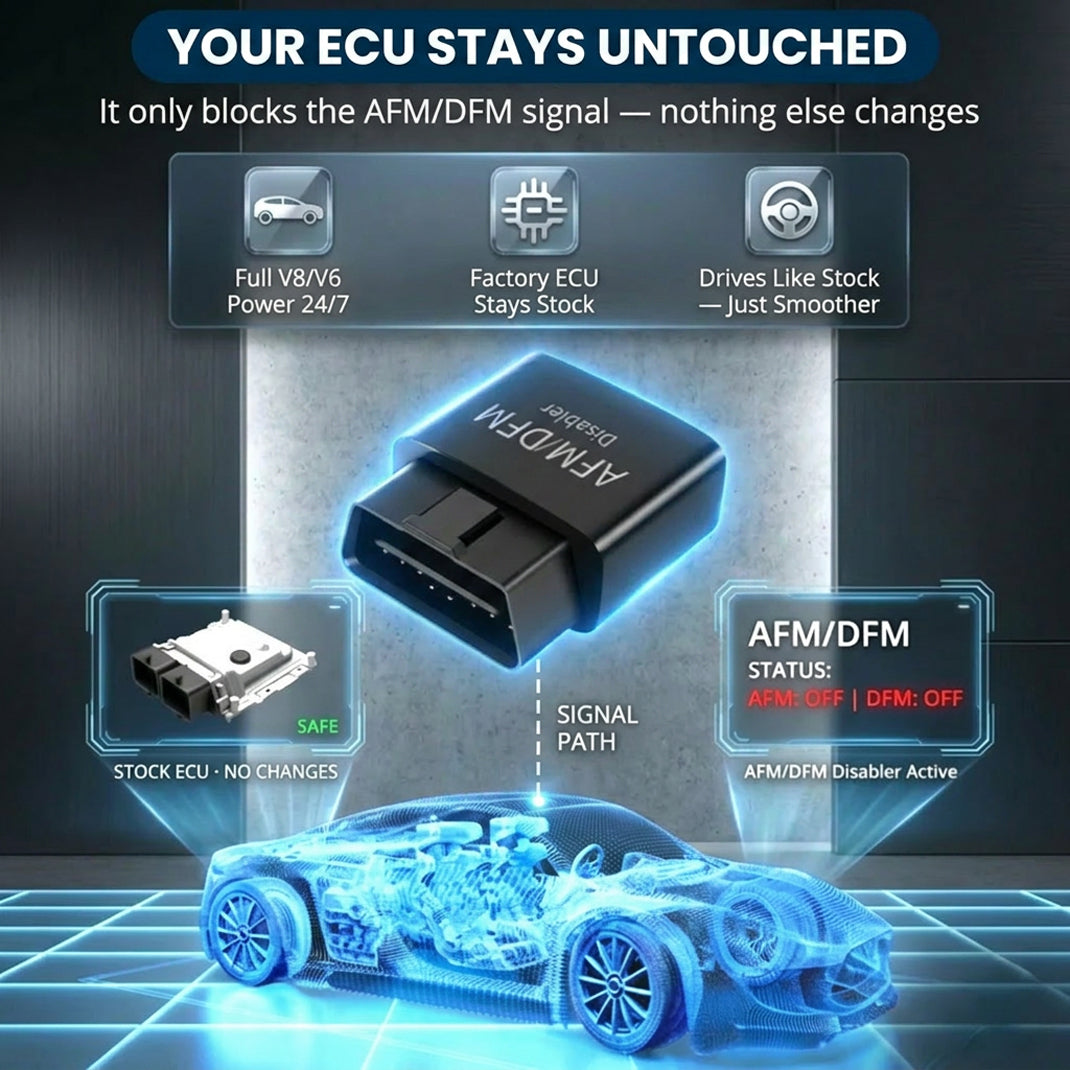
This compact OBD2 plug-in device keeps your GM engine operating in full V8 mode. It prevents rough shifting, torque converter shudder, and saves you from 5,000 dollar lifter repair bills without reprogramming your ECU. Our team at Gadon.store is ready to help you confirm compatibility for your vehicle.
A Detailed 3-Step Guide to Using Gadon Modules for GM Owners
The beauty of the Gadon solution lies in its simplicity and effectiveness. Unlike traditional engine tuning which requires expensive software and risks voiding your manufacturer warranty, this module works by communicating directly with the Engine Control Unit via the diagnostic port to keep all cylinders active. This non-invasive approach is preferred by thousands of GMC Sierra owners because it provides immediate results with zero mechanical expertise required. By following these three simple steps, you can transform your driving experience and safeguard your engine against the inherent flaws of the factory cylinder management software.
Step 1: Unbox and Locate the OBD2 Port
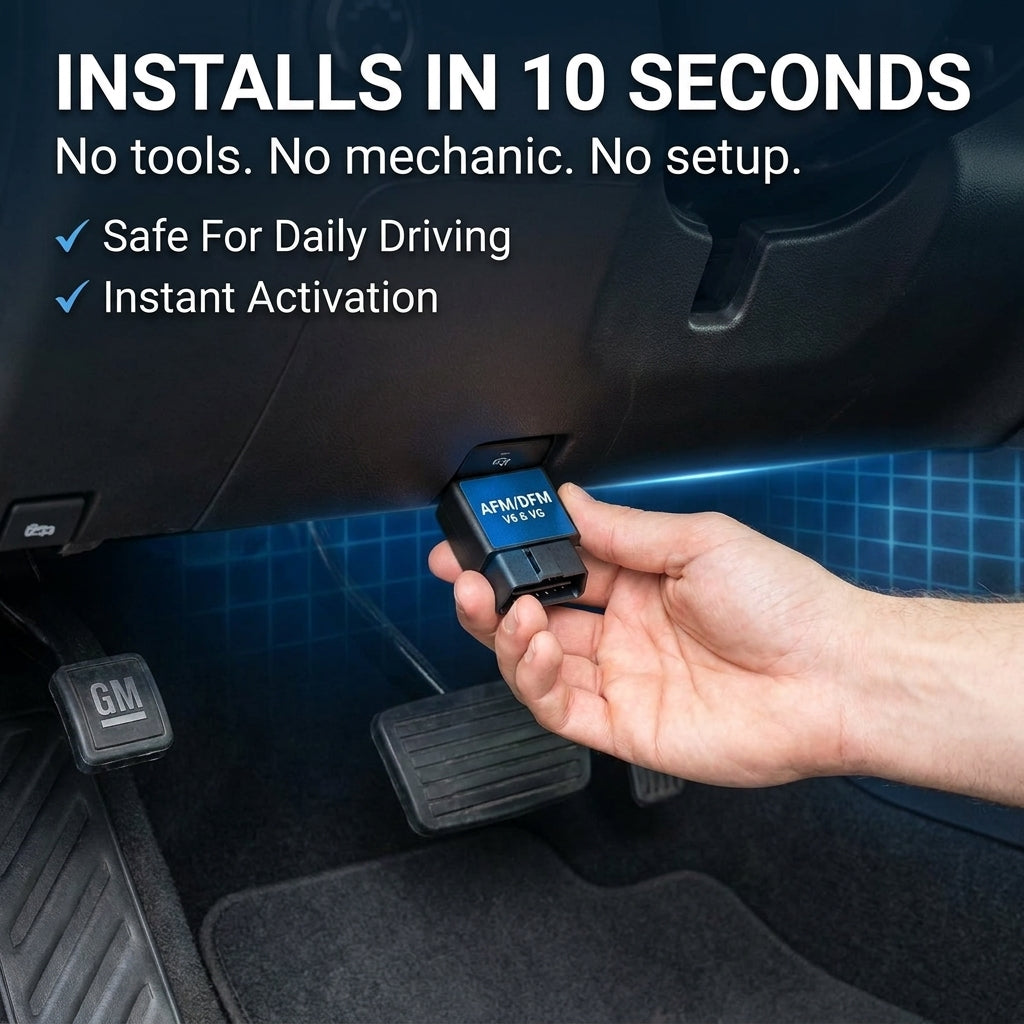
First, locate the OBD2 diagnostic port inside your GM truck or SUV, usually found under the driver side dashboard near the steering column. Ensure your vehicle engine is completely turned off and the ignition is in the off position before proceeding. The port is a trapezoidal 16-pin female connector that provides the primary interface for vehicle diagnostics and performance modules. Based on our team experience at Gadon.store, checking the port for any debris or dust before insertion ensures a solid electrical connection for the module LEDs to function correctly.
Step 2: Plug the Device Securely
Take your Gadon™ AFM/DFM Disabler and push it firmly into the port until it is fully seated. There are no tools required for this process. You will notice the indicator lights flash, confirming it has successfully connected to the ECU and is receiving power. This device acts as a signal blocker, preventing the command to deactivate cylinders from reaching the hydraulic lifters. Because it uses the existing factory hardware and does not rewrite any software code, the device remains safe for the vehicle electronics and leaves no permanent trace on the computer system.
Step 3: Start the Engine and Experience Full V8 Power
Start your engine and observe the immediate change in idling and acceleration. The device instantly blocks the cylinder deactivation signals without rewriting the factory software. You can now drive normally, experiencing immediate smoother throttle response, no lag, and consistent V8 power on every drive. Whether you are merging onto a highway or pulling a heavy trailer, your GMC Sierra will no longer hesitate as it struggles to switch from four cylinders back to eight. This consistent power delivery also reduces wear on the transmission torque converter.
Advanced Tips: Understanding AFM/DFM on GM Vehicles
To truly understand why the GMC Sierra faces reliability challenges, one must examine the internal mechanics of the L83 and L84 engine families. The Active Fuel Management system relies on specialized lifters that contain a spring-loaded locking pin. When the ECU decides to enter V4 mode, oil pressure is diverted through the Life Oil Control Assembly to retract these pins, allowing the lifter to collapse and effectively stop the valves from opening. However, this complex hydraulic process is prone to failure if oil pressure fluctuates or if carbon deposits build up within the tiny oil passages. An advanced tip from professional GM mechanics is to disable this system as early as possible in the vehicle life to prevent these mechanical components from ever undergoing the stress of deactivation.
How Cylinder Deactivation Causes Lifter Failure
The constant switching between V4 and V8 modes creates uneven wear on the active lifters. Over time, the locking pins can become stuck or the internal springs can fatigue, leading to a condition where the lifter fails to re-engage. This leads to premature lifter failure, bent pushrods, and costly engine rebuilds that can exceed 5,000 dollars. Furthermore, when cylinders are deactivated, the piston rings can allow oil to seep into the combustion chamber, leading to the infamous oil consumption issues reported by many Sierra owners. By maintaining full V8 operation, you ensure uniform oil distribution and temperature across all eight cylinders.
Eliminating Transmission Shudder at Cruising Speeds
Many drivers experience a noticeable shudder or vibration at 35 to 60 mph when the truck attempts to stay in V4 mode under light load. This vibration is often misdiagnosed as a failing torque converter, but it is frequently caused by the engine struggling to maintain speed on only half its cylinders. By keeping the engine in full-cylinder mode, the Gadon module balances the torque, eliminating the awkward gear-searching behavior entirely. This provides a much more refined driving experience and reduces the mechanical strain on the 6-speed, 8-speed, and 10-speed automatic transmissions found in GMC trucks.
Troubleshooting Common Issues with Gadon Disablers
While the Gadon AFM/DFM disabler is designed for a seamless plug-and-play experience, owners may occasionally have questions regarding the device operation or its interaction with vehicle systems. Providing clear solutions to these common scenarios is part of our commitment to transparency and technical excellence. Most issues can be resolved in seconds by checking basic vehicle fuses or understanding how the module interacts with the factory power management system. Below are the most frequent queries addressed by our technical support team to help you maintain optimal performance.
- Why are the lights on the device not turning on? Solution: Check your vehicle OBD2 fuse which is often shared with the cigarette lighter or auxiliary power outlet. If the fuse is blown, the port won't provide power to the Gadon module.
- Will the module drain my truck battery? Solution: The device draws a very minimal amount of power on standby. However, if you plan to leave your truck parked and undriven for several weeks, we recommend unplugging it to be safe.
- Do I need to unplug it before taking it to the dealership? Solution: Yes, simply unplug the Gadon disabler before your service visit. Since it leaves zero trace and doesn't flash the ECU, your factory warranty remains 100 percent intact.
- Can I use this with other OBD2 devices? Solution: We recommend using an OBD2 splitter if you need to run a dash camera or GPS tracker simultaneously, though the disabler works best when connected directly to the primary port.
Which Gadon™ AFM/DFM Disabler Package is Right for You? Expert Advice

At Gadon.store, we offer various packages tailored to the specific needs of GM enthusiasts, fleet managers, and multi-vehicle households. Selecting the right package depends on your current vehicle lineup and your long-term goal for engine preservation. Every purchase from Gadon.store includes our 90-Day Guarantee and Free Shipping. Use code WELCOME to get an extra 10 percent OFF today! Investing in this technology is a proactive step that pays for itself by preventing just one mechanical failure in the future. Our packages are designed to provide the highest value for those looking to protect their automotive investments.
| Product Package | Target User | Included Items | Reference Price |
|---|---|---|---|
| 1 Pack | Single Vehicle Owners | 1x Gadon™ AFM/DFM Disabler | 99.99 dollars (w/ WELCOME code) |
| 2 Packs (Most Popular) | Families / Dual GM Trucks | 2x Gadon™ AFM/DFM Disablers | 15 percent OFF Bundle |
| 3 Packs (Best Value) | Work Fleets and Shops | 3x Gadon™ AFM/DFM Disablers | 25 percent OFF Bundle |
| 90-Day Refund | All Customers | Satisfaction Guarantee | Full Money Back |
| Standard Shipping | Domestic and Intl | Tracked Delivery | Free of Charge |
| Expert Support | All Customers | WhatsApp and Phone | Always Free |
| ECU Trace Check | Warranty Protection | Zero Permanent Code | Verified Safe |
| Life Expectancy | Truck Components | Enhanced Durability | Long-term Savings |
Quick FAQs on Gadon AFM/DFM Disablers
Understanding the specific impacts of an AFM disabler on your GMC Sierra is essential for peace of mind. We have compiled the most frequent questions from our community of over 50,000 satisfied customers to provide you with instant clarity. These answers are based on years of technical testing and real-world application across various GM truck models. Whether you are concerned about warranty preservation or technical compatibility, the information below will guide you in making an informed decision for your vehicle health.
Will it void my GM warranty or trigger a Check Engine Light?
The Gadon disabler does not rewrite the factory ECU software or leave any permanent trace on the vehicle computer. Because it is a temporary plug-in module, you can simply remove it before taking your truck to the dealership for service. This ensures your factory warranty stays 100 percent intact and no fault codes are stored in the system memory.
Will it fit my specific truck model?
This device is compatible with over 90 General Motors models ranging from 2005 to 2026. This includes the GMC Sierra 1500, 2500, and 3500 series, as well as the Yukon and Denali trims. If your vehicle features a V6 or V8 engine with cylinder deactivation technology, our module will effectively keep it in full power mode.
Will this actually save my engine from 5,000 dollar repairs?
By preventing the hydraulic lifters from collapsing and re-engaging thousands of times per drive, you significantly reduce the mechanical fatigue that leads to failure. Most lifter failures occur due to the wear and tear of the deactivation process itself. Eliminating this process is the most effective preventative measure available for these engines.
When will I feel the difference while driving?
The difference is immediate upon the first acceleration. Most owners report that the truck feels more responsive, the transmission shifts are crisper, and the annoying exhaust drone or cabin vibration associated with V4 mode is completely eliminated. The truck will maintain its V8 exhaust note at all times.
How hard is the installation process?
The installation takes less than 10 seconds and requires absolutely no tools or mechanical knowledge. If you can locate your steering wheel, you can find the OBD2 port directly beneath it. The module is designed for a snug fit and will stay secure even during off-road driving or high-vibration conditions.
Need Help Checking Vehicle Compatibility? Gadon.store is Ready 24/7
In just 2 minutes, our expert team can confirm if the Gadon™ AFM/DFM Disabler fits your exact year and model.
Protect Your GM Engine and Regain Full V8 Power with Gadon.store
At Gadon.store, we provide a reliable, plug-and-play solution that unleashes your engine true V8 potential while protecting it from expensive lifter failures. We are committed to high-quality performance modules, zero ECU tracing, and excellent customer support. Upgrade your ride and drive with confidence knowing your GMC Sierra is operating at peak efficiency without the risks of cylinder deactivation. Call our support hotline now at +1 813-408-1627 or order directly from our website to secure your vehicle today!
Note: The guidance and prices in this article are for reference at the time of publishing and are subject to change. Please contact Gadon.store directly for the most current information. Always ensure your vehicle is parked safely before interacting with the OBD2 port. Contact Gadon.store for precise support for your GM vehicle.
Disclaimer: The instructions in this article are based on practical experience with GADON STORE products. Always ensure your vehicle is parked safely before interacting with the OBD2 port. Please contact contact@gadon.store for detailed support regarding your specific GM model compatibility.