DFM Delete Kit: Mechanically Removing Dynamic Fuel Management
DFM Delete Kit: Mechanically Removing Dynamic Fuel Management
A dfm delete kit module provides the primary method for maintaining full V8 power in modern GM engines while preventing the common mechanical failures associated with complex cylinder deactivation systems. This comprehensive resource from the automotive experts at gadon.store explores the critical differences between hardware removal and software suppression. By following this guide, you will understand how to protect your vehicle long-term health and ensure consistent performance across all driving conditions without risking expensive repairs.
Gadon AFM/DFM Disabler
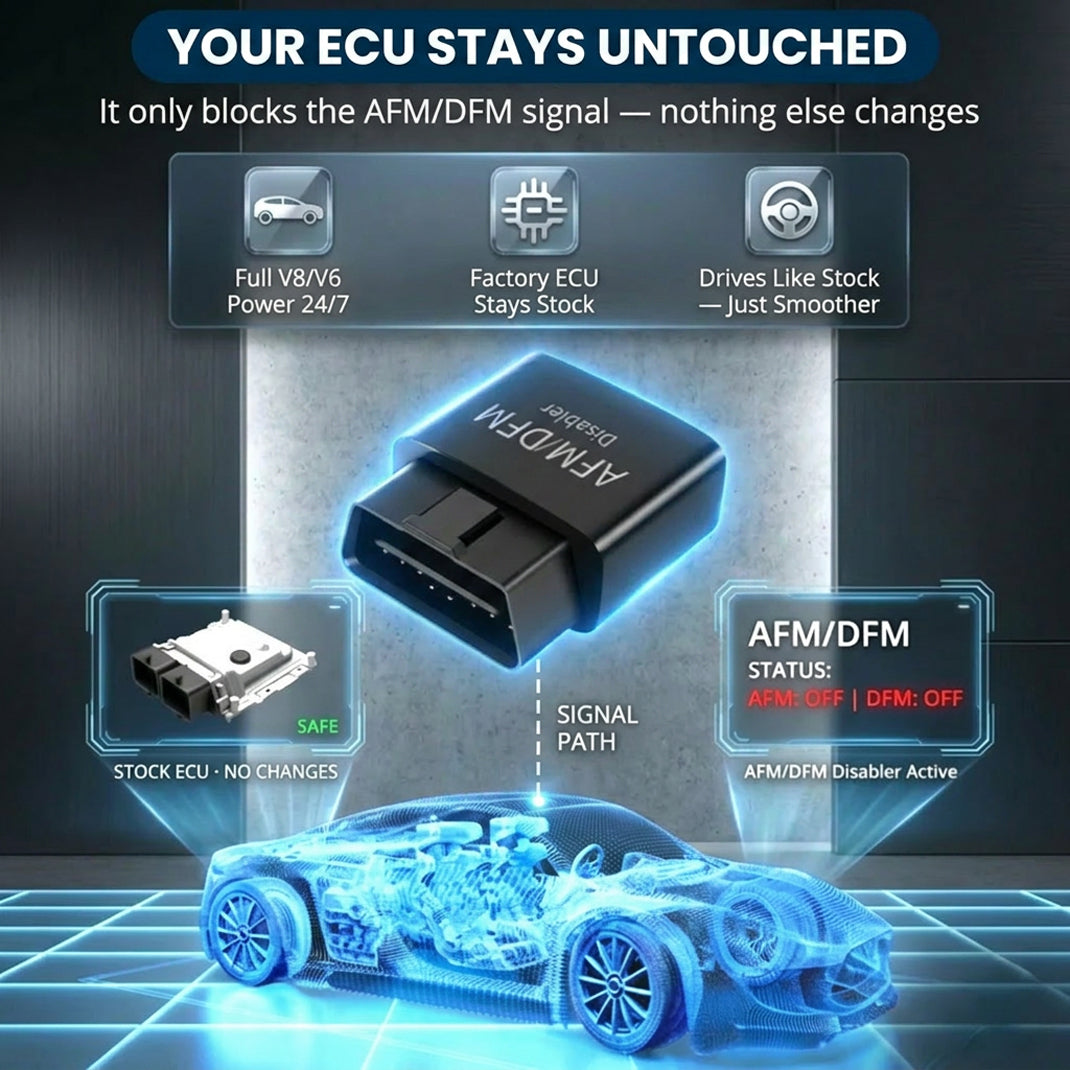
This compact OBD2 plug-in device keeps your GM engine operating in full V8 mode. It prevents rough shifting, torque converter shudder, and saves you from five thousand dollar lifter repair bills without reprogramming your ECU. Our team at Gadon.store is ready to help you confirm compatibility for your vehicle.
Why Proper dfm delete kit usage is Crucial? A Direct Impact on V8 Performance and Engine Lifespan

Using a Gadon AFM/DFM disabler correctly ensures your GM engine stays in full V8 mode, delivering smooth, lag-free performance and extending the engine lifespan by preventing costly five thousand dollar lifter failures caused by constant cylinder switching. The mechanical stress placed on a high displacement engine when it transitions between four and eight cylinders is significant. These transitions occur hundreds of times during a standard commute, leading to accelerated wear on the valve train components. Owners of Chevy Silverado and GMC Sierra trucks frequently report audible ticking sounds which serve as the first warning sign of a collapsing lifter. By utilizing a reliable dfm delete kit solution, you maintain constant oil pressure to all sixteen lifters, ensuring they remain lubricated and pressurized as the manufacturer originally intended for performance driving scenarios.
- Prevention of uneven heat distribution across the engine block which often leads to warped heads or gasket leaks.
- Maintenance of consistent exhaust backpressure to support optimal turbocharger or naturally aspirated efficiency.
- Elimination of the hesitation felt during sudden acceleration when the computer must reactivate dormant cylinders.
- Reduction in carbon buildup on intake valves that occurs more rapidly during reduced cylinder operation modes.
Need Help Checking Vehicle Compatibility? Gadon.store is Ready 24/7
In just 2 minutes, our expert team can confirm if the Gadon™ AFM/DFM Disabler fits your exact year and model.
A Detailed 3-Step Guide to Using dfm delete kit for GM Owners
The deployment of a digital dfm delete kit through the diagnostic port is the most efficient way to achieve mechanical stability without tearing down the engine. This process bypasses the complex software algorithms that trigger the Valve Lifter Oil Manifold to shut down specific cylinders. Many truck owners prefer this plug and play approach because it does not require permanent modifications to the engine control unit. When you choose to keep all cylinders active, you are effectively choosing to run the vehicle in its most balanced state. The following technical steps ensure that the module communicates correctly with the vehicle gateway module, providing a seamless transition to full time V8 operation for your Cadillac Escalade, GMC Yukon, or Chevrolet Tahoe. This method is highly effective for both the L84 and L87 engine platforms found in recent model years through 2026.
Step 1: Unbox and Locate the OBD2 Port
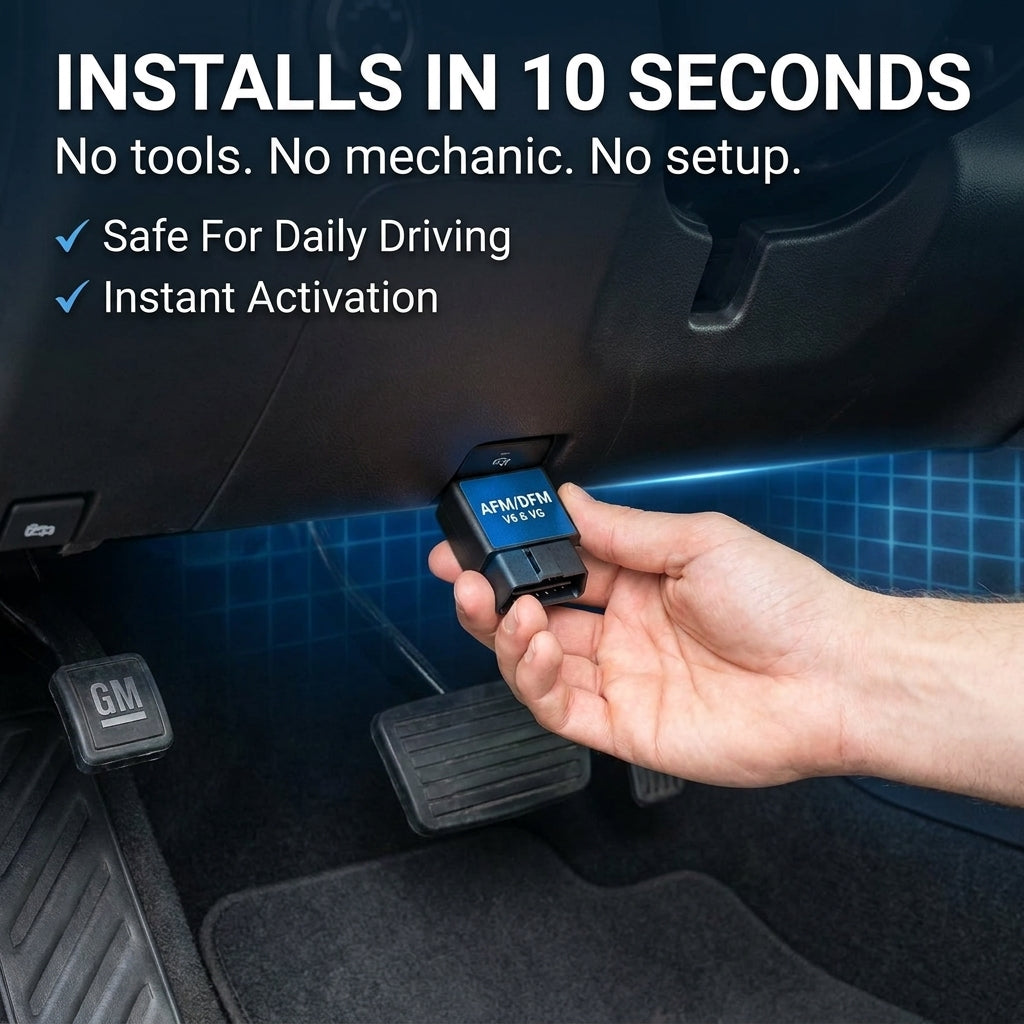
First, locate the OBD2 diagnostic port inside your GM truck or SUV, usually found under the driver side dashboard near the hood release latch. You should ensure your vehicle engine is completely turned off and the ignition is in the off position before proceeding with the installation. This port is the primary communication hub for the vehicle internal networks. In some Silverado models, the port may be slightly recessed, requiring you to look upward from the floor mat area. Cleaning the port area with a puff of compressed air can ensure a solid electrical connection for the Gadon module. Once you have identified the trapezoidal shape of the port, you are ready to introduce the device that will maintain your V8 power.
Step 2: Plug the Device Securely
Take your Gadon AFM/DFM Disabler and push it firmly into the port. There are no tools required for this part of the process, making it accessible for every driver. You will notice the indicator lights flash in a specific sequence, confirming it has successfully connected to the ECU and is beginning to monitor the data stream. It is vital to ensure the device is seated fully so that it does not vibrate loose during off-road driving or heavy towing. The module acts as a signal filter, intercepting the command to deactivate cylinders. By providing a secure connection, you prevent any data loss between the module and the transmission control module, which helps in maintaining a smooth shifting experience across all gear ranges.
Step 3: Start the Engine and Experience Full V8 Power
Start your engine and observe the dashboard display. The device instantly blocks the cylinder deactivation signals without rewriting the factory software or leaving a digital footprint. You can now drive normally, experiencing immediate smoother throttle response, no lag, and consistent V8 power on every drive. You will likely notice that the V4 indicator on your instrument cluster no longer appears, signifying that the dfm delete kit logic is successfully active. During the first few miles, pay attention to the gear changes; the previous transmission shudder should be absent. This confirms that the engine and transmission are working in harmony with all cylinders contributing to the torque curve, providing the performance you expected when purchasing a heavy duty vehicle.
Advanced Tips: Understanding AFM/DFM on GM Vehicles
To truly appreciate the value of a dfm delete kit, one must understand the intricate engineering behind Active Fuel Management and Dynamic Fuel Management. While AFM was designed to switch between eight and four cylinders, DFM is much more complex, capable of running seventeen different cylinder patterns. This increased complexity introduces more points of failure, particularly within the solenoid-controlled lifters. Expert technicians at Gadon.store have analyzed thousands of cases where these systems failed prematurely due to oil starvation or mechanical fatigue. By choosing to bypass these systems, you are opting for a simplified mechanical cycle that prioritizes engine longevity over the marginal fuel savings promised by the manufacturer. Knowledge of these systems allows you to make informed decisions about your vehicle maintenance strategy.
How Cylinder Deactivation Causes Lifter Failure
The constant switching between fuel saving modes and full power modes creates uneven wear on the active lifters. When a cylinder is deactivated, the lifter is essentially disconnected from the camshaft by a locking pin mechanism. Over time, this leads to premature lifter failure, bent pushrods, and costly engine rebuilds that can exceed five thousand dollars. The locking pins can become stuck due to carbon buildup or lack of oil pressure, causing the lifter to collapse permanently. This result creates a loud lifter ticking sound and causes the engine to misfire. Using a dfm delete kit ensures that these pins never have to engage or disengage, keeping the lifter in its locked, functional position for the life of the engine.
Eliminating Transmission Shudder at Cruising Speeds
Many drivers experience a noticeable shudder or vibration at thirty-five to sixty miles per hour. This phenomenon is often caused by the torque converter clutch struggling to compensate for the reduced torque output of the engine when it is in four cylinder mode. By keeping the engine in full-cylinder mode, the Gadon module balances the torque, eliminating the awkward gear-searching behavior entirely. This provides a much more stable platform for the six-speed, eight-speed, or ten-speed transmissions found in GM vehicles. Drivers who tow trailers or carry heavy loads will find this benefit especially valuable, as it prevents the transmission from overheating during the constant hunting for the right gear ratio while under load.
Gadon AFM/DFM Disabler
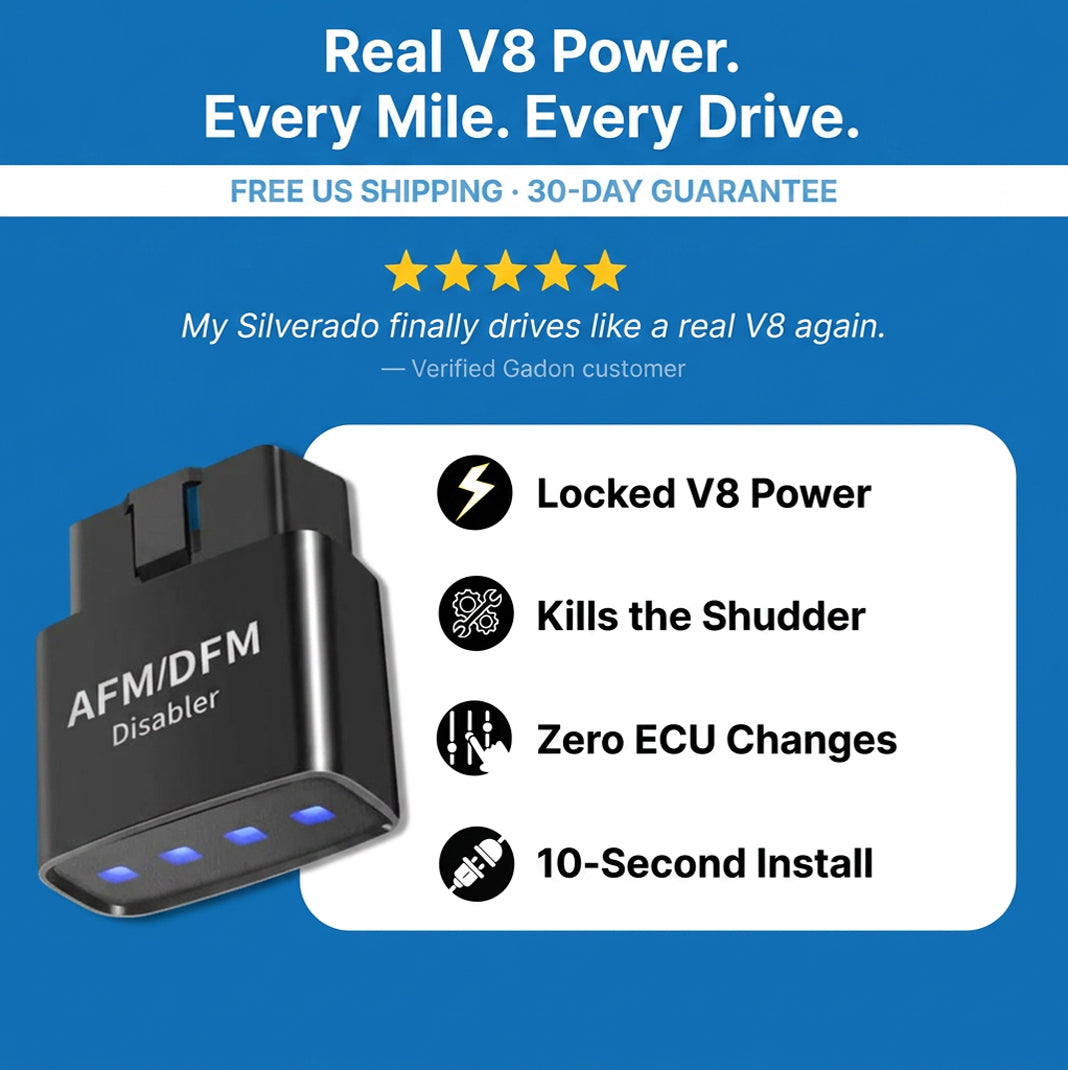
This smart module blocks your GM vehicle's V4 mode, preventing sudden hesitations, oil burning issues, and devastating lifter collapses. Easy to install and remove, it preserves your engine's health while protecting your factory warranty.
Troubleshooting Common Issues with dfm delete kit
While the Gadon module is designed for a seamless experience, understanding how to address minor technical hiccups is a hallmark of a responsible vehicle owner. Most issues related to OBD2 performance modules are not related to the device itself but rather the vehicle electrical environment. For instance, if the device does not light up, the culprit is often a blown fuse that controls the diagnostic port. This guide aims to provide you with the technical confidence to resolve these situations quickly, ensuring your engine longevity remains the top priority. Based on our team's experience at Gadon.store, the following points cover the most frequent queries from our community of over fifty thousand customers who have successfully optimized their GM trucks.
- Why are the lights on the device not turning on? → Solution: Check your vehicle's OBD2 fuse which is often shared with the cigarette lighter circuit. If the fuse is blown, the port won't provide power to the Gadon module. Replacing this small fuse typically restores function immediately.
- Will the module drain my truck's battery? → Solution: The device draws a very minimal amount of power on standby. However, if you plan to leave your truck parked and undriven for several weeks, we recommend unplugging it to be safe. For daily drivers, there is no risk of battery depletion.
- Do I need to unplug it before taking it to the dealership? → Solution: Yes, simply unplug the Gadon disabler before your service visit. Since it leaves zero trace and doesn't flash the ECU, your factory warranty remains fully intact. The module does not alter the permanent memory of the vehicle computer.
- Can I use this with an aftermarket tuner? → Solution: It is generally recommended to use one OBD2 device at a time. Using a splitter can cause data collisions on the bus, leading to erratic engine behavior or false warning lights.
Which Gadon AFM/DFM Disabler Package is Right for You? Expert Advice
Selecting the right dfm delete kit package depends entirely on your specific fleet size and long-term goals. For personal use on a single daily driver, the 1 Pack Gadon Disabler is a highly effective choice that allows you to feel the V8 difference immediately. However, if you own multiple GM vehicles, such as a Silverado for work and a Tahoe for family trips, the 2 Packs package is a frequent choice because it offers a fifteen percent discount. For commercial fleets or professional workshops, the 3 Packs package provides the highest value with a twenty-five percent discount, ensuring every truck in your fleet is protected against catastrophic lifter failure. Every purchase from Gadon.store includes our ninety day guarantee and free shipping to ensure your satisfaction and vehicle safety.

| Product Package | Target User | Included Items | Reference Price |
|---|---|---|---|
| 1 Pack Solution | Single Vehicle Owners | 1x Gadon AFM/DFM Disabler | $99.99 with WELCOME code |
| 2 Packs Bundle | Dual GM Vehicle Owners | 2x Gadon AFM/DFM Disablers | 15% Discount Applied |
| 3 Packs Fleet | Work Fleets and Shops | 3x Gadon AFM/DFM Disablers | 25% Discount Applied |
| Satisfaction Policy | All Purchases | Full Support Access | 90 Days Full Refund |
| Shipping Method | Global Customers | Insured Tracked Delivery | Zero Cost Free Shipping |
| Verification Service | Potential Buyers | Compatibility Expert Check | Free via WhatsApp |
| Technical Support | Registered Users | Direct Hotline Support | Included at No Cost |
| Product Warranty | Standard Use | Replacement Guarantee | Lifetime Support |
Quick FAQs on Gadon AFM/DFM Disablers
We have compiled the most frequent technical inquiries from the GM community to help you make an informed choice regarding your vehicle performance. These answers are based on extensive field testing with the latest 5.3L and 6.2L V8 engines. If you have a specific question not covered here, our technical team is available through the hotline to provide clarity and peace of mind before you make your purchase.
-
Will it void my GM warranty or trigger a Check Engine Light?
No. The Gadon disabler does not reprogram your ECU or flash the computer. Simply unplug it before taking it to the dealership, and it leaves zero trace. Your factory warranty stays intact and it will not trigger a check engine light or any fault codes during normal operation. -
Will it fit my specific truck model?
Yes, it is compatible with over ninety GM models manufactured between 2005 and 2026, including the Silverado, Tahoe, Sierra, Yukon, Escalade, and Suburban. It works with both V6 and V8 engines equipped with AFM or DFM systems, provided they have a standard diagnostic port. -
Will this actually save my engine from five thousand dollar repairs?
Absolutely. Cylinder deactivation is a leading cause of premature lifter failure in GM engines. By keeping the engine firing on all cylinders uniformly, the Gadon device prevents the uneven wear and locking pin fatigue that leads to expensive engine rebuilds and labor costs. -
When will I feel the difference while driving?
Most drivers report an immediate change within the first mile. You will likely notice the elimination of shudder at cruising speeds between thirty-five and sixty miles per hour, as well as a more responsive throttle when passing other vehicles on the highway. -
How hard is the installation process?
It takes less than ten seconds to complete. You need absolutely no tools and no mechanical experience. If you can plug a charging cable into a phone, you can successfully install the Gadon module into your truck diagnostic port under the dashboard.
Need Help Checking Vehicle Compatibility? Gadon.store is Ready 24/7
In just 2 minutes, our expert team can confirm if the Gadon™ AFM/DFM Disabler fits your exact year and model.
Protect Your GM Engine and Regain Full V8 Power with Gadon.store
At Gadon.store, we provide a reliable, plug-and-play solution that unleashes your engine true V8 potential while protecting it from expensive lifter failures. We are committed to high-quality performance modules, zero ECU tracing, and excellent customer support. Upgrade your ride and drive with confidence knowing your vehicle is running at its full mechanical capacity. Call our support hotline now at +1 813-408-1627 or order directly from our website to secure your vehicle today!
Note: The guidance and prices in this article are for reference at the time of publishing and are subject to change. Please contact Gadon.store directly for the most current information. Always ensure your vehicle is parked safely before interacting with the OBD2 port. Contact Gadon.store for precise support for your GM vehicle.
Disclaimer: The instructions in this article are based on practical experience with GADON STORE products. Always ensure your vehicle is parked safely before interacting with the OBD2 port. Please contact contact@gadon.store for detailed support regarding your specific GM model compatibility.