Why is My AFM Disabler Causing a Check Engine Light?
Why the AFM Check Engine Light Triggers and How to Fix It
An AFM check engine light can be a frustrating experience for GM owners attempting to optimize vehicle performance with a plug-in module. This in-depth guide from the experts at gadon.store helps you troubleshoot communication errors while maintaining full V8 power and preventing expensive engine damage. By understanding the interaction between the OBD2 port and the engine control unit, you can safely eliminate cylinder deactivation, stop transmission shudder, and save thousands in potential repair costs.
Need Help Checking Vehicle Compatibility? Gadon.store is Ready 24/7
In just 2 minutes, our expert team can confirm if the Gadon™ AFM/DFM Disabler fits your exact year and model.
Why Proper Engine Management is Crucial? A Direct Impact on V8 Performance and Engine Lifespan
Maintaining a consistent V8 environment is essential for the structural integrity of modern high-displacement engines found in Silverado, Sierra, and Tahoe models. Active Fuel Management and Dynamic Fuel Management are designed for fuel economy but often introduce mechanical vulnerabilities that lead to lifter failure and bent pushrods. Using a Gadon AFM/DFM disabler correctly ensures the GM engine stays in full V8 mode, delivering smooth, lag-free performance and extending the engine lifespan by preventing costly 5,000 dollar plus lifter failures caused by constant cylinder switching.

The mechanical stress of switching between four and eight cylinders creates uneven thermal expansion and contraction within the engine block. Professional mechanics have observed that engines remaining in full power mode exhibit more consistent oil pressure and less wear on the valve train components. By blocking the deactivation signals, you protect the high-performance lifters from getting stuck in the collapsed position, which is the leading cause of internal engine damage in the GM lineup.
- • Consistent Oil Flow: Full cylinder operation ensures that oil reaches every part of the valve train without interruption, maintaining crucial lubrication levels.
- • Thermal Stability: Keeping all cylinders firing prevents cold spots in the engine block, reducing the risk of gasket issues and head warping over time.
- • Reduced Mechanical Stress: Eliminating the rapid engagement and disengagement of the solenoid valves preserves the longevity of the oil manifold assembly.
A Detailed 3-Step Guide to Using the Disabler for GM Owners
The installation process for a plug and play V8 module is designed to be accessible for all vehicle owners regardless of mechanical experience. There is no requirement to flash the engine control unit or modify the factory wiring harness. This ensures that the vehicle remains within warranty specifications while providing an immediate upgrade to the driving dynamics. Following a specific sequence is recommended to ensure the module establishes a clean communication handshake with the vehicle computer system.
Step 1: Unbox and Locate the OBD2 Port
First, locate the OBD2 diagnostic port inside the GM truck or SUV, usually found under the driver side dashboard near the hood release or steering column. Ensure the vehicle engine is completely turned off and the ignition is in the off position before proceeding. Removing any existing obstructions or debris from the port area ensures a secure and flush connection for the high-performance module.
Step 2: Plug the Device Securely
Take the Gadon™ AFM/DFM Disabler and push it firmly into the port until it is fully seated. There are no tools required for this process as the device uses a standard pin configuration compatible with all modern GM vehicles. You will notice the indicator lights flash, confirming it has successfully connected to the ECU and is receiving the necessary voltage from the vehicle battery to function correctly.
Step 3: Start the Engine and Experience Full V8 Power
Start the engine and observe the dashboard display. The device instantly blocks the cylinder deactivation signals without rewriting the factory software. You can now drive normally, experiencing immediate smoother throttle response, no lag, and consistent V8 power on every drive. The module will maintain this state as long as it remains plugged into the diagnostic port, requiring no further interaction from the driver.
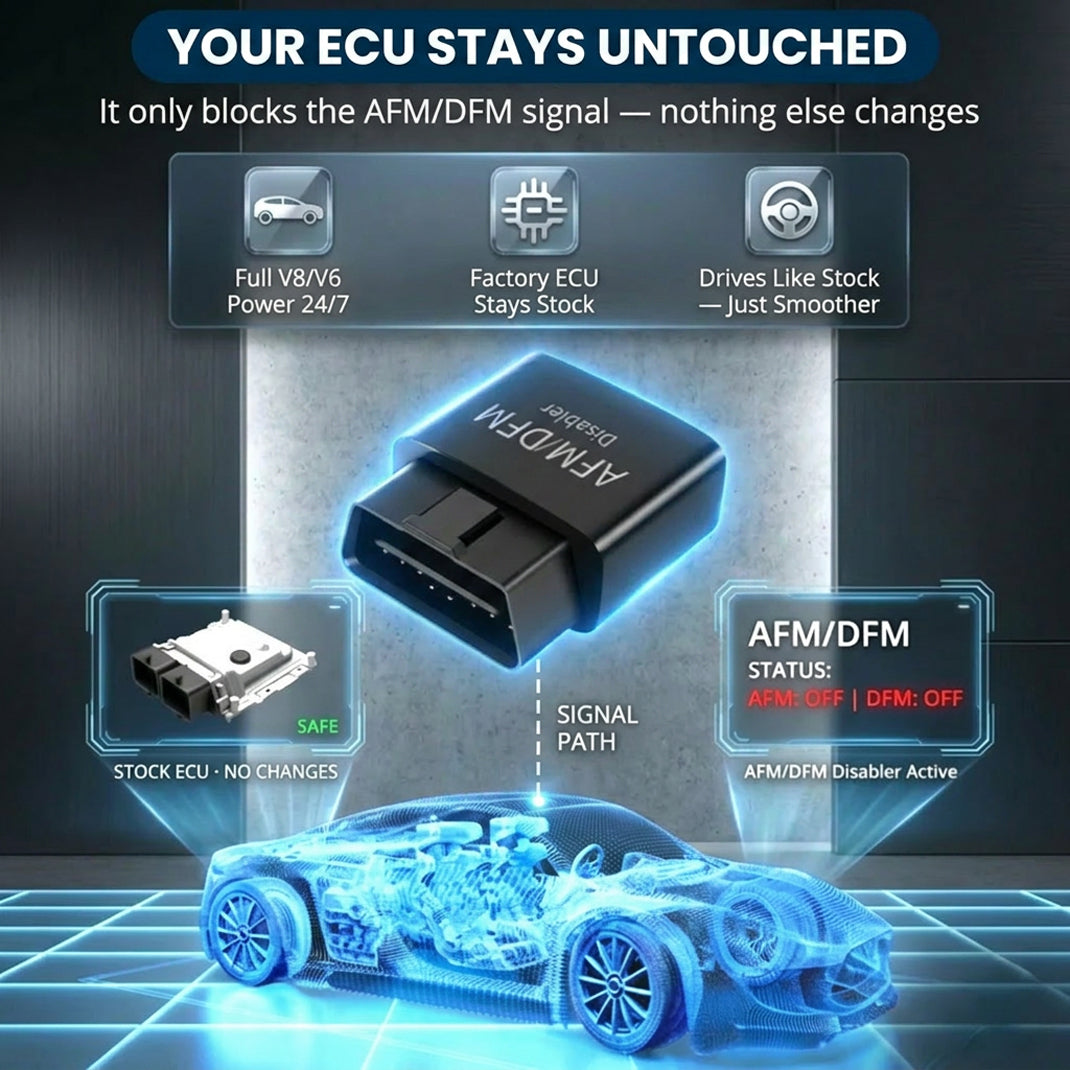
Gadon™ AFM/DFM Disabler
This compact OBD2 plug-in device keeps your GM engine operating in full V8 mode. It prevents rough shifting, torque converter shudder, and saves you from 5,000 dollar plus lifter repair bills without reprogramming your ECU. Our team at Gadon.store is ready to help you confirm compatibility for your vehicle.
Advanced Tips: Understanding AFM/DFM on GM Vehicles
Active Fuel Management and Dynamic Fuel Management are complex systems designed by General Motors to improve fuel efficiency by deactivating cylinders under light load conditions. While the theory is sound for reducing emissions, the practical application often results in mechanical fatigue within the engine. Based on the experience of the team at Gadon.store, understanding these systems is the first step toward effectively protecting your vehicle for the long term.
How Cylinder Deactivation Causes Lifter Failure
The constant switching between V4 and V8 modes creates uneven wear on the active lifters because they are forced to lock and unlock thousands of times during a single trip. Over time, this leads to premature lifter failure, bent pushrods, and costly engine rebuilds that can exceed 5,000 dollars. When a lifter fails to unlock, it can damage the camshaft lobe, requiring a complete teardown of the top end of the engine. This issue is particularly prevalent in high-mileage trucks that have spent years cycling in and out of fuel-saving modes.
Eliminating Transmission Shudder at Cruising Speeds
Many drivers experience a noticeable shudder or vibration at speeds between 35 and 60 miles per hour. This is often caused by the torque converter struggling to find a balance between the reduced power output of the V4 mode and the requirement to maintain cruising speed. By keeping the engine in full-cylinder mode, the Gadon module balances the torque, eliminating the awkward gear-searching behavior and providing a more linear power delivery that protects the transmission from unnecessary wear.
Troubleshooting Common Issues with the AFM Check Engine Light
An AFM check engine light typically occurs when the vehicle computer detects an unexpected data request on the diagnostic bus or fails to receive a confirmation signal from the cylinder management system. This is often referred to as a communication error or an ECU handshake issue. Addressing these errors requires a systematic approach to ensure the module and the vehicle are in perfect synchronization. Most issues are resolved by resetting the connection rather than requiring mechanical repairs.
Advanced diagnostics show that modern GM vehicles are highly sensitive to voltage fluctuations at the OBD2 port. If the vehicle battery is weak or the port fuse is failing, the module may lose power momentarily, causing the ECU to trigger a fault code. It is also important to consider if other electronic accessories are competing for data on the same network, which can lead to traffic congestion on the vehicle bus and result in a temporary check engine light.
- • Why are the lights on the device not turning on? Solution: Check the vehicle OBD2 fuse which is often shared with the auxiliary power outlet. If the fuse is blown, the port will not provide power to the Gadon module.
- • Will the module drain the truck battery? Solution: The device draws a very minimal amount of power on standby. However, if you plan to leave the truck parked and undriven for several weeks, the technicians recommend unplugging it to ensure the battery remains fresh.
- • Why did a Stabilitrak warning appear? Solution: This is often a temporary communication glitch during the initial plug-in. Unplug the module, turn off the engine, wait two minutes, and plug it back in firmly to reset the data handshake.
- • Do I need to unplug it before taking it to the dealership? Solution: Yes, simply unplug the Gadon disabler before any service visit. Since it leaves zero trace and does not flash the ECU, the factory warranty remains fully intact.
Which Gadon™ AFM/DFM Disabler Package is Right for You? Expert Advice
Selecting the appropriate performance package depends on the number of GM vehicles in your household or fleet and your specific driving needs. For personal use on a single daily driver, the 1 Pack Gadon™ Disabler is the preferred choice, offering an immediate improvement in engine smoothness and power. Every purchase from Gadon.store includes a 90-Day Guarantee and Free Shipping to ensure a risk-free experience for every customer. Use code WELCOME to get an extra 10 percent off your order today.

| Product Package | Target User | Included Items | Reference Price |
|---|---|---|---|
| 1 Pack | Single Vehicle Owners | 1x Gadon™ AFM/DFM Disabler | 99.99 dollars with WELCOME code |
| 2 Packs | Families and Dual GM Trucks | 2x Gadon™ AFM/DFM Disablers | 15 percent discount included |
| 3 Packs | Work Fleets and Workshops | 3x Gadon™ AFM/DFM Disablers | 25 percent discount included |
| Trial Period | All New Orders | Full Satisfaction Period | 90 Days Full Refund Policy |
| Logistics | Worldwide Customers | Tracked Delivery Service | Free Shipping on all orders |
| Verification | Potential Buyers | 2 Minute Compatibility Check | Free via WhatsApp Support |
| Consultation | Technical Inquiries | Expert Hotline Support | Free via +1 813-408-1627 |
| Warranty Protection | All Active Users | Zero Trace ECU Protection | Factory Warranty Remains Intact |
If you own a Silverado and your spouse drives a Tahoe, the 2 Packs is the most popular option, providing a significant discount for a dual-vehicle upgrade. For commercial fleets or professional mechanics managing multiple work trucks, the 3 Packs offers the best value, ensuring all engines are protected against lifter failure. Investing in these modules now averts the devastating expense of factory lifter collapses and transmission rebuilds later in the vehicle life cycle.
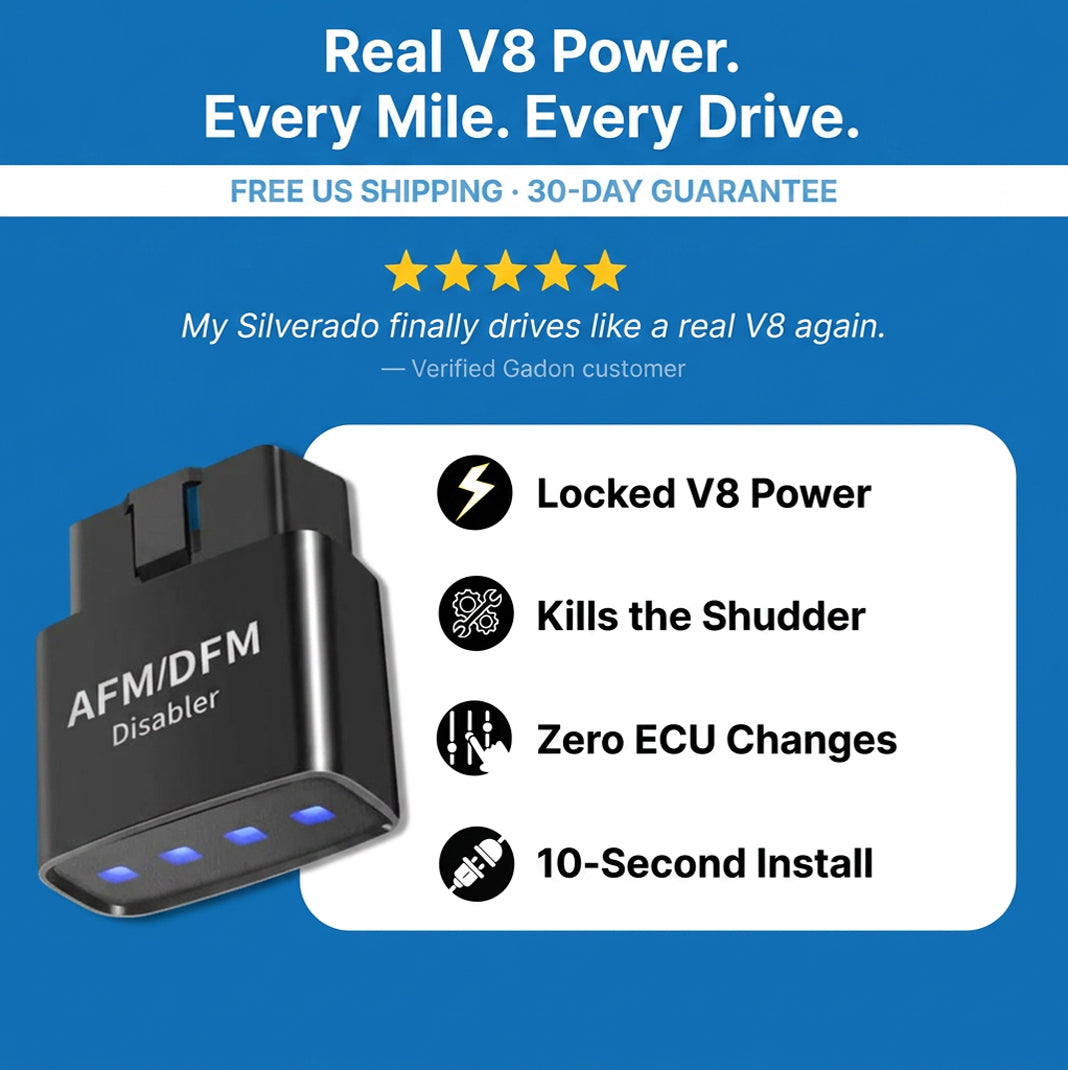
Gadon™ AFM/DFM Disabler
This smart module blocks the GM vehicle V4 mode, preventing sudden hesitations, oil burning issues, and devastating lifter collapses. Easy to install and remove, it preserves the engine health while protecting the factory warranty.
Quick FAQs on Gadon AFM/DFM Disablers
Navigating the technical aspects of cylinder deactivation can be challenging for many truck and SUV owners. The team at Gadon.store has compiled a list of common questions based on feedback from over 50,000 satisfied customers. These answers provide clarity on how the module interacts with your vehicle and what to expect during long term use.
- Will it void the GM warranty or trigger a Check Engine Light? No. The Gadon disabler does not reprogram the ECU or flash the computer. Simply unplug it before taking it to the dealership, and it leaves zero trace on the vehicle logs. Your factory warranty stays 100 percent intact and the device is designed to operate without triggering a check engine light under normal conditions.
- Will it fit my specific truck model? Yes, the module is compatible with a wide range of GM models manufactured between 2005 and the current year. This includes the Silverado, Tahoe, Sierra, Yukon, Escalade, and Suburban. It works with both V6 and V8 engines equipped with Active or Dynamic Fuel Management systems.
- Will this actually save the engine from 5,000 dollar plus repairs? Absolutely. Cylinder deactivation is a documented cause of premature lifter failure in GM engines. By keeping the engine firing on all cylinders uniformly, the Gadon device prevents the uneven mechanical wear that leads to expensive engine rebuilds and internal damage.
- When will I feel the difference while driving? Most drivers report a difference within the first mile of operation. Common observations include the elimination of cruising speed shudder, more responsive acceleration from a dead stop, and an overall smoother transition during gear changes.
- How hard is the installation process? It takes less than 10 seconds to complete. There are no tools required and no advanced technical knowledge is necessary. If you can plug a phone charger into an outlet, you can install the Gadon module into the OBD2 port of your truck.
Need Help Checking Vehicle Compatibility? Gadon.store is Ready 24/7
In just 2 minutes, our expert team can confirm if the Gadon™ AFM/DFM Disabler fits your exact year and model.
Protect Your GM Engine and Regain Full V8 Power with Gadon.store
At Gadon.store, we provide a reliable, plug and play solution that unleashes the engine true V8 potential while protecting it from expensive lifter failures. We are committed to high-quality performance modules, zero ECU tracing, and professional customer support. Upgrade your ride and drive with confidence knowing your engine is protected for the long haul. Call our support hotline now at +1 813-408-1627 or order directly from our website to secure your vehicle today!
Disclaimer: The instructions and prices in this article are for reference at the time of publishing and are subject to change. Please contact Gadon.store directly for the most current information. Always ensure your vehicle is parked safely before interacting with the OBD2 port. Contact Gadon.store for precise support for your GM vehicle.