Silverado Pedal Commander Review: Does it Fix the Lag?
Silverado pedal commander modules are frequently sought by truck owners looking to eliminate throttle hesitation, yet achieving peak performance requires a deeper understanding of how the GM engine management system functions. This in-depth guide on throttle response and engine protection will help you navigate the complexities of power delivery while introducing the specialized solutions available at gadon.store to maximize your driving experience. By addressing the root causes of lag and potential mechanical failures, you can ensure your vehicle remains reliable, powerful, and efficient for many years to come.
Need Help Checking Vehicle Compatibility? Gadon.store is Ready 24/7
In just 2 minutes, our expert team can confirm if the Gadon AFM/DFM Disabler fits your exact year and model.
Why Proper Throttle Management is Crucial? A Direct Impact on V8 Performance and Engine Lifespan
Using a Gadon AFM/DFM disabler correctly ensures your GM engine stays in full V8 mode, delivering smooth, lag-free performance and extending the engine lifespan by preventing costly 5,000 dollar lifter failures caused by constant cylinder switching.
When you drive a modern Chevrolet Silverado or GMC Sierra, the factory software is programmed to prioritize fuel economy over immediate power delivery. This results in a phenomenon often called the dead pedal where the vehicle hesitates for a second before accelerating. While a throttle controller can mask the signal delay, it does not solve the mechanical transitions happening inside the engine block. Professional mechanics often see the following issues in vehicles without proper engine management modules:
- • Premature wear on specialized lifters in cylinders 1, 4, 6, and 7.
- • Increased oil consumption due to pressure imbalances during V4 transitions.
- • Annoying vibrations known as torque converter shudder when cruising at highway speeds.
- • Delayed acceleration when merging into fast-moving traffic or during towing.
- • Frequent shifting of the transmission as it hunts for the correct gear during cylinder deactivation.
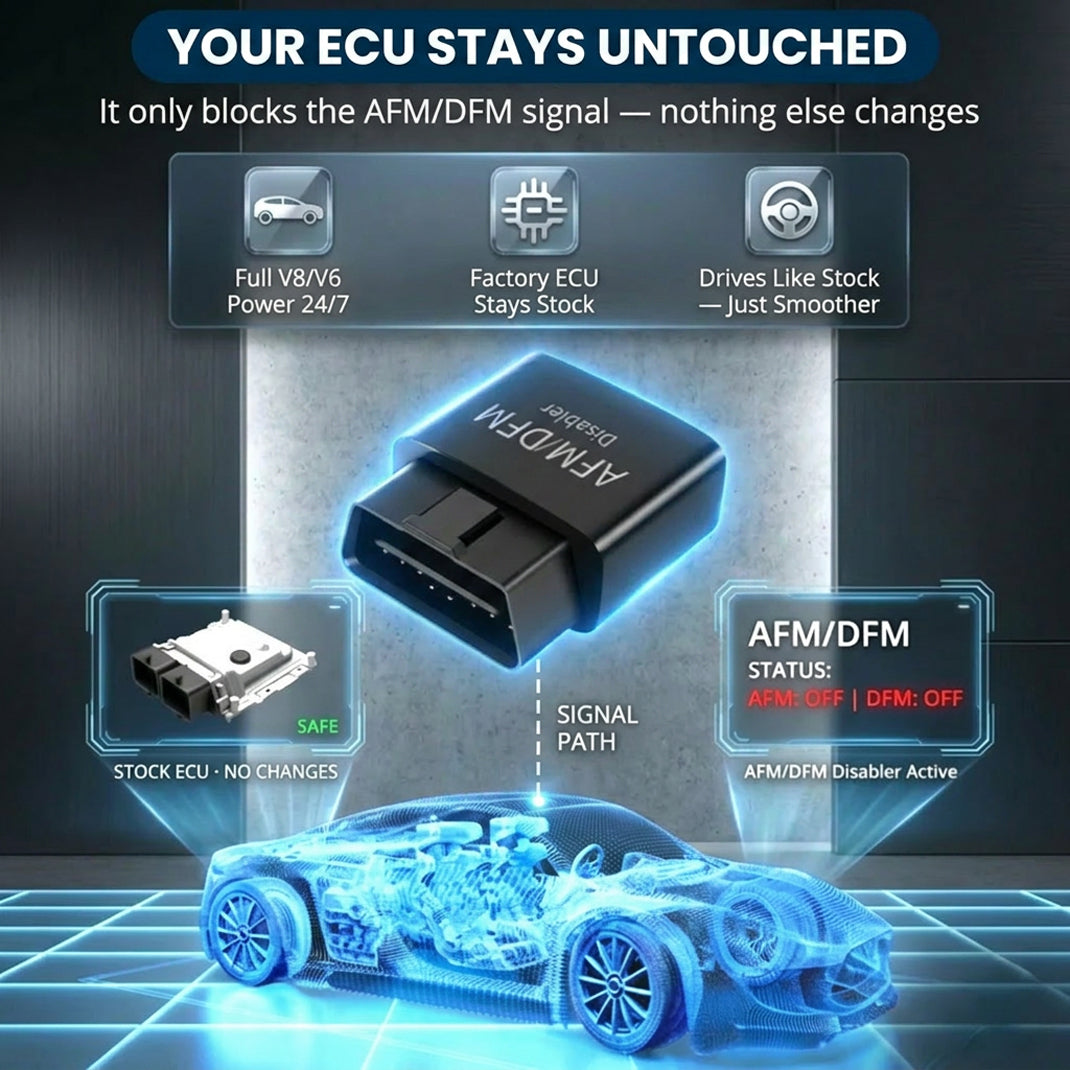
Gadon AFM/DFM Disabler
This compact OBD2 plug-in device keeps your GM engine operating in full V8 mode. It prevents rough shifting, torque converter shudder, and saves you from 5,000 dollar lifter repair bills without reprogramming your ECU. Our team at Gadon.store is ready to help you confirm compatibility for your vehicle.
A Detailed 3-Step Guide to Using Performance Modules for GM Owners
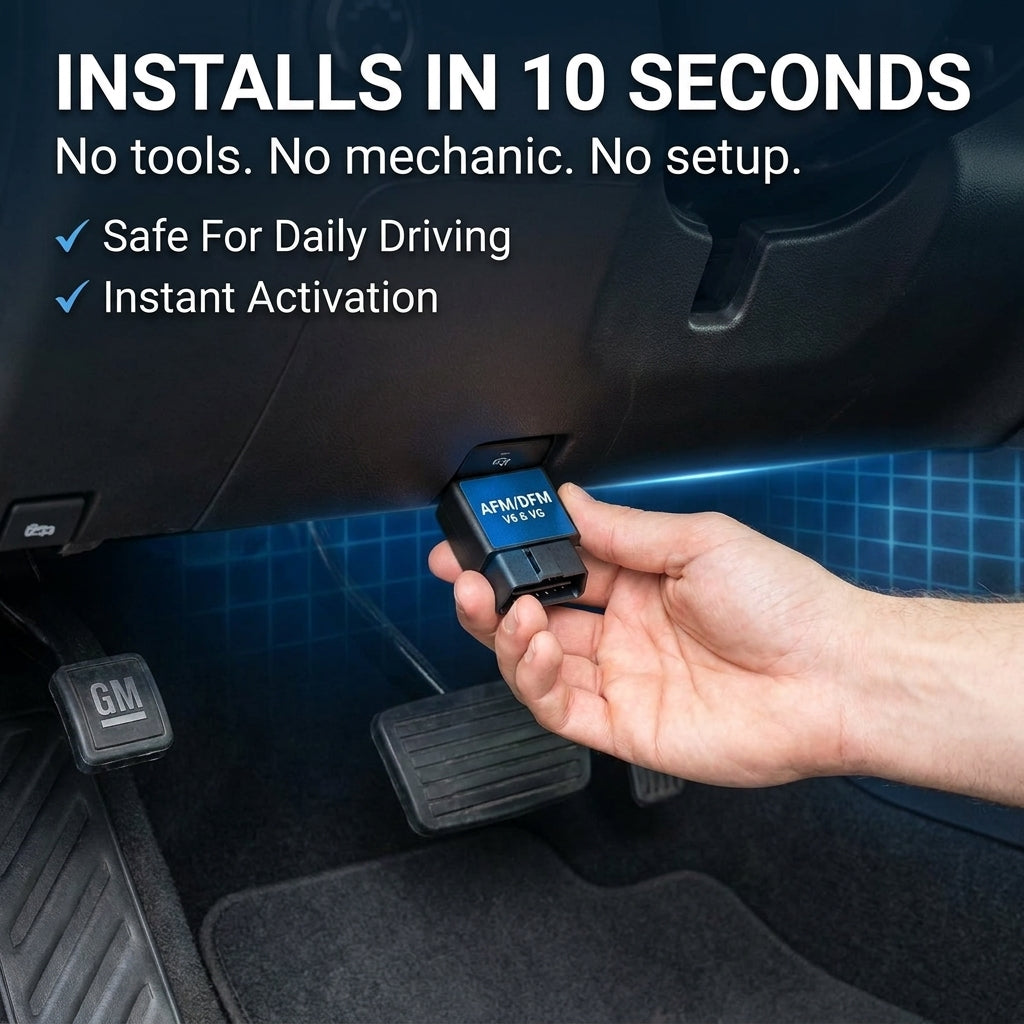
To properly disable AFM or DFM, insert the module directly into the OBD2 port located under the steering wheel while the vehicle is turned off, and ensure the indicator LEDs light up when you turn the key. This process is designed for simplicity, allowing anyone to upgrade their vehicle in seconds without technical expertise or expensive tools.
The following steps represent the standard operating procedure recommended by the technical team at Gadon.store. These instructions apply to Silverado, Sierra, Tahoe, Yukon, and Suburban models from 2005 to the current production year. Following these steps ensures the device syncs correctly with the Engine Control Unit or ECU for optimal operation.
Step 1: Unbox and Locate the OBD2 Port
Locating the OBD2 diagnostic port is the first step toward reclaiming your truck power. This port is typically found under the driver side dashboard, near the brake pedal or hood release. It is a trapezoidal 16-pin connector that provides a direct communication line to your vehicle computer. Always perform the initial connection with the engine off to allow the module to initialize properly during the start-up sequence.
Step 2: Plug the Device Securely
Take your Gadon AFM/DFM Disabler and align it with the port. Push it firmly until it is fully seated. You do not need any screwdrivers or specialized hardware. Most users will notice a sequence of indicator lights on the face of the module. These lights signify that the device is drawing power from the port and is communicating with the high-speed data bus of the vehicle. This connection allows the module to intercept the cylinder deactivation commands before they reach the engine hardware.
Step 3: Start the Engine and Experience Full V8 Power
With the device plugged in, start your engine. You will immediately feel a more consistent idle. As you pull away, the throttle response will be more linear because the engine no longer has to wake up dormant cylinders before accelerating. Drive your truck normally and observe the dashboard display. You will notice that the fuel management screen stays on V8 mode at all times, providing smooth power and eliminating the awkward hesitation at intersections. Every purchase from Gadon.store includes our 90-Day Guarantee and Free Shipping to ensure your satisfaction.
Advanced Tips: Understanding AFM/DFM on GM Vehicles
Active Fuel Management and Dynamic Fuel Management are systems designed to save fuel by turning off cylinders, but they often lead to mechanical failure due to uneven thermal expansion and lubrication issues in the valvetrain. Understanding these mechanisms helps owners appreciate why a disabler is a preventative maintenance tool rather than just a performance upgrade.
How Cylinder Deactivation Causes Lifter Failure
The mechanics of cylinder deactivation involve complex solenoids and locking lifters. When the system activates, oil pressure is redirected to collapse the lifter, preventing the valves from opening. When these lifters spend thousands of miles locking and unlocking, the internal pins can fail or get stuck. This leads to the infamous lifter tick, bent pushrods, or even a camshaft that is ground down by a seized roller. Preventing these transitions with a Gadon module stops this wear cycle, potentially saving owners from an engine rebuild costing between 3,500 and 8,000 dollars.
Eliminating Transmission Shudder at Cruising Speeds
Many GM owners complain about a shuddering sensation that feels like driving over rumble strips. This often happens because the torque converter clutch is trying to compensate for the reduced torque output of the engine in V4 mode. By keeping the engine in full V8 mode, the torque delivery remains constant. This reduces the stress on the transmission and the torque converter, leading to a much smoother ride during highway cruising and reducing the need for expensive transmission flushes or repairs.

| Solution Type | Core Function | Warranty Impact | Estimated Cost |
|---|---|---|---|
| Gadon Disabler | Stops Cylinder Deactivation | Zero Trace / Safe | 99.99 dollars |
| Throttle Controller | Adjusts Pedal Sensitivity | Usually Safe | 300 dollars |
| Custom ECU Tune | Permanent Software Change | Voids Warranty | 600+ dollars |
| Mechanical Delete | Physical Parts Swap | Voids Warranty | 2,500+ dollars |
| Factory Stock | Active AFM/DFM Cycling | N/A | 0 dollars (Initially) |
| Lifter Repair | Replacement of Failed Parts | Critical Failure | 4,500 dollars avg |
| Support Service | 24/7 Expert Consulting | Trusted Expertise | Free at Gadon |
| Shipping | Worldwide Delivery | Reliable Logistics | Free at Gadon |
Troubleshooting Common Issues with Performance Modules
If the device indicator lights do not illuminate, check your vehicle OBD2 fuse which is often linked to the auxiliary power outlet circuit. Troubleshooting these small issues is straightforward and ensures your module remains active to protect your engine at all times.
Our technical support team at Gadon.store has compiled a list of common questions and solutions based on feedback from over 50,000 customers. Addressing these minor concerns ensures a seamless experience with your performance module.
- • Device not powering on: Inspect the fuse labeled CIGAR or AUX POWER in your fuse box. If this fuse is blown, the OBD2 port will not provide the necessary power to the module.
- • Battery drain concerns: While the device draws very little power, it is recommended to unplug the module if the vehicle will be parked for more than three weeks without being driven.
- • Check Engine Lights: Our modules are designed to be passive. If a light appears, ensure the device is firmly seated. Most lights are unrelated to the module and can be scanned for diagnosis while the device is unplugged.
- • Compatibility after software updates: If your dealership performs a major ECU update, simply unplug and replug the device to allow it to recalibrate to the new software handshake.
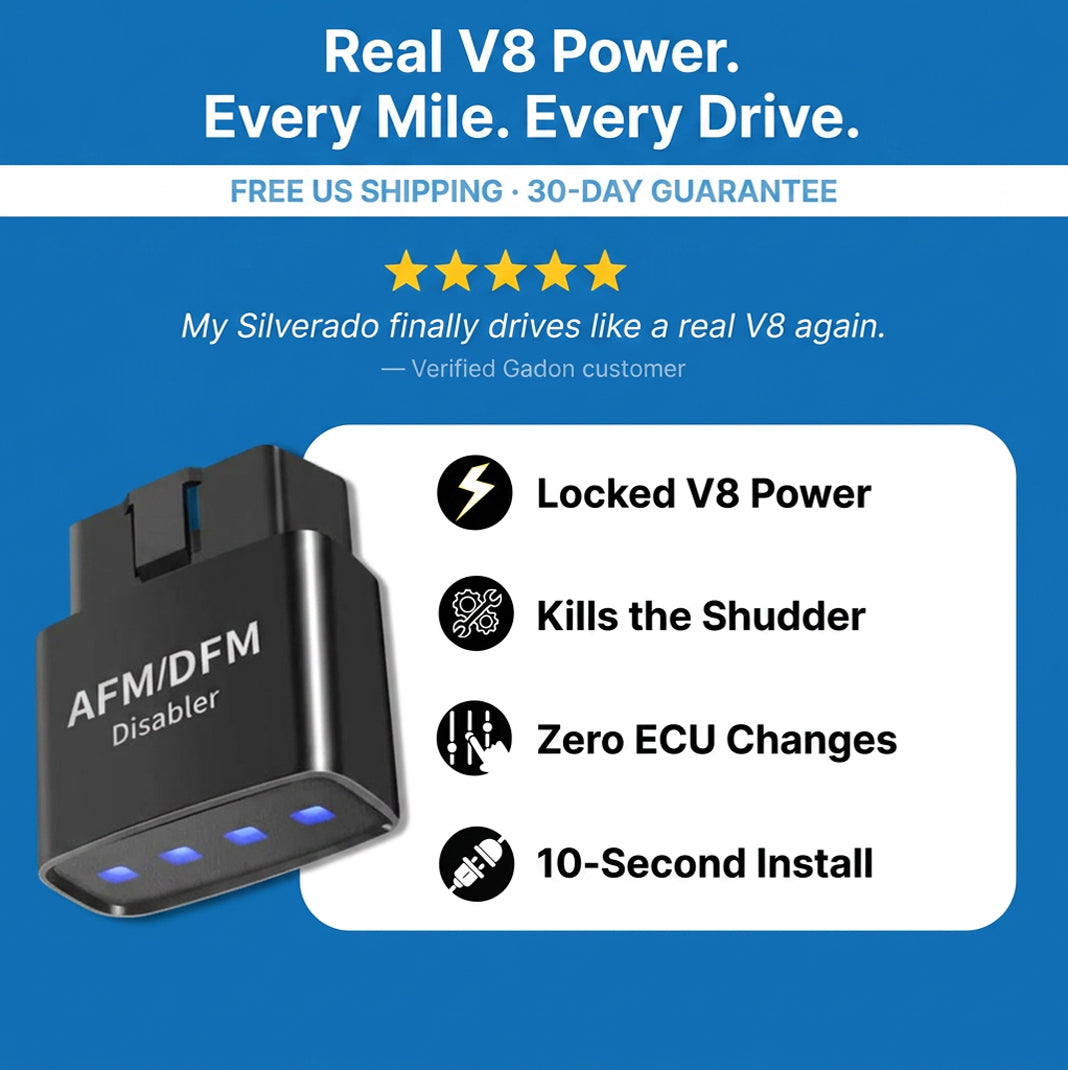
Gadon AFM/DFM Disabler
This smart module blocks your GM vehicle V4 mode, preventing sudden hesitations, oil burning issues, and devastating lifter collapses. Easy to install and remove, it preserves your engine health while protecting your factory warranty.
Which Gadon AFM/DFM Disabler Package is Right for You? Expert Advice
For owners of a single daily driver truck, the 1 Pack Gadon Disabler offers the most direct value, while families with multiple GM SUVs should consider the 2 Pack or 3 Pack options to maximize savings and protect all vehicles in the household simultaneously.

Choosing the right package depends on your specific fleet or family needs. At Gadon.store, we offer tiered pricing to ensure that everyone from the individual enthusiast to the commercial fleet manager can afford to protect their engines from lifter failure. Use code WELCOME to get an extra 10 percent OFF today! Our current packages include:
- • 1 Pack (Individual Protection): The standard choice for a single Silverado or Tahoe. Immediate V8 power for one vehicle.
- • 2 Packs (Dual-Vehicle Upgrade): Our most popular option for households with two GM vehicles. Save 15 percent compared to individual purchases.
- • 3 Packs (Fleet and Value): Perfect for small business owners with work trucks. Save 25 percent and ensure all engines are running efficiently.
Quick FAQs on Gadon AFM/DFM Disablers
Gadon disablers are compatible with over 90 different GM models and do not void your factory warranty because they do not reprogram the ECU. These modules simply communicate through the OBD2 port and can be removed at any time to return the vehicle to its original factory state.
Will it void my GM warranty or trigger a Check Engine Light?
No. Because the Gadon module does not flash or rewrite the software on your vehicle computer, it leaves zero trace. If you need to visit the dealership for service, simply unplug it before you arrive. The vehicle will resume its normal factory programming immediately with no record of the device ever being present.
Will it fit my specific truck model?
The device is compatible with a wide range of Chevrolet, GMC, Cadillac, and Buick vehicles equipped with V6 or V8 engines and Active or Dynamic Fuel Management. This includes the Silverado, Sierra, Yukon, Tahoe, Suburban, and Escalade. If your vehicle was manufactured between 2005 and the present day, it is highly likely the module will work perfectly.
Will this actually save my engine from 5,000 dollar repairs?
By keeping the engine in full cylinder mode, you eliminate the mechanical strain caused by cylinder deactivation. This prevention is the most effective way to avoid the catastrophic lifter failures that plague these engines. Spending a small amount now on a disabler is an investment that prevents the 5,000 to 8,000 dollar repair bill associated with a total engine teardown.
When will I feel the difference while driving?
The difference is noticeable within the first mile of driving. You will feel a more responsive throttle, smoother gear shifts, and the total elimination of the shuddering sensation when cruising. Many drivers also report a significant improvement in towing performance as the engine maintains its full torque output at all times.
How hard is the installation process?
The installation takes less than 10 seconds. It is a simple plug-and-play process that requires no mechanical skill. If you can plug a cable into a wall outlet, you can install this module. It is the easiest and most effective performance upgrade available for GM truck owners today.
Need Help Checking Vehicle Compatibility? Gadon.store is Ready 24/7
In just 2 minutes, our expert team can confirm if the Gadon AFM/DFM Disabler fits your exact year and model.
Protect Your GM Engine and Regain Full V8 Power with Gadon.store
At Gadon.store, we provide a reliable, plug-and-play solution that unleashes your engine true V8 potential while protecting it from expensive lifter failures. We are committed to high-quality performance modules, zero ECU tracing, and excellent customer support. Upgrade your ride and drive with confidence knowing your engine is safe from the pitfalls of cylinder deactivation. Call our support hotline now at +1 813-408-1627 or order directly from our website to secure your vehicle today!
Disclaimer: The instructions in this article are based on practical experience with GADON STORE products. Always ensure your vehicle is parked safely before interacting with the OBD2 port. Please contact contact@gadon.store for detailed support regarding your specific GM model compatibility. Note: The guidance and prices in this article are for reference at the time of publishing and are subject to change. Please contact Gadon.store directly for the most current information.