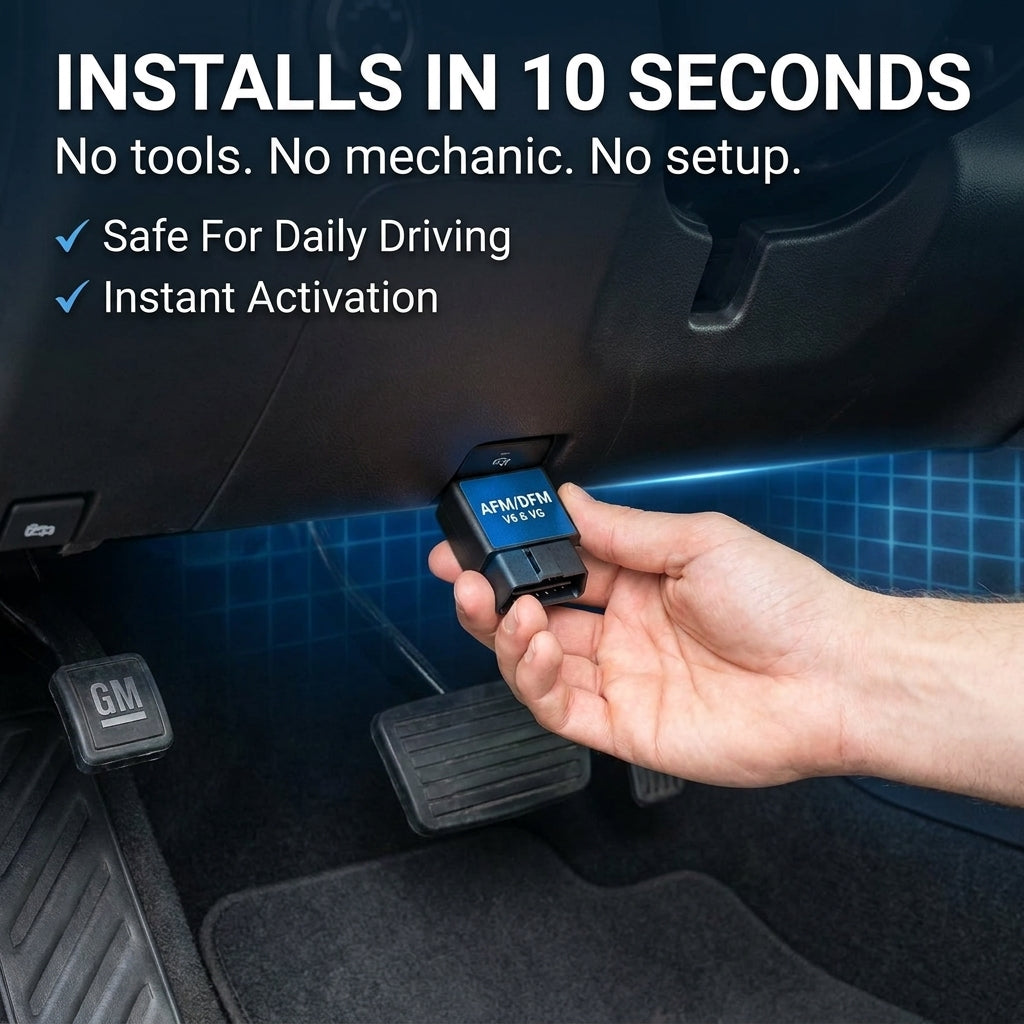
Chevy 5.3 Ground Strap Issues: Fixing Electrical Gremlins
Chevy 5.3 Ground Strap Issues: Fixing Electrical Gremlins
An AFM/DFM disabler module represents the most effective way to maintain consistent electrical communication within the engine control system while preventing the dreaded lifter failure common in Silverado and Sierra models. This in-depth guide on Chevy 5.3 ground strap issues will help you identify hidden electrical faults that cause dashboard flickering and Stabilitrak errors while explaining how gadon.store helps truck owners restore full V8 power and long-term mechanical reliability through advanced plug-and-play technology.
Need Help Checking Vehicle Compatibility? Gadon.store is Ready 24/7
In just 2 minutes, our expert team can confirm if the Gadon™ AFM/DFM Disabler fits your exact year and model.
Why Proper Chevy 5.3 Ground Strap Maintenance is Crucial? A Direct Impact on V8 Performance and Engine Lifespan
Using a Gadon AFM/DFM disabler correctly ensures your GM engine stays in full V8 mode, delivering smooth, lag-free performance and extending the engine lifespan by preventing costly 5000 dollar lifter failures caused by constant cylinder switching. However, the performance of these sophisticated electronic modules depends heavily on the integrity of your vehicle grounding system. A corroded or loose ground strap creates electrical resistance that confuses the Engine Control Unit, leading to ghost codes and erratic shifting behavior that mimics transmission failure.

When the electrical foundation of a Chevy Silverado or GMC Sierra is compromised, the high-speed data bus experiences interference. This creates several high-risk scenarios for the owner:
- Intermittent Stabilitrak and Traction Control warnings that disable safety features during driving.
- Hard starting or total loss of power to the dashboard while cruising at highway speeds.
- Erratic voltage swings that can prematurely wear out the alternator and battery cells.
- Poor sensor readings that trigger false Check Engine Lights regarding the fuel management system.
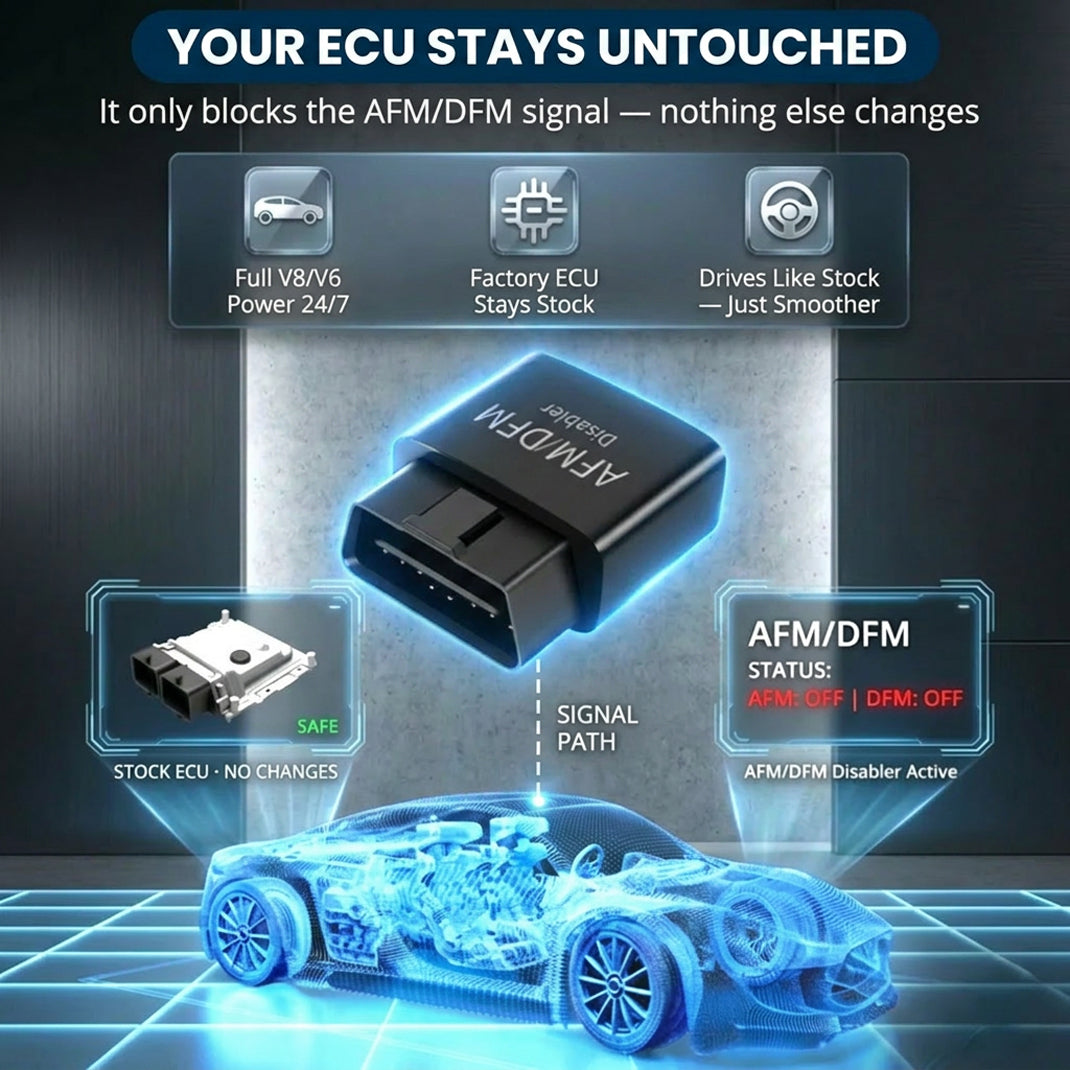
Gadon™ AFM/DFM Disabler
This compact OBD2 plug-in device keeps your GM engine operating in full V8 mode. It prevents rough shifting, torque converter shudder, and saves you from 5000 dollar lifter repair bills without reprogramming your ECU. Our team at Gadon.store is ready to help you confirm compatibility for your vehicle.
A Detailed 3-Step Guide to Using Grounding Solutions for GM Owners
To resolve Chevy 5.3 ground strap issues, owners should follow a systematic approach to ensure the electrical path is clear. Maintaining a solid ground is the first step toward optimizing your truck performance before installing the Gadon module. Most electrical gremlins are found in the braided straps connecting the engine block to the firewall or the main battery cables. Cleaning these points can prevent the voltage drops that cause the ECU to malfunction during cylinder deactivation transitions.
Step 1: Locate and Inspect Primary Ground Points
First, locate the main engine ground strap, usually found at the back of the cylinder head on the passenger side or near the front of the frame. You should also check the battery negative cable where it connects to the engine block. Inspect for green corrosion or frayed wires. Professional mechanics recommend tugging slightly on the braided straps; if they crumble or feel brittle, they require immediate replacement to maintain the 12-volt stability required for the OBD2 port and interior electronics.
Step 2: Clean the Contact Surfaces with a Wire Brush
Take your tools and remove the bolts securing the ground wires to the chassis or engine block. Use a stiff wire brush or sandpaper to scrub the metal until it is bright and shiny. Removing paint, rust, and road grime ensures a low-resistance path for the current. Once clean, apply a thin layer of dielectric grease to prevent future oxidation. This simple maintenance task often fixes flickering lights and radio resets immediately without needing expensive dealership diagnostics.
Step 3: Plug in the Gadon Disabler for Maximum Engine Protection
With the electrical system stabilized, insert your Gadon™ AFM/DFM Disabler into the OBD2 port. There are no tools required for this final step. You will notice the indicator lights flash, confirming it has successfully connected to the ECU. Start your engine to experience immediate smoother throttle response and consistent V8 power. By combining solid grounding with the Gadon module, you create a fail-safe environment for your lifters and transmission, ensuring the truck drives as it was intended from the factory.
Advanced Tips: Understanding AFM/DFM and Electrical Stability on GM Vehicles
Every GM truck owner should understand that the Active Fuel Management system is highly sensitive to voltage fluctuations. When a ground strap fails, the ECU may struggle to command the solenoids that manage oil flow to the lifters. This technical instability, combined with the mechanical stress of constant V4/V8 switching, accelerates the wear on internal components. Providing your truck with a stable electrical environment and a Gadon disabler is the dual-layer defense needed for longevity.
How Cylinder Deactivation Causes Lifter Failure
The constant switching between V4 and V8 modes creates uneven wear on the active lifters. Over time, the locking pins within the AFM lifters can fail to engage or disengage correctly, leading to premature lifter failure, bent pushrods, and costly engine rebuilds that can exceed 5000 dollars. The Gadon module prevents this by keeping the lifters pressurized and active 100 percent of the time, eliminating the mechanical fatigue that leads to catastrophic engine damage.
Eliminating Transmission Shudder at Cruising Speeds
Many drivers experience a noticeable shudder or vibration at 35 to 60 mph, which is often mistaken for a failing torque converter. This vibration typically occurs during the transition into V4 mode. By keeping the engine in full-cylinder mode, the Gadon module balances the torque output across the crankshaft. This eliminates the awkward gear-searching behavior and provides a seamless driving experience that feels significantly more powerful and refined during highway cruising.
Comprehensive Comparison: Grounding Impacts and Product Solutions
The following table outlines how different electrical and mechanical factors impact your vehicle performance. Understanding these variables allows you to make an informed decision about your maintenance schedule and which Gadon package offers the best value for your specific needs.

| Feature/Issue | Impact on Vehicle | Recommended Action | Gadon Solution |
|---|---|---|---|
| Corroded G103 Ground | Dashboard flickering | Clean block surface | Ensures stable OBD2 data |
| Active AFM System | Lifter failure risk | Disable V4 transitions | Gadon™ AFM Disabler |
| Active DFM System | Complex gear hunting | Maintain full power | Gadon™ DFM Disabler |
| ECU Re-flashing | Warranty voided | Avoid permanent tunes | Zero Trace Technology |
| Multiple Vehicles | High repair costs | Fleet protection | 2 or 3 Pack Bundles |
| Oil Consumption | Stuck piston rings | Prevent V4 mode oiling | Reduces oil burning |
| Customer Support | Technical confusion | Seek expert advice | 24/7 WhatsApp Support |
| Peace of Mind | Breakdown anxiety | Install quality parts | 90-Day Full Refund |
Troubleshooting Common Issues with Chevy Ground Straps and Performance Modules
Based on our team experience at Gadon.store, many customers encounter issues that seem complex but are actually related to simple electrical connectivity. If your disabler is not acting as expected, the problem often lies in the vehicle electrical health rather than the module hardware. We recommend performing a thorough check of the vehicle auxiliary systems to ensure the OBD2 port receives a consistent signal. Every purchase from Gadon.store includes our 90-Day Guarantee and Free Shipping. Use code WELCOME to get an extra 10 percent OFF today!
- Why are the lights on the device not turning on? – Solution: Check your vehicle OBD2 fuse, which is often shared with the cigarette lighter. If the ground strap near the battery is loose, the port may also lack the necessary power to activate the module.
- Will the module drain my truck battery? – Solution: The device draws a very minimal amount of power on standby. However, if you plan to leave your truck parked for several weeks, we recommend unplugging it to ensure the battery remains at peak voltage.
- Do I need to unplug it before taking it to the dealership? – Solution: Yes, simply unplug the Gadon disabler before your service visit. Since it leaves zero trace and does not flash the ECU, your factory warranty remains 100 percent intact.
- What if I still see the V4 light on my dash? – Solution: Ensure the module is pushed firmly into the port. In some cases, a weak firewall ground strap can cause signal drops that momentarily allow the ECU to switch modes. Clean the grounds and re-test.
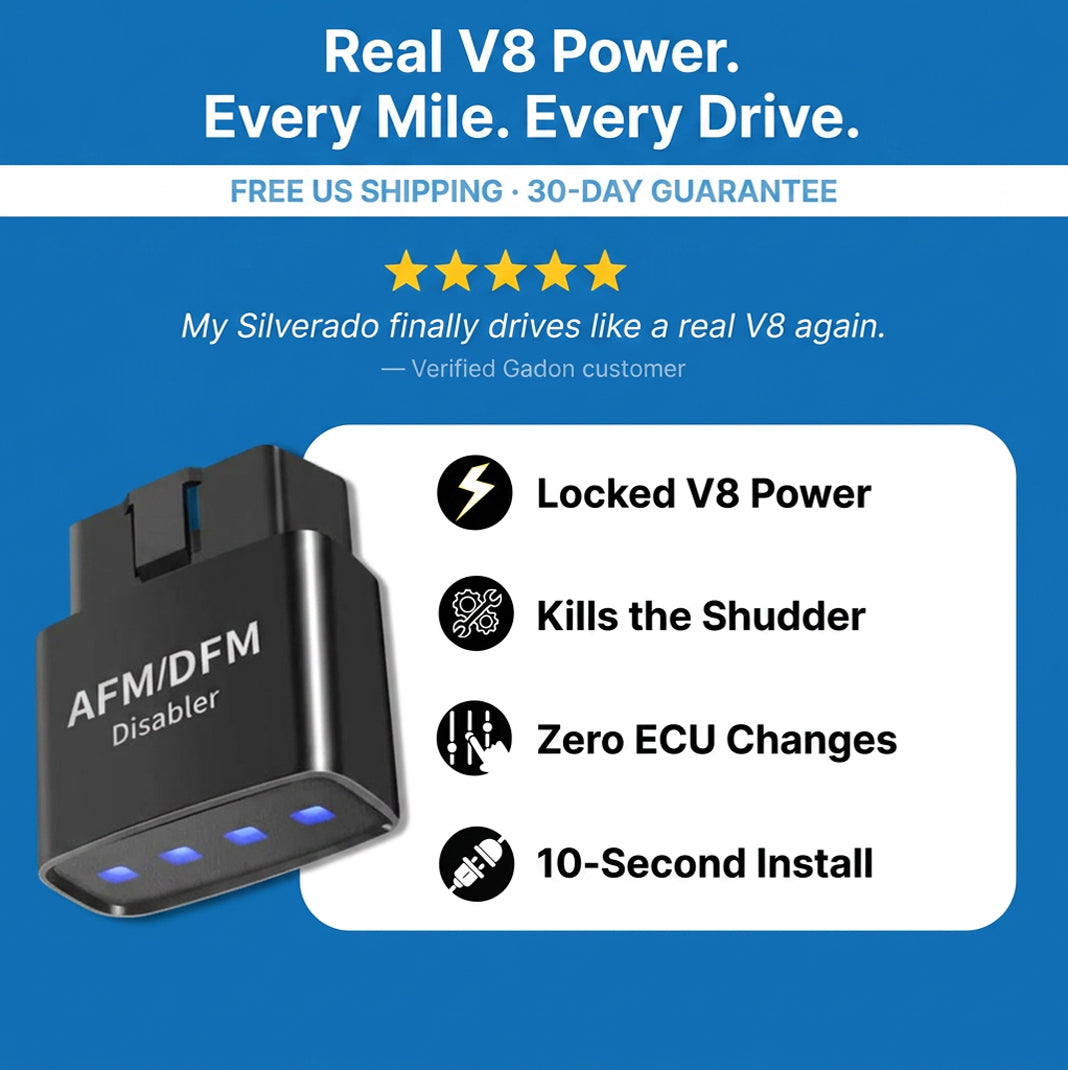
Gadon™ AFM/DFM Disabler
This smart module blocks your GM vehicle V4 mode, preventing sudden hesitations, oil burning issues, and devastating lifter collapses. Easy to install and remove, it preserves your engine health while protecting your factory warranty.
Which Gadon™ AFM/DFM Disabler Package is Right for You? Expert Advice
For personal use on a single daily driver, the 1 Pack Gadon™ Disabler is the perfect choice. You will feel the V8 difference immediately after installation. This package is ideal for owners of the Chevy Silverado 1500 or Tahoe who want to protect their investment from the high costs of engine teardowns. If you own multiple GM vehicles, such as a truck and a matching SUV, our bundle options provide significant savings while ensuring total fleet protection.
For Multi-Vehicle Owners, the 2 Packs (Most Popular) is ideal, offering a 15 percent discount for a dual-vehicle upgrade. This is our most requested package for families who drive both a Sierra and a Yukon. For commercial fleets or professional mechanics, the 3 Packs (Best Value) offers a 25 percent discount, ensuring all your work trucks are protected against lifter failure. Choosing the right package ensures you never have to swap a single module between vehicles, maintaining constant protection for every engine in your driveway.
Quick FAQs on Gadon AFM/DFM Disablers
We have compiled the most frequent questions from our community of over 50000 satisfied customers to help you make the right choice for your Chevy or GMC truck. Our technical experts have verified these answers to provide you with the most accurate information available regarding OBD2 performance modules.
- Will it void my GM warranty or trigger a Check Engine Light? – No. The Gadon disabler does not reprogram your ECU or flash the computer. Simply unplug it before taking it to the dealership, and it leaves zero trace. Your factory warranty stays 100 percent intact and it will not trigger a check engine light.
- Will it fit my specific truck model? – Yes, it is compatible with over 90 GM models manufactured between 2005 and 2026, including the Silverado, Tahoe, Sierra, Yukon, Escalade, and Suburban. It works flawlessly with both V6 and V8 engines equipped with AFM or DFM systems.
- Will this actually save my engine from 5000 dollar repairs? – Absolutely. AFM/DFM cylinder deactivation is the leading cause of premature lifter failure in GM engines. By keeping the engine firing on all cylinders uniformly, the Gadon device prevents the uneven wear that leads to expensive engine rebuilds.
- When will I feel the difference while driving? – Within the first mile. Most drivers report an immediate elimination of shudder at cruising speeds, smoother throttle response, stronger acceleration from a dead stop, and an overall better driving experience.
- How hard is the installation process? – It takes less than 10 seconds. You need absolutely no tools and no mechanical experience. If you can plug a charger into your phone, you can plug the Gadon module into your truck OBD2 port.
Need Help Checking Vehicle Compatibility? Gadon.store is Ready 24/7
In just 2 minutes, our expert team can confirm if the Gadon™ AFM/DFM Disabler fits your exact year and model.
Protect Your GM Engine and Regain Full V8 Power with Gadon.store
At Gadon.store, we provide a reliable, plug-and-play solution that unleashes your engine true V8 potential while protecting it from expensive lifter failures. We are committed to high-quality performance modules, zero ECU tracing, and excellent customer support. Our mission is to help you enjoy your truck performance without the fear of mechanical breakdown. Upgrade your ride and drive with confidence knowing your engine is protected by the best technology in the industry. Call our support hotline now at +1 813-408-1627 or order directly from our website to secure your vehicle today!
Note: The guidance and prices in this article are for reference at the time of publishing and are subject to change. Please contact Gadon.store directly for the most current information. Always ensure your vehicle is parked safely before interacting with the OBD2 port. Contact Gadon.store for precise support for your GM vehicle.
Disclaimer: The instructions in this article are based on practical experience with GADON STORE products. Always ensure your vehicle is parked safely before interacting with the OBD2 port. Please contact contact@gadon.store for detailed support regarding your specific GM model compatibility.